[Editor’s Note: This piece contains spoilers for Silent Hill 2 and its remake.]
There’s a hidden message in Silent Hill 2 Remake found by collecting all the Polaroid photographs strewn throughout town: “You’ve been here for two decades.” It reveals the game to be a stealth sequel to the original, with James living this hell over and over again. But in 2001’s Silent Hill 2, the town is more purgatory than damnation. In its most commonly achieved ending, James is able to confront his transgressions and emerge, if not redeemed, at least changed. The remake’s incorporation of the original enshrines it with reverence, but it also overwrites its story. In most endings of Silent Hill 2, James escapes the town, whether through death or confrontation. But in what is now the most accessible version of the game, he will stay there forever.
Silent Hill is far from the only horror series to indulge in this rewriting veneration. Through endless “soft reboots” and revisitations (as well as a thematic preoccupation with trauma), today’s horror treats the past as a sacred text. Resident Evil Requiem just returned to the series’ original setting of Raccoon City, after releasing a spread of remakes. Recently, horror staples like Halloween, Texas Chainsaw Massacre, and Evil Dead received sequels which selectively integrated and ignored the past. Instead of all this reverence, though, horror could use some real blasphemy.
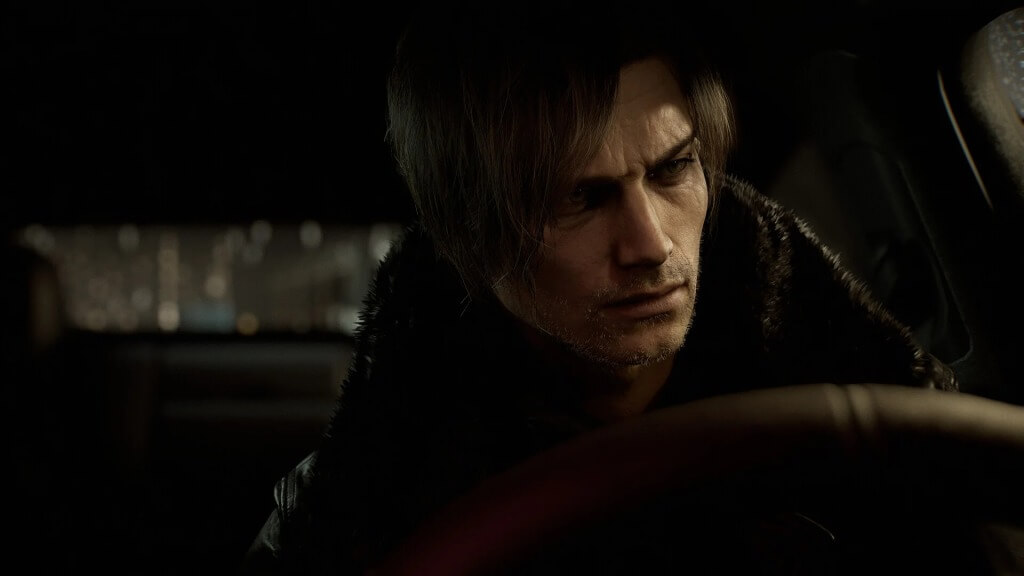
In many ways, Resident Evil Requiem is a return. The name, a pun on the world for “nine” in Japanese, implies mourning and reflection on what once was (perhaps an appropriate theme for the series’ upcoming 30th anniversary). The game marks the first new appearance of Leon since his president-killing stint in 2012’s Resident Evil 6. The game’s second protagonist, Grace Ashcroft, is the daughter of Alyssa Ashcroft, one of multiple playable characters in the co-op focused spin-off Resident Evil Outbreak. The very beginning of the game sees Grace returning to the now-dilapidated hotel where her mother was murdered, to investigate the murder of a Raccoon City survivor. There, Doctor Victor Gideon, a former Umbrella researcher who helped create the T-virus, kidnaps her. Leon pursues, though a mysterious illness (shared with other Raccoon City survivors) draws him closer to his past. Eventually, both their fates draw them back to the city where the zombie outbreak originated.
Yet, the most publicized part of this return is made possible through a rewrite. In the original Resident Evil 3, Raccoon City is completely decimated. The destruction is a promise that the game will never return to the setting which it mined for the first three games. Indeed, Resident Evil 4, 5, and 6 take the series international, far from where it started. But in Resident Evil 3’s 2020 remake, the total destruction of the city is not shown, leaving a door open for the franchise to return to its roots. Requiem assumes that you’ve played the more recent remakes instead of the original PlayStation releases (if you’ve played any of them at all). What was once a thrilling promise that the games would chart a new course has potentially faded away to more nostalgia.
This shows in the exact way Requiem plays with the past. In Resident Evil 2, Leon is trapped in a police station during the zombie outbreak. In the original game, the police station is an ordinary place which only becomes extraordinary through the desperate circumstances of the outbreak. Now, almost 30 years later, it is mythic. It is a legend, fodder for mic-drops in advertisements. It is a way to build anticipation for coming back to the places you loved before.
Fittingly, Requiem integrates Resident Evil’s past and present. Leon’s sections are yet another run at the action thrills of Resident Evil 4 and feature a host of that remake’s additional mechanics. Grace’s sections incorporate the first person, stealth-heavy mechanics of Resident Evil 7 and 8. In some ways, Requiem acts as a marker for every place the franchise has been so far, from haunted house to zombie city and back again. This gives it real thrills. Early in the game, Leon head-shots a monstrous foe that has been pursuing Grace. The contrast between how helpless you are as Grace, and how capable you are as Leon, makes the tonal switches of the franchise thus far into something shimmering and coherent. Is a horde of zombies an opportunity to show off gun-fu wrestling moves or something that can only be run from? It all depends on who you are and what tools you have. Yet it is also something easy to read with cynicism. The game charts every place Resident Evil has been because it has no other place to go.
Strangely, Silent Hill has been charting new paths, most obviously with Silent Hill f, a game that abandons the titular American town in favor of thematic overlap. It features a religious cult that lurks behind the history of a rural town, and a teenage girl trapped by her parents’ expectations, who shapes her haunted home to her psychology. Yet, Silent Hill f is not really laced with Easter eggs, so much as it is dense with meaning. Writer Ryukishi07’s background in visual novels works mostly to the game’s advantage. The game’s journal, and its various written portions, build layered thematic work which comments on the themes of the original Silent Hill games, without ever directly conjuring them.
Another alternative route is found in the widely hated film Return To Silent Hill. The movie is a poor adaptation of Silent Hill 2, to put it lightly. It takes the basic pieces of the game and reworks them to the point that its themes are either absent or, if you want to be cynical about it, trodden on. While the film makes multiple callbacks to exact shots from Silent Hill 2, almost every one of those shots is re-contextualized, often for the purpose of subverting expectations. Yet, these changes are funny, baffling, and dazzling more than angry. Every detail of Silent Hill 2 has been dissected countless times in blog posts and video essays. What more can be said about it? For all its faults, Return To Silent Hill has the courage to blaspheme, to make something in meaningful conversation with the original without feeling beholden to it.
Despite it all, Silent Hill 2 still exists. There are multiple great, if extralegal, ways to play the original. The reverence of Bloober’s 2024 remake is insulting, a devotion that manages to miss the point. Resident Evil is more successful and more charming. The series’ endless revisiting of its campy lore is an undeniable part of its lasting power. Yet Requiem still feels trapped in a past it cannot quite capture. Resident Evil 4 remains the best game of its kind. While some of its imitators—Dead Space, The Evil Within, and Alan Wake 2—have managed their own brilliance, RE4 still stands alone. Even the best parts of Requiem lie in the shadows of greater works, lacking the real courage shown, in very different ways, by Silent Hill f and Return To Silent Hill. If there is anything horror might be defined by, it is the urge to walk into the dark, no matter what horrible truths await within; Resident Evil seems to have forgotten that.


 Keep scrolling for more great stories.