
Blaxploitation came of age with the help of Barry White and War
The teens of Together Brothers and Youngblood got it together to some killer tunes.
Photo: American International Pictures
In the year-long series Sounds Of Blaxploitation, Craig D. Lindsey plays the hits that defined a genre, drawing connections between the music of the moment and the films that gave it a platform.
The Blaxploitation age wasn’t all about badass brothas and sistas whooping (primarily white) asses on the big screen. There were also a few inner-city coming-of-age dramas sprinkled among the pulpy-but-righteous mayhem.
The Education Of Sonny Carson (directed by The Mack helmer Michael Campus), A Hero Ain’t Nothin’ But A Sandwich (the last film for Lillies Of The Field director Ralph Nelson), Cornbread, Earl And Me (co-starring a young Laurence Fishburne in his film debut)—all these adolescent message movies (directed by white dudes, of course) were basically ABC Afterschool Specials in the hood, harrowing stories of wayward dark-skinned teens growing up in run-down, drug-and-crime-infested surroundings and quickly learning how to man the fuck up.
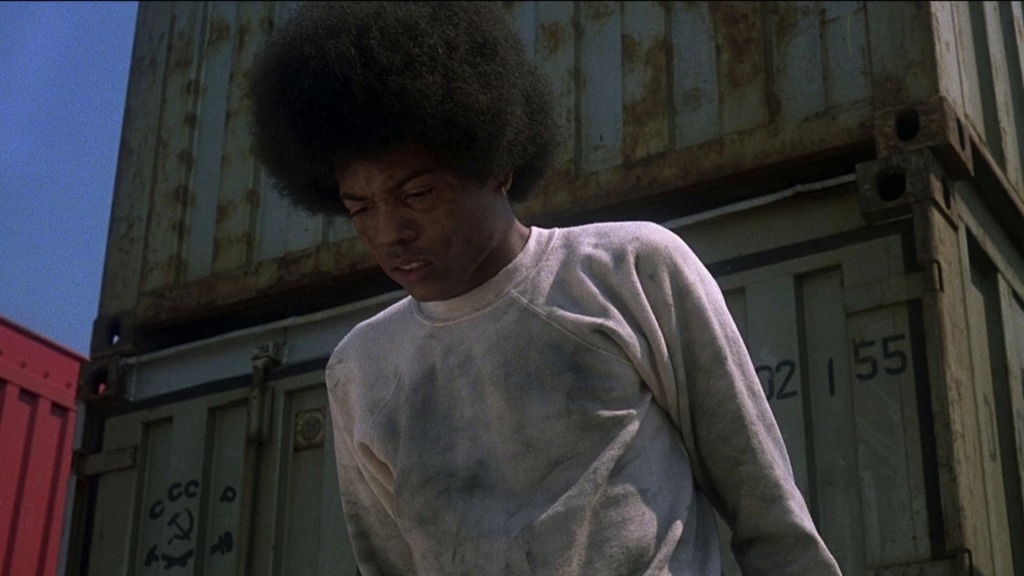
Two of the films in that particular subgenre, Together Brothers and Youngblood, have musical scores that outshine the films themselves. Both pictures feature babyfaced, jive-talking gangs taking the law in their own hands, hunting down the pushers, murderers, and other nefarious folk who make the hood, well, the hood. They also feature a young, hotheaded, large-floppy-hat-wearing protagonist (played by an inexperienced juvenile thespian) who learns to stop goofing off and protect his skinfolk.
The 1974 urban thriller Together Brothers was a Blaxploitation/teensploitation mashup from veteran director William Graham, who’d previously tackled interracial love between two high schoolers in 1971’s Honky, scored by Quincy Jones. This minority-populated take on Fritz Lang’s magnum-opus mystery M has a Galveston gang, led by mesh-tank-top-wearer H.J. (Ahmad Nurradin), going after the killer who offed Mr. Kool (Ed Bernard), the neighborhood’s only decent cop, and who traumatized the silent little kid (Anthony Wilson) who witnessed the whole thing. The shadowy baddie even gets a sinister, whistle-heavy theme—an obvious nod to Peter Lorre’s OG whistling psycho—whenever his wingtips enter the frame.
With Together Brothers taking place in the ravaged streets of Galveston, 20th Century Fox got Galveston-born Barry White, a rising R&B star on their 20th Century Records label, to handle composing duties. Already known for the champagne-soul stylings he produced and performed either for himself or his backing trio Love Unlimited (who also appear on the soundtrack), White put the romance on hold and got in the gritty, grimy groove for Brothers. (After all, he still grew up in Watts in South Central Los Angeles.) The main title theme “Somebody’s Gonna Off The Man” is textbook Blaxploitation fare, an anxious-but-funky number foreshadowing the movie’s events while also laying on some heavy—as the kids said back then—social commentary. White, who only makes two vocal appearance on the score, goes full make-me-wanna-holler on this one: “In the name of justice / In the name of peace / When will this killing and fighting ever cease?”
Alongside longtime arranger Gene Page (who did the score for Afro horrorshow Blacula) and his Love Unlimited Orchestra, White does an angsty, action-packed score that’s more lush and polished than the movie it’s scoring. Truth be told, if the cast wasn’t populated with local, green-as-hell non-professional actors, Together Brothers could’ve been a decent, albeit predictably problematic, potboiler. The film’s legacy lives on, just not where you’d expect: A montage of H.J. and his boys hitting the streets and doing some shoe-leather investigating is accompanied by the bustling “Theme From Together Brothers,” which would later get sampled for “C’mon N’ Ride It (The Train),” Quad City DJ’s’ Miami bass anthem.
 Keep scrolling for more great stories.