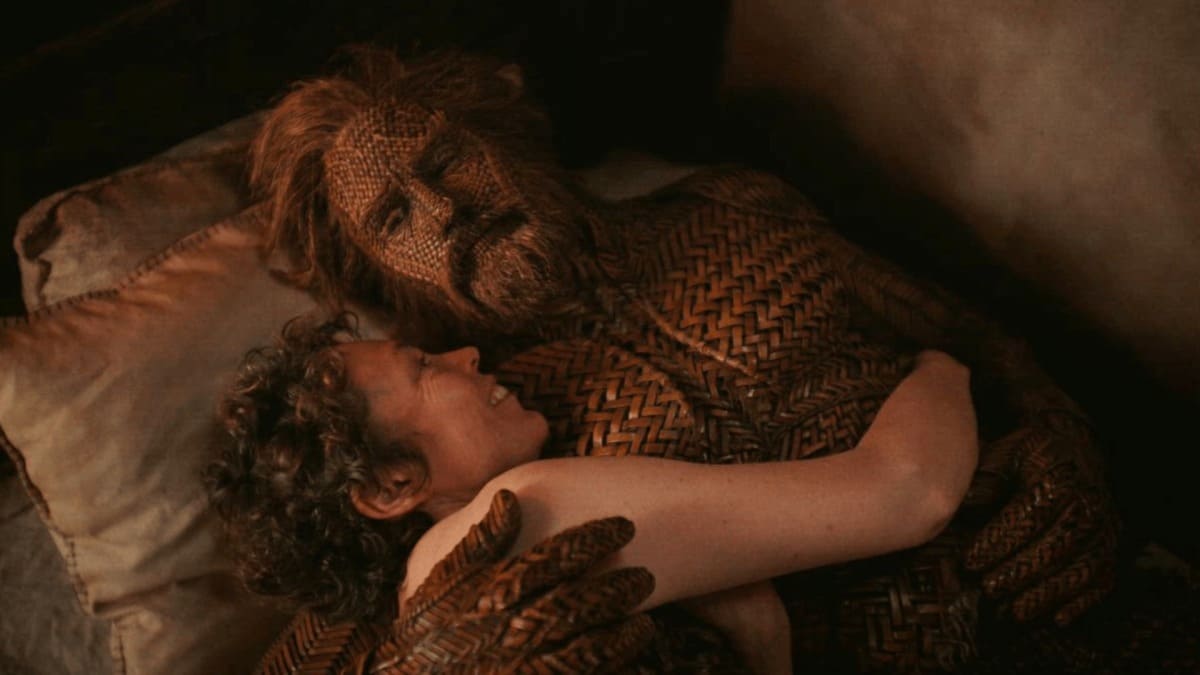
When the trailer dropped in July, some laughed at its premise, but others got to work making cheeky videos voicing their newfound thirst for wicker. People started posting their reactions to the trailer, noting its unabashed references to sex, which stood out against other modern romantic comedies that feel oddly chaste. Libraries got in on the action too, showcasing their books on basketmaking. Even IKEA posted a well-timed photo series of its wicker furniture under the title “Husband material,” set to Raye’s “Where The Hell Is My Husband.”
At a time where sex is in short supply in most TV and movies, the fact that Wicker and its grassroots social media campaign has allowed—even encouraged—public displays of thirst is a refreshing change. Historically, studios have underestimated the success of the romance genre, but readers know better: Romance readership has grown consistently since the COVID pandemic, with hundreds of romance-focused specialty bookstores like The Ripped Bodice and Lovestruck springing up around the country. Why shouldn’t the girls have a little naughty fun at the movies as well?
The fanfare has only ramped up now that Wicker is in theaters, with moviegoers sharing the joy (and maybe even a little shame or confusion) over getting so hot and bothered by an inhuman romantic fantasy. Other institutions and businesses got in on the joke, like the New York Historical sharing its woven eel traps and HomeGoods showing off its wicker ware. Jokes aside, the movie and the wide-spanning reaction it has earned is a result of tapping into an often-neglected market that enjoys a story about an older woman who’s desired and wanted as she is––the lust of Fifty Shades Of Grey meets the emotional vulnerability of Nancy Meyers’ Something’s Gotta Give, all by way of a magical basketmaker.
The story of Wicker is simple yet, for many, a great source of fantasy, tapping into some of the romance genre’s biggest appeals. In an era of toxic online dating, the resurgence of rape culture nearly a decade after the second wave of the MeToo movement, and men doing the absolute least, a romantasy about a sturdy man who loves his fisherwoman unconditionally and is an equal part of his relationship is worth thirsting over. One of the swooniest moments in the movie is not when the wicker man has to fix the bed (multiple times), but when he declares his love to his fisherwife at a party, breaking the brain of the bully coming over to taunt them. The wicker husband’s egalitarian approach to the fisherwife, who earns the household income while he tends to the household chores, is in stark contrast to the treatment other wives in the medieval village endure from their partners, like the tailor’s wife (Elizabeth Debicki), whose husband will only let her handle domestic duties.
Are the wicker trappings silly? Yes, but the underlying need to be accepted and cared for by someone you love, or have a relationship where both partners actively like—let alone love—each other, is not. The horny wicker posts aren’t just jokes about character design, but rooted in a real want to be desired and supported, even if it’s by a wicker man. Part of the appeal of Wicker is that the woven husband not only notices problems on his own, he gets up and fixes them. That kind of attractive capability is rooted in the same kind of competency porn that launched a thousand crushes on characters like Dr. Robby in The Pitt: Any ability to make a decision or show any emotional intelligence will do at this point. Sometimes the fantasy of a caring and reliable partner who can take care of business in the home and bedroom is a better companion than settling for someone who can do neither.


 Keep scrolling for more great stories.