In the coastal town of Whittock, a prominent local has gone missing. Henry Park (Hudson Williams), the heir to the town’s fishery empire, has disappeared. The local cops, including Detective Carson (Clark Backo), think he’s gone on a rich boy jaunt to Europe. Rapp (Noah Reid), a private investigator of unconventional means, has been hired by Henry’s family to uncover the truth. It seems like a simple case, but what about Katherine (Carrie-Anne Moss), a local professor with ties to Henry and proclivities for younger men? And what’s with all this talk about witches?
Even in the current era of plenty, where international programming is more available than ever, a Canadian horror-fantasy-mystery based on a little-seen play would probably not be considered must-see TV. Certainly, the chances of it receiving a splashy world premiere at the Toronto International Film Festival would have been highly unlikely. But when you were fortunate enough to cast one of the biggest breakout stars of 2026 right as he was thrust into the international spotlight, you can reap the benefits. Yaga boasts the first post-Heated Rivalry performance (technically performances, plural) from Hudson Williams, bringing the series a level of attention it wouldn’t have otherwise. With that comes the pressure to live up to expectations that don’t exactly match up with the series’ aims. Sure, some of the bawdiness of Williams’ main TV gig is present here, but this is more of an appealingly retro supernatural caper with some intriguing ideas up its sleeve.
Yaga’s marketing seems eager to cash in on the current romantasy trend dominating bestsellers’ lists and what’s left of the publishing industry, but a more accurate point of comparison would be with the syndicated urban fantasy shows of the late-’90s and early 2000s. It evokes memories of the sexy paranormal heroes keeping the streets of Toronto safe in Forever Knight and Blood Ties, or those shows’ more contemporary, Vancouver-produced cousins from The CW. Certainly, it fills a gap in the market left behind by Supernatural—and it doesn’t have to pretend to take place in the United States to do so. This 2026 take on this type of show has loftier ambitions than its predecessors, though—ambitions that sometimes exceed Yaga’s grasp.
Rapp rolls into town via helicopter, a self-consciously suave P.I. who’s modeled himself after gumshoe characters of old, and immediately begins bending the rules. Unlike Carson, a by-the-book cop who thinks this is all much ado about nothing, Rapp has a personal connection to Henry and can’t believe he’d be so selfish—or that he would’ve at least given his parents a heads-up before he skipped town. But it’s been a while since Rapp and Henry hung out, and things have changed. Living in the vast Park family estate is Logan, a friend of Henry’s who looks uncannily like him (to the point that he’s also played by Hudson Williams). Henry’s ex, Pam (Ezra Franky), could be a suspect. So could Katherine, an anthropology professor whose reputation and weirdly erotic lectures about crab spiders have earned her the nickname “the Boner Beast.” As the investigation continues, Rapp keeps coming across mentions of Baba Yaga, the witch of Slavic folk tales who, depending on the teller, is either a malicious bone-eating monster or a kindly old woman.
A seaside town surrounded by impenetrable fog and equally dense forestry provides an aptly eerie and moody setting for this story of witches and the men who wrong them. But there’s also an impish humor to it all. Sporadic narration from Baba Yaga herself (Sheila McCarthy, chewing the scenery with aplomb) talks of unfair assumptions and society’s habit of blaming witches for everything. Maybe if you just got to know the witch, and stopped accusing her of screwing the world up, you’d like her. Certainly, she seems to be the preferable option to the men of Whittock. Henry is a spoiled narcissist who treats people like disposable toys. Logan is bitter with jealousy that he isn’t Henry. The chief of police is a loser creep, and even Rapp quickly lets his cool demeanor slip to reveal casual chauvinism. In Yaga, there is no such thing as a “nice guy.”
The gender divide of the story is intriguingly presented, but across the first seven episodes (the finale was not provided for review), it’s not examined as richly as it could have been. Yaga is fascinated by the dichotomy of women’s sexual autonomy behind the stifling veil of patriarchy, and in allowing its heroines to experience unfettered pleasure, with or without some dumb dude’s involvement. To the series’ credit, it’s all very steamy, fitting for an age when even a small-town detective like Carson reads “fairy smut.”
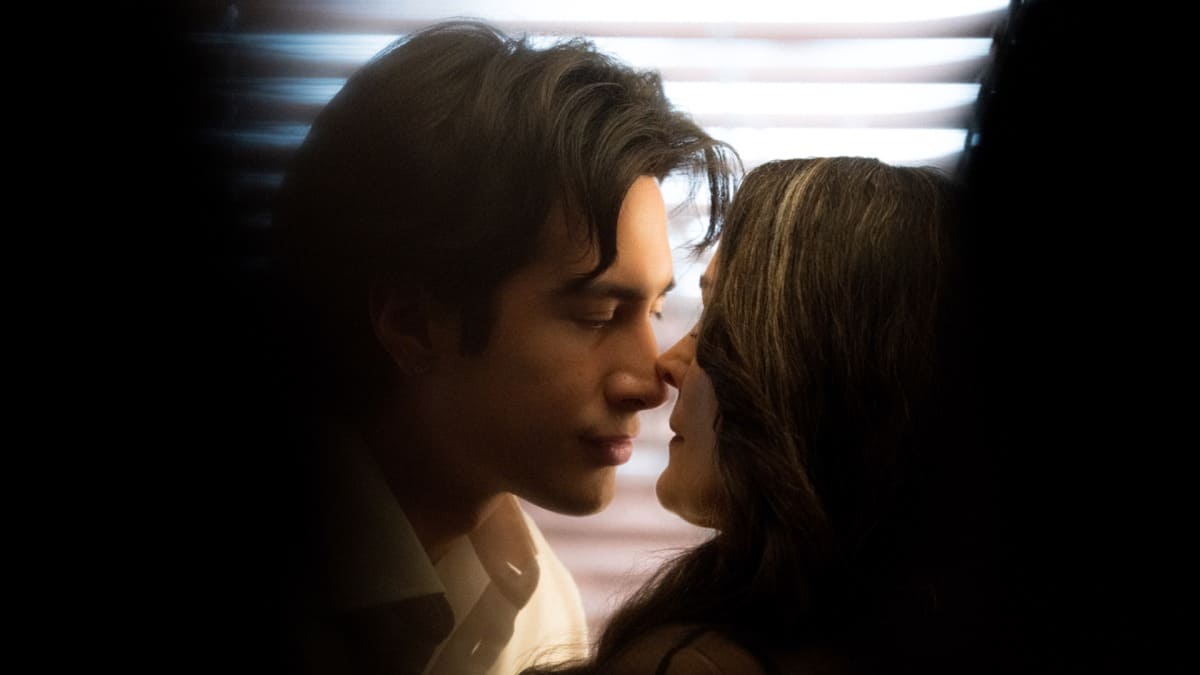
Katherine is proudly sexual, noting how frequently older women like her are rendered invisible to men, and both Henry and Rapp are desperate to claim her as their own. Henry’s entitlement extends to full-on sex crimes, of which his meek doppelganger seems happy to partake. Williams shows off strong work in his dual performance, but while there’s enough here to fire the imaginations of fanfic writers, the characters are given less screen time than the marketing would suggest. Henry’s disappearance is meant to be the Trojan horse through which Yaga can delve into its ideas of misogyny, but his absence leaves them feeling adrift.
Showrunner Kat Sandler has done a sturdy job of translating her original version of Yaga—an intimate affair with limited actors and staging—into a full world with multiple side characters and subplots not present in the source material. (Not every stage-to-screen adaptation is so lucky.). Tonally, Sandler has a lot of fun with the blend of mood, humor, and folklore—plus all of the Russian-language covers of pop songs like “I Want To Know What Love Is” and “I Will Survive” are a blast. The episodes, roughly 30 minutes in length, fly by, Yaga a great binge-watch during the countdown to Halloween. Its full potential, however, isn’t quite realized. The ideas are plentiful in Yaga, as are the thrills, but be prepared to have some key questions left unanswered.


 Keep scrolling for more great stories.