By Jacob Oller, Matt Schimkowitz, Saloni Gajjar, Natalia Keogan, Jesse Hassenger, Brianna Zigler, and Katie Rife. Credits clockwise from top right: Warner Bros., Warner Bros., A24, Neon, Warner Bros.
The best films of 2025 emerged from a landscape as politically volatile and competitively lopsided as the darkest days in Hollywood history. This climate of consolidation and capitulation gave a little extra oomph to a film slate that felt like the last angry hurrah from artists working within and without a system that was, at seemingly every turn, attempting to sell out to war criminals or debase itself at the feet of high-tech swindlers. Amid this desolation, long-gestating seeds of industry dissent sprouted into incredible blockbusters, while other incredible movies floated in from newcomers entirely disinterested in the mainstream.
A few bursts of originality floated above the nadir of live-action remake culture, with filmmaker-driven visions reminding the money-men that artistry can reach audiences even when it’s not smuggled inside a brand-name package. But a few of those latter films also made their way onto our list; just because a film is part of a franchise doesn’t mean game can’t recognize game. Comedies surged, documentaries had a crushing year (a bittersweet bonus to so much hardship), and men were able to find friends—and not just in fantasies!
Our seven ballot-filing critics went to bat for tiny baseball films and international festival darlings. They found joy in the year’s biggest hits and its most intimate experiments. They appreciated double features from Steven Soderbergh and Richard Linklater, and the first efforts in years from Bi Gan and Mary Bronstein. They embraced the anger racing through the artform, because they’re just as passionate and because misery loves company. The best films of 2025 provided the best versions of that companionship, hoping, joking, lamenting, and steaming about all the indignities of life that never quite fade away when the lights go down in the theater. In a year where seemingly every facet of life is trying to inhumanly capitalize on division and lonesomeness, these films are personal reassurances that their audience is not alone.
A prime entry into the annals of “weird little guy” cinema, Alain Guiraudie’s Misericordia begins with the death of a baker, which leads to the return of his former disciple, Jérémie (Félix Kysyl). Jérémie arrives back in his hometown, where he shacks up with the baker’s widow, Martine (Catherine Frot). It’s an innocent enough arrangement, but it arouses the suspicions of her burly son Vincent (Jean-Baptiste Durand)—a former friend of Jérémie, who is nevertheless disquieted by Jérémie’s presence. Tensions rise, a welcome is overstayed, a heated argument turns violent, and someone ends up dead. Meanwhile, a pulsing undercurrent of unspoken desires and past infractions gathers in strength as a local priest (Jacques Develay) steps in on behalf of Jérémie’s innocence with his own agenda at play. Misericordia is hypnotic in its sluggishness, a weird, absurd exploration of repression, compulsion, and guilt. [Brianna Zigler]
Steven Soderbergh, jack-of-all-trades as he is, filmed his ghost story Presence entirely from the perspective of the ghost. The film follows the Payne family, new residents of a gorgeous Victorian home (sold to them by real estate agent Julia Fox). But unbeknownst to them, an unseen figure roams the halls, impassively observing patriarch Chris (Chris Sullivan), his wife Rebekah (Lucy Liu), and the tense relationship between their two teenage kids, Tyler (Eddy Maday) and Chloe (Callina Liang)—the latter of whom is grieving the recent death of a friend. As the camera glides around the house, the spirit harmlessly meanders about—knocking things over, moving a book or two—all while dread quietly builds to the stunning climax of an otherwise gentle film, which ruminates on spirituality and the unknowable nature of time. [Brianna Zigler]
Steven Soderbergh’s other 2025 film, the sleek and sexy espionage thriller Black Bag, brought spycraft to the bedroom. An Eyes Wide Shut for the John Le Carré crowd, Black Bag works through the trust issues of a secret agent power couple, George Woodhouse (Michael Fassbender) and Kathryn St. Jean (Cate Blanchett), as they discover that the counter-intelligence community is a hotbed of relationship woes. After learning that someone in his orbit (including his wife) might be a mole, George tries to suss out the truth while maintaining the bonds of wedlock. The impersonal politics of spy games veer out of control after a dinner party—attended by spycraft coworkers played by Tom Burke, Marisa Abela, Regé-Jean Page, and Naomie Harris—reveals how common infidelity is in this splinter-cell friend group. How much can a secret agent really trust someone? It’s a question at the heart of Black Bag, which suggests that every spouse is necessarily part spy. The year’s second collaboration between Soderbergh and screenwriter David Koepp is a spiritual successor to their 2022 COVID take on The Conversation, Kimi, uncovering a similarly satirical view of surveillance culture through a marital thriller of errors. [Matt Schimkowitz]
Kiyoshi Kurosawa has long predicted and depicted online behaviors as IRL nightmares. The director’s most famous excursions into techno hell, Cure and Pulse, took the lurid anonymity of the internet and brought it to the screen when webspeeds crawled at 56K. With Cloud, he overturns the seedy underbelly of e-commerce—the dishonest give, take, and resale of goods that mean nothing to the person behind the keyboard. Cloud‘s coolly detached reseller Yoshii (Masaki Suda) has a knack for turning shady deals into quick profits. To Yoshii, a disaffected swindler who projects the quiet cool of Le Samurai but for reselling junk on eBay, the thrill of the hunt is peanuts to the dopamine hit of watching his listings sell out in seconds flat. His success in the online auction arena sends Yoshii from his cramped one-bedroom, overflowing with product, to a wooded suburban home. But as he moves up the consumer-culture food chain, his buyers come to resent his tactics. When those purchasing from him do the math on Yoshii’s upcharge, they escape the comment section for some old-fashioned revenge, which transforms Cloud from a humorous capitalist satire to a matter-of-fact action thriller that’s as funny as it is unsettling. [Matt Schimkowitz]
The Naked Gun delivered a spoof worthy of its esteemed title. Taking his cues from the casting ingenuity of the Zucker-Abrahams-Zucker original, director Akiva Schaffer placed a dramatic actor known for severity at the center of a clichéd procedural and loaded every line with stupid-smart jokes. Liam Neeson takes the badge and gun from the late Leslie Nielsen as Frank Drebbin, Jr., the roguish, chili-dog-addicted son of Police Squad’s greatest hero. Neeson was born for this. But Schaffer fills out the rest of the cast in kind: a scatting, game Pamela Anderson takes over the stunt-casting spot from Priscilla Presley, and the typecast Danny Huston, as the film’s tech-bro billionaire, is a Ricardo Montalbán stand-in. The shorthand worked beautifully. Over its tight 85 minutes, The Naked Gun finds room for diversion, including rants about TiVoed Buffy episodes, a snowman possessed by a polyamorous demon, and technofascists planning to do a 28 Days Later to society. This all adds up to The Naked Gun being the best kind of remake: One that recreates the alchemy of the original, transmuting it into a fresh, original comedy that would never forget the Duchess. [Matt Schimkowitz]
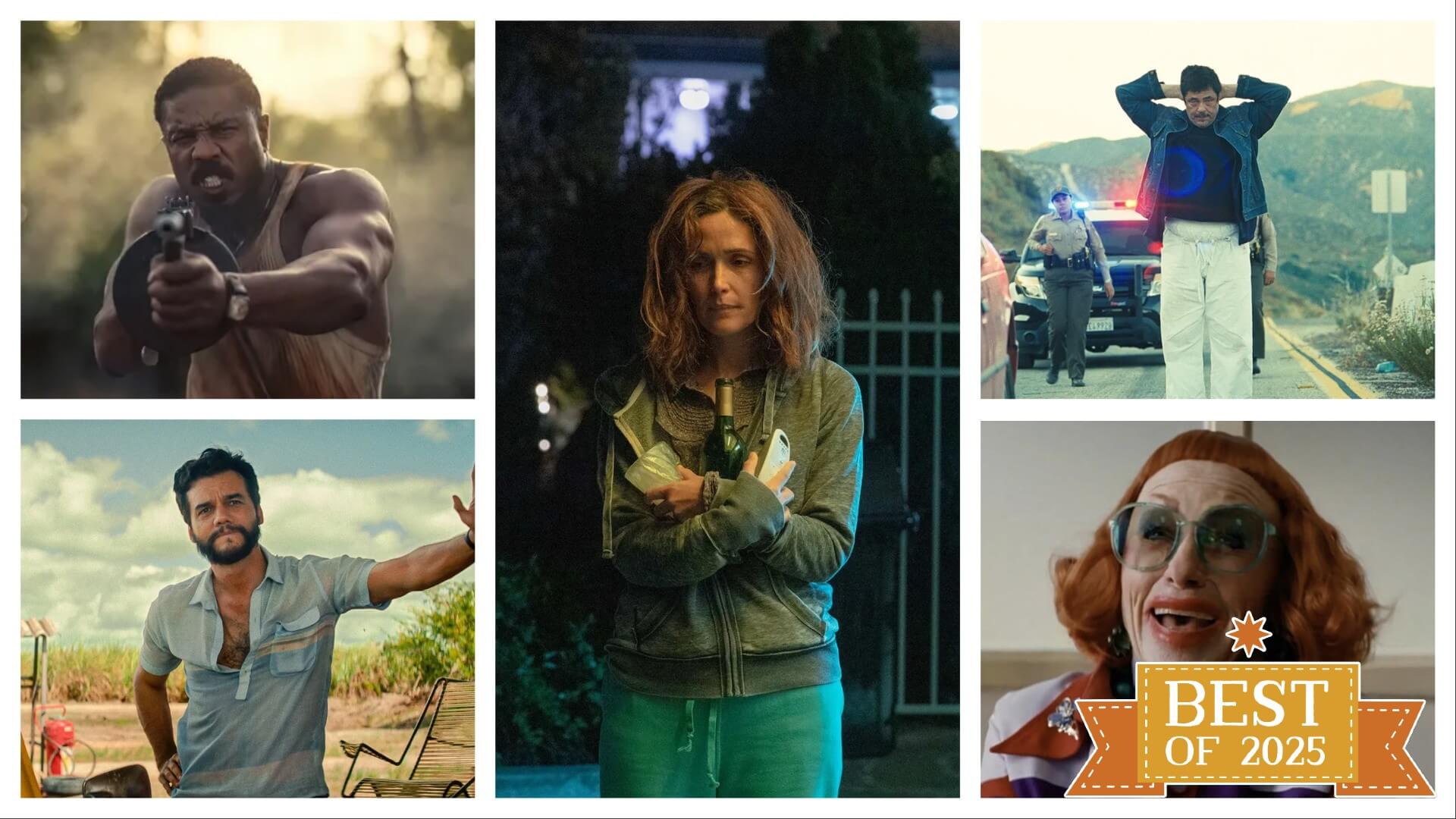
Let’s settle the occasional debate over what constitutes “minor Wes Anderson” with a theory: There is no minor Wes Anderson movie, not these days. Even when the writer-director’s scope shrinks slightly, as The Phoenician Scheme hustles its smaller ensemble on and off screen with fewer head-spinning combination-lock layers than Asteroid City, his supposed dollhouse sets open up to a vast expanse. Here, they depict a series of interlocking midcentury territories that industrialist Zsa Zsa Korda (Benicio del Toro, in the first of two career peaks he reached this year) hopes to conquer through a Middle Eastern infrastructure project. He’s joined by the skeptical, semi-estranged daughter Liesl (Mia Threapleton) he has judged worthy of possible inheritance—for Zsa Zsa’s life appears in constant and earned peril, despite his reassurances. Like The Grand Budapest Hotel, this is an international caper with dark undertones beneath the whimsy; unlike that masterpiece, its glimmers of hope sparkle a little brighter than grim reality. If the idea of a rich criminal obsessively propping up vainglorious infrastructure projects before finding a measure of redemptive grace feels like a step too far, fair enough. But it’s a tribute to Anderson’s imagination that he can picture emotionally satisfying ways for a rich man to shrink himself down. [Jesse Hassenger]
Director Déa Kulumbegashvili’s sophomore feature is a resolute portrait of the unholy union between religion and healthcare, where a culture of deep shame surrounding abortion and birth control is fostered in a rural Georgian village. Ia Sukhitashvili plays Nina, an empathetic practitioner who administers under-the-table abortions, hands out birth control packets to child brides, and dodges the condescension of her male cohorts who know her practices are an open secret. While April is culturally specific, its focus on regression in women’s healthcare is universal. The film is a progressively tightening noose, a slow-burn nightmare that condemns the abuse and complacency that enable women’s suffering while offering no clear resolution. Despairing, perhaps, but April is nonetheless a sobering, shocking, and beautiful film. [Brianna Zigler]
Ira Sachs’ intimate, 1974-set chamber piece is exactly what it sounds like: an exploration of a single day in the life of New York City photographer Peter Hujar, portrayed by Ben Whishaw with a calculated tri-state aura. Hujar’s good friend, Linda Rosenkrantz (a subtle but stellar Rebecca Hall), has asked him to narrate the events of the previous day for a prospective interview series. Sachs constructs the film entirely from Rosenkrantz’s resultant transcript, only capturing the artists in dialogue and never resorting to flashbacks. While shooting on location in Manhattan, Sachs isolates a sliver of skyline that feels void of the garish skyscrapers and gauche luxury housing complexes that now litter the landscape, making it earnestly appear to be 1974. As Hujar recounts spontaneous naps, chasing freelance payments, a chat with Susan Sontag, and an eventful photoshoot of Allen Ginsberg, it’s hard not to mourn the version of New York City that fostered creative lifestyles. Many of the struggles Hujar discloses are still relatable (wrangling checks, nutritionless meals, and subpar sleep habits among them), even if the price of cigarettes rising to 66 cents doesn’t quite make the cut. As immersive as it is formally invigorating, Peter Hujar’s Day is a radically granular depiction of the artistic process. [Natalia Keogan]
The first of two 20th-century showbiz biopics from Richard Linklater this year, Blue Moon watches a career on the rise from the vantage of one in decline. It’s the opening night of Oklahoma! and Lorenz Hart (Ethan Hawke) is getting drunk and talking shit about former partner Richard Rodgers’ (Andrew Scott) new musical, written with Hart’s replacement Oscar Hammerstein (Simon Delaney). Blue Moon follows the balding, diminutive lyricist as he seethes with jealousy from the bar at the Broadway hangout Sardi’s, sneaking shots of whiskey he told the bartender (Bobby Cannavale) not to serve him. As he awaits his unrequited love (Margaret Qualley)—who’d rather be meeting Rodgers—Hart tells acerbic sob stories about days gone by to anyone that will listen, moving in and out of his past from his barstool perch. Linklater strikes a delicate balance between a film about theater and a filmed play as New York’s intelligentsia enter and exit Hart’s orbit, expanding the bar but maintaining the tight focus. Hawke is funny, heartbreaking, and infuriating as Hart, stifling his pain with drink in hopes of finding someone who will feel sorry for him. It’s a mesmerizing film, one that does what Hart says all great art should do: It levitates. [Matt Schimkowitz]
Anchored by the avatar of impotent masculine rage, Tim Robinson, and the previous generation’s ageless everyman, Paul Rudd, writer-director Andrew DeYoung’s surreal Friendship explores the gender affirming care our boys crave through the various social cages they lock themselves in. Lonely and directionless digital marketer Craig Waterman (Robinson) has an unhealthy obsession with his new neighbor, meteorologist Austin Carmichael, in this pressure cooker cringe comedy about a man in desperate need of a bud and a chill pill (he settles for licking a frog). Their relationship opens a new world of confidence and excitement for which Craig is ill-equipped. When exploring the ensuing fallout, Friendship is relentless in its understanding of the self-imposed rules of manliness, blowing out everyday insecurities and awkward exchanges to absurd, sinister heights. DeYoung mixes earnest sincerity with the menacing darkness lurking beneath the overworked performance of being a man. Elaborating on Robinson’s television work, the feature’s length allows the camera to linger on Robinson’s misjudgments longer, adding a heavy layer of sad, humiliating humor to his comedy canon. [Matt Schimkowitz]
15. My Undesirable Friends: Part I—Last Air In Moscow
A five-and-a-half-hour documentary about dogged, depressed, chain-smoking journalists clinging to their ideals and their sanity as their country continues to turn against them sounds like it could be the final straw that breaks the back of people who still care about the integrity of the written word. But the independent Russian reporters of My Undesirable Friends: Part I—Last Air In Moscow,all hilarious young women and mostly designated as “foreign agents” by the Putin regime, are so damned devoted to getting the truth out there that you can’t help but come away inspired and invigorated. As entrenched filmmaker Julia Loktev documents the long lead-up and rapid final days of Russia’s invasion of Ukraine, her intimate access to her subjects and their cynical, weathered, black-humored fight against propaganda is as enthralling as it is enraging. Unbelievably timely, undeniably heroic, and thoroughly badass, this is a real-time look at a worst-case scenario for the free press, told from the inside up until the final moments. Five hours later and Part II sounds even more enticing. [Jacob Oller]
While not quite as gaudy as the 3D-dabbling Long Day’s Journey Into Night, Bi Gan’s ambitious anthology Resurrection still gets deliriously high on the art of filmmaking, splitting itself into five, sense-driven chapters that take place at different times and styles in cinema’s history. That means a chilly ghost story sits alongside a noir, which sits aside a con drama and a German Expressionist silent film. But the crown jewel is another of Bi’s incredible single-shot wonders, this time a Before Sunrise-style meet-cute that devolves into a genre film at the end of the world, set on the cusp of the year 2000. It’s a creatively invigorating movie, saturated with reference points for film fans and endless pleasures for your eyes and ears. To top it all off, it boasts the single best fart joke of the year. [Jacob Oller]
13. The Testament Of Ann Lee
Like its subject, The Testament Of Ann Lee has great clarity of purpose, striding into the unknown with an unshakable faith in the righteousness of its mission. So much could have gone wrong here: The difficult Manchester accents, the wackier aspects of its characters’ beliefs, the fact that it’s an honest-to-goodness musical. Yet somehow it all comes together, united by Amanda Seyfried’s passionate performance as real-life 18th-century religious leader Ann Lee, founder of the ecstatic Christian group known as the Shakers. Director Mona Fastvold leans into the visionary aspects of Ann Lee’s life, turning the story of her and her followers’ Atlantic-spanning journey into an alternative founding myth for a different, more utopian kind of American dream. Especially interesting is the film’s treatment of a female-led approach to religion, a much-needed counter to the resurgence of patriarchal conservatism in America. [Katie Rife]
Eephus, the directorial debut of cinematographer Carson Lund (Ham On Rye, Christmas Eve In Miller’s Point), makes its low-key case for casual male friendship through streaks of melancholy, emotionally stifled chitchat, and an almost religious reverence for baseball. As rec league teams Adler’s Paint and the Riverdogs face each other one last time before their diamond is bricked over for a new school, a couple dozen middle-aged beer-crushers ask after families, shoot the shit, and harmlessly bust balls. These are the endearingly small interactions that grease the social wheels of a community. This grounded point is further situated in our reality by Lund’s ensemble of regular-looking character actors, fat, haggard, or heading in that direction, all of whom are just as much fun to look at as the crisp small-town Massachusetts afternoon they’re whiling away. Eephus’ oddball title comes from a slowpoke trick pitch (Red Sox long-timer and eephus aficionado Bill “Spaceman” Lee pops up to sling a few) that unexpectedly floats through the air, as carefree and mellow as Robert Altman after a few healthy joint hits. The chatty, leisurely film stumbles and talks over itself in kind, matching its interpersonal poetry with images that harness all the beauty of a dwindling day’s light. Give it a chance, and even the most sports-averse viewer will find the romance in baseball. [Jacob Oller]
There’s something so human about looking into the face of evil and letting out a defiant laugh. To be clear, there’s nothing unserious about Iranian director Jafar Panahi’s latest film. But its sharp observations, savage irony, and bleak sense of humor make it so that the first thing you might think after walking out of the theater is, “Wow, that was really funny.” The film begins on a droll note, before shifting into a thought experiment and then an existential thriller, building to a chilling final sound—not an image, but a sound—that encompasses decades of troubled history. The anger in this film is not the immediate, reactionary kind; it’s been living inside of its characters for years, roiling and festering and exposing its many sides. Viewers can (and should) turn it over in their heads for a while as well, gaining new and profound insights with each rotation. [Katie Rife]
Filmmaker Clint Bentley (Jockey) leaps forward by looking to America’s past in Train Dreams. In observing a single man’s lifetime–-logger Robert Grainier (Joel Edgerton)—Bentley’s Denis Johnson adaptation taps into an eternal sense of time slipping through one’s fingers. Does it fall faster when contextualized with the country’s technological leaps from the 1880s to the 1960s? Or would any given generation feel this kind of dissociating acceleration? Perhaps it’s Edgerton’s melancholy grimace, or the Pacific Northwest’s verdant thickets, that makes Train Dreams‘ era a bit more magical, a bit more ethereal, as it fades before our eyes. Shot with some of the greenest greens committed to film this year, and with a healthy sense of sweetness to balance the sadness, this awestruck drama finds harmony and acceptance with the inevitably changing times, bolstered by some of the year’s quietest yet most powerful performances. At just 95 minutes before credits, it’s as efficient, accessible, and poignant as a good short story, with a timeless truth at its heart: The only thing that really persists is change. [Jacob Oller]
It might appear gimmicky at first blush, but the decision to let The Perfect Neighbor play out through bodycam footage and 911 calls, without much in the way of narration or visible filmmaker influence turns the documentary into a powerful, precise statement. Directed by Geeta Gandbhir, it follows the events that led up to Ajike Owens’ murder in 2023 at the hands of her racist white neighbor in Florida, but it also speaks to a broader national issue about the misuse of authority and the flaws of the American legal system. The Perfect Neighbor will anger you and break your heart, but it makes a strong case for why this hands-off, found-footage documentary form is one worth investing in, especially for subject matter this bleak, sensitive, and necessary. [Saloni Gajjar]
Only Kelly Reichardt could’ve made a heist film like The Mastermind, a downbeat, autumnal chiller about a profound misjudgment of confidence. Her singular brand of slow cinema doesn’t immediately scream “crime caper,” yet Reichardt’s version of a Coen brothers’ dunderheaded art heist plays the genre’s typical rhythms on the backbeat, tapping its toe to the crime’s idiosyncratic tempo (not to mention Rob Mazurek’s brassy score) as that pesky other shoe begins to fall. Set in Framingham, Massachusetts, unemployed and immature family man J.B. (Josh O’Connor), avoids the help-wanted pages by plotting to rob the local art museum. An easy score for a guy who thinks he’s the smartest, most capable one in the room. In another magnetic performance from a year full of them, O’Connor sneaks around the film, a smirk tattooed on his face, discovering each piece of the crime more arduous than the last. Behind him is a disappointed family and a country in conflict with itself as the writer-director makes a point to highlight the Vietnam War playing out just over J.B.’s shoulder. Moving at half-speed, Reichardt makes off with one of the funniest and most sublime crime films of the year. [Matt Schimkowitz]
Two decades of simmering meant that the rage contained within Alex Garland and Danny Boyle’s sci-fi apocalypse has mostly boiled off. What remains is something more complicated, more mature. As they return to the world they created back in 2003, they introduce it through the eyes of someone born into this reality. That choice lets 28 Years Later free itself from its franchising and instead become a coming-of-age nightmare imagined by two worried genre experts. Splitting Spike’s (Alfie Williams) adventure into halves, one spent with gung ho dad (Aaron Taylor-Johnson) and the other with his ailing mom (Jodie Comer), 28 Years Later finds malice, desperation, and the still-smoldering embers of compassion in the regressed survivors abandoned by the outside world. Through these two storylines, and the two perspectives they bring, Spike grows beyond his isolated community while the audience gets to see just how strange things got over the years. As the score thrums and the iPhone-shot images bulge, the world looks and feels warped—and that’s before meeting an incredible Ralph Fiennes and his Bone Temple. A far more expansive take on its mythology than either of its predecessors, 28 Years Later is still vitally energetic, darkly cheeky, and now shaded even more deftly with the sadness of an older creative team. [Jacob Oller]
Brazil, 1977. The oppressive air of the military dictatorship is juxtaposed with the non-stop pulse of Carnival, and both political refugees and seedy assassins utilize its inherent commotion to their advantage. Wagner Moura exudes sexiness as a man on the run from hitmen hired by corrupt officials. He returns to his native Recife in order to collect his young son and flee the country with the help of a network of dissidents. Writer-director Kleber Mendonça Filho crafts a film that would be totally satisfying as a straightforward conspiracy thriller, but instead interweaves elements of surreal slapstick, cinematic reverie, and archival musings. For those who’ve seen Pictures Of Ghosts, Filho’s 2023 doc about bygone cinematic institutions in Recife, it’s evident that the filmmaker has been laying the groundwork for this epic narrative for almost a decade. The resulting film’s time-bending conclusion similarly interrogates the city’s ever-altering landscape and the phantasmic presence of people and places that no longer exist. Above all, The Secret Agent honors the power of preservation—of archives, film culture, and memory—as a means of reckoning with the past. [Natalia Keogan]
Writer-director-star Eva Victor takes an uncomfortable, horrifying subject and delivers a movie confident and comfortable enough in its tone and setting to work wonders on its audience. The stunning Massachusetts scenery lulls you into feeling cozy before pulling the rug out from under you: Instead of depicting Agnes’ (Victor) sexual assault at the hands of a professor, Sorry, Baby spends time on how the event pauses life for Agnes. She grapples with the feeling of being stuck and wanting to move on, but trauma rarely lets you do that, and Victor knows it. In an impressive debut, they meditate on the long process of healing with humor and tenderness. The intimate attention paid to the power of female friendships makes Sorry, Baby even more potent, as do the hard-hitting scenes of Agnes leaving her professor’s house, a courtroom monologue, or being saved from a roadside panic attack by John Carroll Lynch. It’s a moving, magnificently told story that establishes Victor as one of the year’s most promising new filmmakers. [Saloni Gajjar]
Ryan Coogler’s vampire masterpiece has an abundance of cultural, communal, and spiritual ideas that intertwine just as poignantly with music and joy as they do with loss and violence. (As a happy bonus, the film is also quite horny!) From start to end, Sinners looks and sounds beautiful as it invites viewers into the hyper-specific world that twin brothers Smoke and Stack (each played distinctly by Michael B. Jordan) want to wring dry. Coogler’s sharp, ambitious portrayal of Black life looks back into history, while also expanding to incorporate mysticism and folklore into a story rooted in reality. The sprawling ensemble makes it even easier to sink into Coogler’s vision, with terrific performances from Wunmi Mosaku, Delroy Lindo, Hailee Steinfeld, Jack O’Connell, and Miles Caton—the latter being one of the year’s finest discoveries. Despite its various show-stoppers—including a stunning musical sequence or two and a few killer fight scenes—Sinners doesn’t lose sight of what it wants to say, making it a rare type of blockbuster. [Saloni Gajjar]
The country is sick and Zach Cregger is having as much fun as he can pointing out the symptoms. Giving a Stephen King small town a healthy dose of Roald Dahl’s nasty humor, the writer-director’s horror film Weapons delights in making a too-real tragedy into a fantastic, perverse indictment of suburban coping. Thankfully, it’s not devoted to being more metaphor than movie, which is also part of its wry appeal: There’s such simplicity lurking beneath its harrowing story of an elementary class that simply up and runs off in the middle of the night that it’s almost a relief compared to the interconnected evils of gun violence, lobbying power, and wealth inequality that actually rob us of schoolchildren. As the kids’ teacher (Julia Garner) tries to hold it together as she’s blamed for their disappearance, and the various flawed figures of a town happy to turn a blind eye to unpleasantness (a brutal cop, a homeless addict, a bureaucracy-bound principal) careen into one another, the plot’s puzzle clarifies into something wonderfully what-the-fuck. It all weaves together into a grasping, grotesque attempt at finding closure in the face of pure evil, a bold fantasy gleefully unfurled in the middle of pitch-black times. [Jacob Oller]
A collapsed ceiling, a child’s stoma tube, and a rogue pet hamster all add to the anxious current that runs through Mary Bronstein’s electric sophomore feature. The film arrives 17 years after her debut, and it’s clear she’s done a lot of growing up in the interim. Instead of road-trip drama and petty interpersonal squabbles, Bronstein’s second film focuses on the psychic torture suffered by Linda (Rose Byrne in a career-best performance), a mother in the throes of an extended crisis. Her daughter—almost always off-camera—suffers from a rare illness (a detail loosely based on Bronstein’s similar experience) and her husband (Christian Slater, mostly unseen) is only present via phone calls during an extended work trip. Linda spends all day supporting her patients as a therapist, but can’t seem to curry the sympathy of her own counsel (a droll Conan O’Brien). On top of all of this, she and her daughter must take refuge in a motel while their landlord tends to massive repairs to their Montauk apartment. Linda can’t catch a break—but is there something almost self-destructive about her suffering? What’s so compelling about Bronstein’s exploration of the mayhem that mothers must navigate is that it doesn’t frame Linda as a martyr or victim, but rather a person flailing to stay afloat. The thing about drowning people is that if you swim out to save them, their instinct may not be to accept your aid, but rather take you down with them. [Natalia Keogan]
The memetic nature of the title says it all. The ex-radical known as Bob Ferguson (Leonardo DiCaprio) may have retired from the good fight for the safety of himself and his daughter Willa (Chase Infiniti), but those fights, good or not, rage on. And so, too, will Paul Thomas Anderson’s One Battle After Another continue to provoke debate, albeit nothing so monumental as the real-world struggles it depicts. Is Anderson embracing the current moment with scenes of radical action against ICE-like facilities, or is he using contemporary imagery as a cheap shortcut? Worse, is he making fun of radicalism? Or, perhaps more likely, accidentally diminishing the ultimate need for it by making fun of the white-supremacist absurdities of a group called the Christmas Adventurers Club? Working from the spirit of a Thomas Pynchon novel, One Battle After Another ignites this debate while feeling like a post-Western thriller from half a century ago, shot through with a mischievous jolt of ’90s-auteur energy. As much as it depicts the chilling encroachment of fascism, it’s also a hell of a lot of fun. But all of the zoomy-hilled car chases or bravura DiCaprio slapstick—the man falls off a damn building!—might not land so well if the movie didn’t connect on an emotional level that, yes, maybe uses anti-fascist organizing as a backdrop. Not superficially, not cheaply, but as an unavoidable way of rooting the period-friendly filmmaker in this moment. It’s there to help us key into a different question than those posed above: Can we actually remake the broken world we see in front of us, or must we run and retreat, in order to better protect the children who will inherit that world? Anderson hints that the deeply moving answer is an ongoing, unavoidable, sometimes impossible negotiation between the two. [Jesse Hassenger]


 Keep scrolling for more great stories.