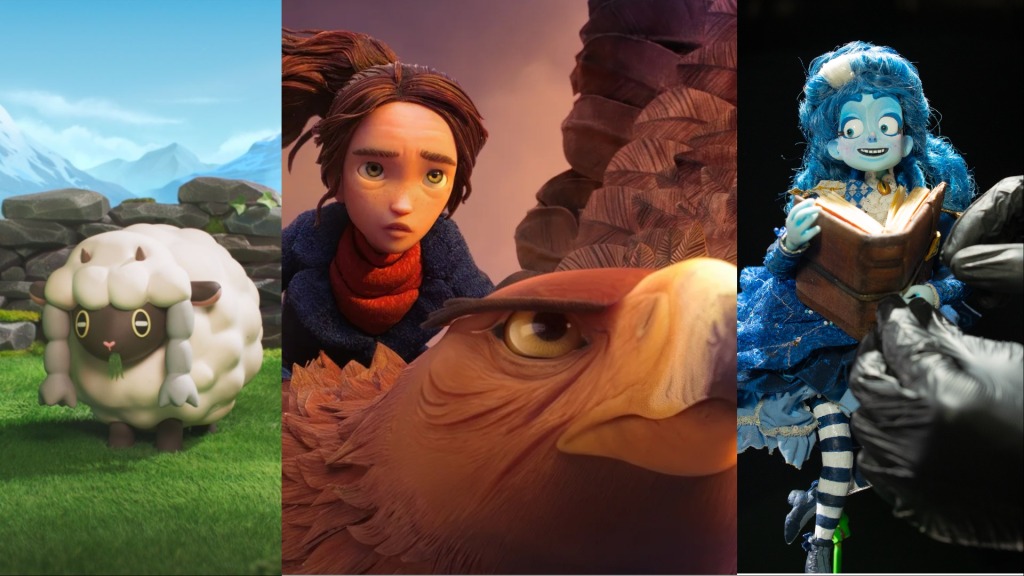
Although CGI decimated the output of 2D animation and took over stop-motion’s spot for special effects, there’s still a clear audience for handmade creativity. When the trailer for Laika Studio’s Wildwood was released, it spread far and wide on social media, racking up almost 90 million views in a month on YouTube alone. The studio, whose angular style produced such critically acclaimed films as Coraline and ParaNorman, has amassed a following for its approach to stop motion animation and their offbeat stories. Aardman Animations, the stalwart British studio behind Wallace And Gromit and Chicken Run, is as busy as ever, producing feature-length entries for each of their most famous series over the past few years. Later this fall, they will also release a new sequel for Shaun The Sheep, The Beast Of Mossy Bottom. The desire for stop-motion is even allowing the company to branch out into other IP; Aardman announced it would soon be bringing its familiar style to a new collaboration called Pokémon Tales: The Misadventures Of Sirfetch’d & Pichu.
Making Mexico’s first-ever stop-motion feature, Cinema Fantasma did more than set a precedent with I Am Frankelda. The Netflix film is an imaginative riff on Gothic romance, childhood fairy tales, and a dreamland of nightmares and monsters, even incorporating 2D-animated oil painting and hand drawn effects into its DIY aesthetic. The handmade process allows the characters’ hair, fur, feathers, and costumes to look charmingly old-school but organic, as these real objects are moved, photographed, moved, and photographed again for hundreds of hours to create the illusion of movement. Some background details, like pebbles or grass, move with the figures like they would in real life. It’s the kind of movement AI-generated images specifically can’t replicate without looking eerily unnatural. Both I Am Frankelda and the original series Frankelda’s Book Of Spooks end with behind-the-scenes footage showing how animators brought the characters to life and created certain effects and settings, illustrating and centering the filmmakers’ work as the credits roll, demystifying the process and reminding audiences of the human effort that it takes (and should take) to bring movie magic to the screen.
But even higher-profile filmmakers have been using stop-motion to tap into the nostalgia and power of the technique. The Mandalorian And Grogu featured the work of Oscar-winning FX artist and Mad God filmmaker Phil Tippett for a tactile robotic fight scene. In I Love Boosters, director (and AI skeptic) Boots Riley uses surreal stop-motion animation to bring to life otherworldly villains who use skinsuits to manipulate the media and an unwitting public. These briefer moments still access what the likes of Aardman, Laika, and Cinema Fantasma all find throughout their best films, pushing the boundaries of the old-school technique, dazzling audiences with technical feats and memorable characters.
As companies attempt to push generative AI into films, especially into animation, artists must remember that the result is only an approximation of what the prompter asks for, not what they dream up for months, draft, and redevelop before finally setting up the first camera shot. While AI offers tempting creative shortcuts, filmmakers like del Toro and Riley are clear-eyed about how AI has and can hurt the industry. It’s probably no coincidence that they’re investing in stop-motion. Filmmaking isn’t supposed to be easy—it’s supposed to look impressive, and on that front, this recent surge of stop-motion animation rejects giving up the ghost of human artistry.


 Keep scrolling for more great stories.