
R. Scott Gemmill and John Wells on making The Pitt "feel even more visceral" in season 2
"We don't want to make a show you can fold your laundry to. We want you to lean forward in your seat."
Photo: Warrick Page/HBO Max
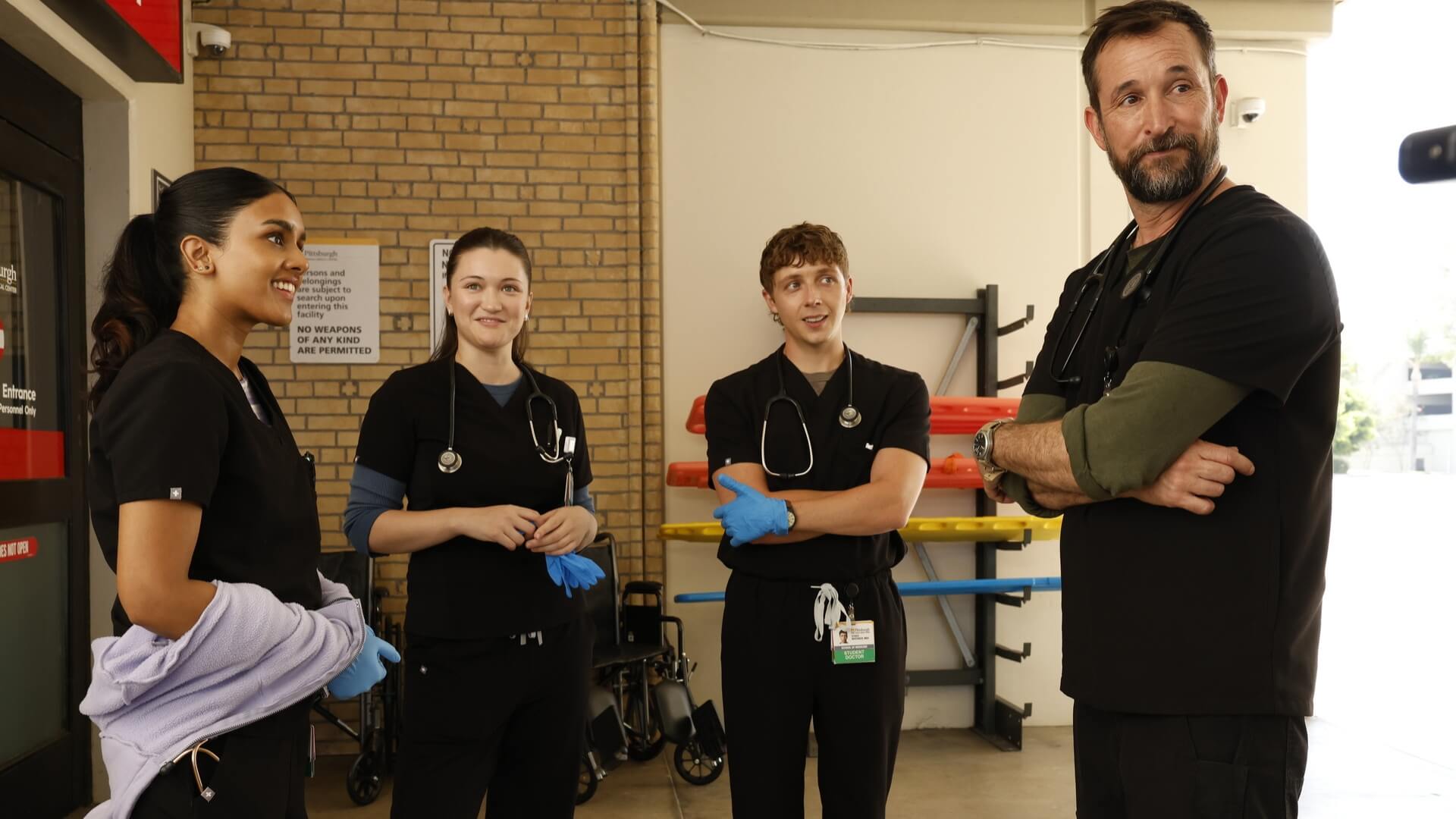
2026 has barely started, but over on The Pitt, it’s already a sweltering summer morning when Dr. Michael “Robby” Robinavitch (Noah Wyle) rides to the Pittsburgh Trauma Medical Center on his motorbike (sans helmet) in the show’s season-two premiere. HBO Max’s hit drama picks up 10 months after season one’s finale, which saw Robby and his ER colleagues dealing with a mass-casualty event after a rough day of emotional confrontations and mental breakdowns. The Pitt made a splashy debut and quickly turned into an awards juggernaut, nabbing multiple Emmys and, just yesterday, the top TV prize at the Critics’ Choice Awards. And in an increasingly rare feat in the streaming era, the show returns on January 8—almost exactly a year after its premiere—with higher stakes, new faces, and more tear-jerking cases.
In the upcoming batch of episodes, Robby chooses July Fourth as his last day before going on a monthslong sabbatical. So now he’s forced to collaborate with his replacement, Dr. Al-Hashimi (Sepideh Moafi), who arrives with ideas to improve the department. He also comes face-to-face with his mentee, Dr. Frank Langdon (Patrick Ball), who returns to work after a rehab stint. What’s more, Robby’s love interest, Tracy Ifeachor‘s Dr. Heather Collins, isn’t around anymore (although he may have another romance brewing). Season one’s rookie docs like Trinity Santos (Isa Briones) and Victoria Javadi (Shabana Azeez) have progressed to training med students, while everyone’s favorite nurse, Dana Evans (Emmy winner Katherine LaNasa), gets a young protege of her own. While coping with personal issues, they get bombarded with plenty of jarring cases. All of this might make The Pitt sound like a soapy medical drama. But the real-time format (in which each episode is one hour of a 15-hour shift) is the key here, helping maintain a gritty, immersive tone that sets it apart.
The crackerjack team of R. Scott Gemmill, John Wells, and Wyle were, of course, part of the long-running TV hit ER. So it’s not surprising that they quickly found their footing. Wells, who executive produces this procedural, swears by following the rigorous formula. “If it’s covering the whole story in only one hour, it’s difficult to keep it from being a bit melodramatic,” Wells says. “Since our arc takes place over multiple episodes or hours, hopefully the audience gets invested in it and bonds with [the person] like our doctors do. That’s what makes [season two] feel even more visceral.” He tells The A.V. Club that this setup allows them to tell stories in a way this genre doesn’t normally see, even if the topics that The Pitt covers might be familiar, like “a powerful sexual assault storyline” with a patient in the latter half of season two (a subject that has been portrayed on Grey’s Anatomy, The Resident, and ER).
 Keep scrolling for more great stories.