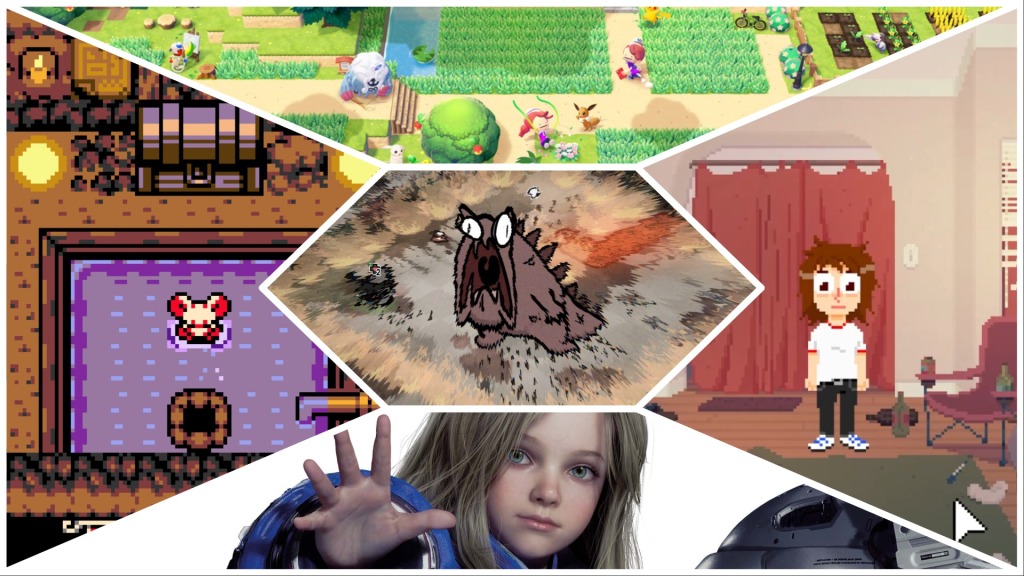
All of this swirls around in my head as I try to take critical stock of the first half of the year, where—aside from Capcom, which continues to buck trends by just putting its head down and powering through the business of making interesting games like Pragmata and Resident Evil: Requiem—the big-budget gaming apparatus seems to be increasingly at war with itself. I might have had fun with PlayStation 5 exclusive Saros (while also bemoaning the ways it felt like a less successful imitation of Housemarque’s earlier Returnal) or received my regular dopamine drips from the compulsively soulless Souls-like Nioh 3. But for every moment when The Big, Expensive Video Game Machine produced something with a genuine spark of life to it—hey, Pokémon Pokopia—it produced five that left me feeling as hollow as a Grand Theft Auto VI game box. In a climate where CEOs care more about pushing AI and “linked game economies,” where concurrent player counts are obsessively tracked by both industry insiders and the warring fans who unnecessarily imitate them, and where a single failure point can lead to dozens, if not hundreds, of people losing their jobs, the contraction of creativity and risk-taking in the big-budget spaces feels increasingly stifling. Can you really blame anybody for saying “Fuck it, let’s just remake Ocarina Of Time again?”
As ever, the indie spaces provide some respite. While 2026 hasn’t had its Balatro moment just yet—i.e., that point where a single low-budget game emerges from out of the collective gaming consciousness and smashes its far more expensive competition to bits—smaller studios and indie developers have nevertheless been responsible for pretty much all of the year’s best games. Meredith Gran finally released a heartbreaking sequel to her also-heartbreaking Perfect Tides. The Binding Of Isaac’s Edmund McMillen finally broke the Mewgenics curse and released a fascinating, fitfully frustrating combination of dead baby jokes and robust tactical combat that continues to colonize little portions of my brain. Inkle’s TR-49 might have been about 50 percent too chatty for my liking, but its core literary mystery was deeply compelling. Esoteric Ebb managed to stand out from an unexpected pack of Disco Elysium-likes by focusing on fantasy, while Mina The Hollower demonstrated what a relentless focus on room-by-room craft can accomplish. We even got a few great games from those rarest of beasts, independent mid-sized studios like the now-Justin-Roiland-free Squanch Games, whose High On Life 2 contains jokes I still annoy my friends by bringing up on a pretty regular basis. (It remains extremely funny to me that the space-based shooter game not only includes a John Waters cameo, but asks the legendary provocateur to expound at length about the joys of running a Spirit Halloween store.)
Even so, it’s a pretty small list—to the point that I wouldn’t feel comfortable assembling it into any kind of more robust ranking. (With a gun to my head, I’d call Mewgenics my game of the year so far, on “hours played” alone; I’ve spent way too much time this year breeding and killing those poor, grotesque little cats.) It also feels telling that almost everything I genuinely loved this year came out in the world of PC gaming, far outside the limits of tighter corporate controls. (I might not have loved a game like The Killing Stone, where incredible world-building and writing collided inelegantly with a core card-based strategy game, but I can’t deny that it’s the kind of thing that could only thrive in an independent ecosystem.) But maybe I’m just blinkered, letting great stuff slip through the cracks because I’m too distracted by the grunting and shaking of the dying machine. Which great games are missing from my rundown? We’ve got about six months left before GTA VI arrives to implode the entire industry in a black hole of developer excess while we scramble to find $1,000 hardware to play it—so we might as well make the best of the time we have left.


 Keep scrolling for more great stories.