In many ways, 2025 was an extremely good year for anime. As for output, there was a rich range of options: we received modern masterpieces like The Apothecary Diaries and Orb: On The Movements Of The Earth, which dug into historical injustices and asked big questions. There was a great variety of romance stories, from fluffy fun like My Dress-up Darling or the disaster lesbian hijinks of WataNare, to The Summer Hikaru Died’s mixture of queer longing and deliciously gross body horror.
There was action spectacle, with My Hero Academia turning in its best season in years and Gachiakuta matching its inner angst with external fits of explosive animation. Panty and Stocking successfully made a comeback 15 years in the making, and Tatsuki Fujimoto received not one, but two excellent adaptations of his work: the pitch-perfect Chainsaw Man – The Movie: Reze Arc and Tatsuki Fujimoto 17-26, an anthology that elevated his first few one-shots. On the more experimental end of things, there were visually interesting films like the latest Mononoke flick or 100 Meters.
Many anime fans rightfully bemoan the large amount of derivative isekai and other otaku-bait nonsense, but when you look at the 20-ish percent of shows that were actually good, there’s a lot of variety: vampires, adaptations of beloved early 20th century literary novels, multiple gay bands, the strangest take on Kris Kringle you’ve ever seen, apocalyptic hotels run by robots forced to weather centuries in the absence of their human masters, and so on. Sure, most of these were adaptations of existing manga and Light Novels, and it would be nice if there were more out-there originals (like Apocalypse Hotel), but it’s a bit difficult to complain given this breadth of options.
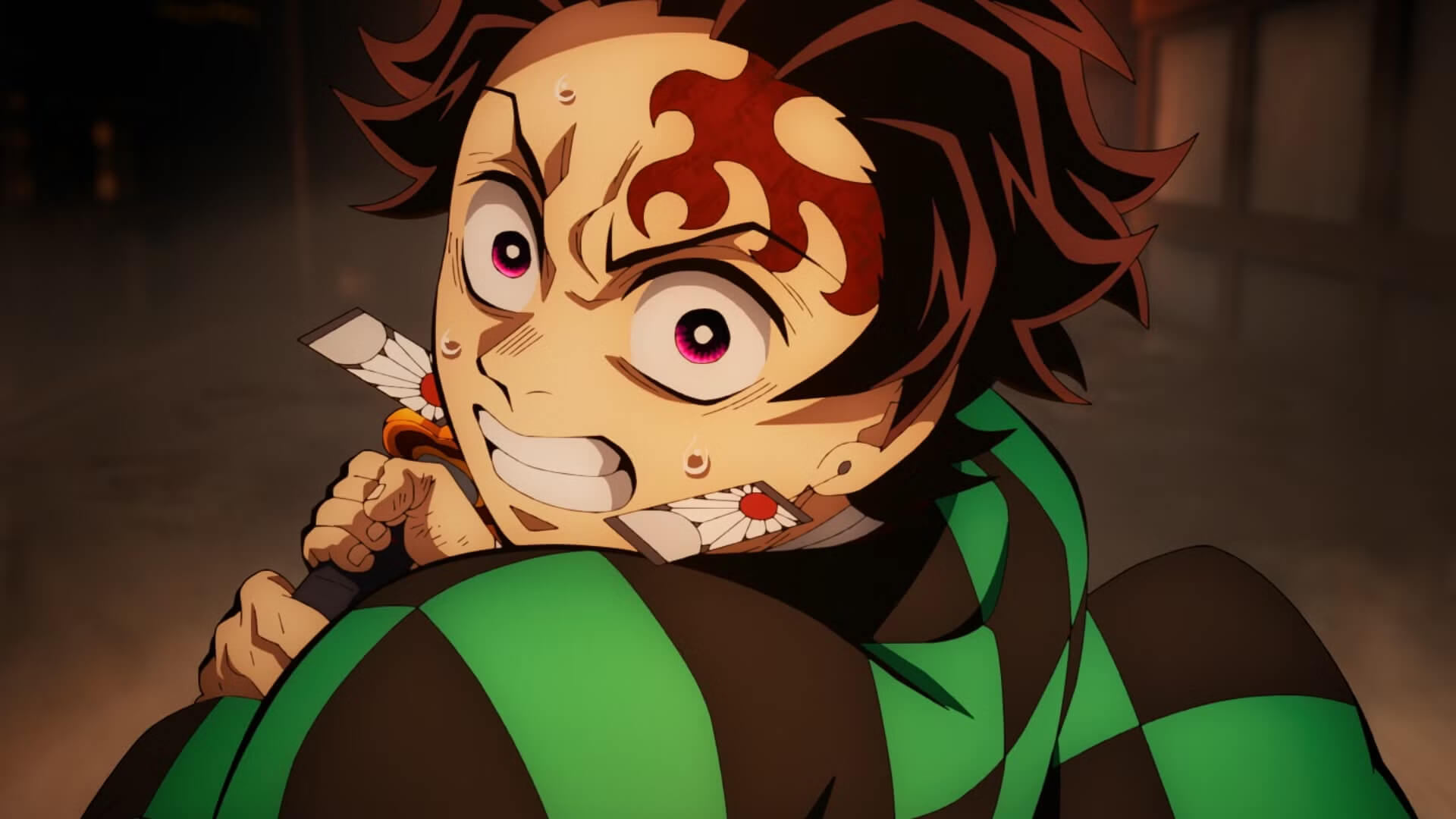
And while some of these series are a bit underwatched, that’s certainly not something you can say about this year’s biggest anime hit: Demon Slayer: Infinity Castle. This first film in a trilogy that will adapt the final arc of this uber-popular battle-shonen series has grossed $780 million at the global box office. It is the highest-grossing film produced in Japan, the highest-grossing anime film in the history of the North American box office, and grossed more than both of this year’s MCU movies. And it did all that while requiring audiences to have watched the previous four seasons of a TV show (at least if you wanted to understand what’s going on). But perhaps the most exciting detail for entertainment industry bean counters is how much it cost to make the film: an estimated $20 million—even if you don’t factor in marketing and other costs, that’s quite a profit margin. Hollywood has certainly noticed, as evidenced by Oscar-winner Chloé Zhao launching Kodansha Studios, an outfit that will be adapting manga from manga publisher Kodansha’s large catalog.
This movie’s absurd popularity is one of the clearest signs of the medium’s ascendant global popularity. 2025 is simply the continuation of a general trend, though. According to the Association of Japanese Animations, the anime industry saw a 14.8% increase in market value from 2023 to 2024, which was the second-highest annual increase ever (the first was in 2019, which overlaps with the COVID-19 pandemic). The vast majority of that increase came from overseas markets. Meanwhile, anime is very popular with younger viewers in particular, with a 2024 survey from Vox Media finding that 42% of Gen Z watches anime weekly compared to 3% of Baby Boomers.
All of this is to say that by most surface-level metrics, you would assume that the anime industry is in a sort of Golden Age: the medium’s global popularity is on the rise, there are far more shows being made each year than in decades past (close to 200 a season), and of these, there are dozens of worthwhile ones to watch every year, so many that even the most dedicated fans of the space will struggle to keep up.
However, there’s a counterintuitive reality at play: somehow, the anime industry is doing so poorly financially that this increase in global popularity and recognition has been described as a “profitless boom.” For example, the financial research firm Teikoku Databank found that eight anime studios had already folded in 2025 as of September, which is tied for the most closures through September in the last decade. Despite general revenue increases, only 40% of anime studios saw profits increase in 2023, in large part because labor shortages caused production cycles on many series to go for longer than initially expected.
As for why this labor shortage exists, the short answer is that working conditions for those in the industry remain very bad. In 2024, it was found that more than half of those in the anime industry work more than 225 hours a month (close to 11 hours a day if operating on a five-day work week), which was well over the country’s national average of roughly 163 hours. And on top of these long hours, a survey from Nippon Anime & Film Culture Association found that 40% of workers earned less than 2.4 million yen (around $15,500 by current exchange rates) in 2023, which is well under the national average for that year of $49,200.
This low pay has created a persistent brain drain where animators and other workers feel forced to switch fields, a situation that has made it quite difficult for studios to find key animators, the artists who create the most critical frames of animation (called key frames) for a given cut—in the modern anime industry, finding enough key frame animators for a project is often a major production bottleneck. Adding to this problem is the AI garbage. While generative AI nonsense hasn’t fully infiltrated the space yet, many are worried that companies will begin to attempt to replace in-between animators (the people who animate what is in between the key frames) with machine-generated images. If implemented across the board, this could destroy the future of the industry by making it impossible for artists to get the experience they need to become key animators. When you combine all these factors with the general uptick in the number of anime coming out each year, there is a huge talent deficit in the space, something that has led to a widening gap between the best-looking productions and the worst ones.
For example, while it is very much beating a dead horse, the latest season of One Punch Man is a fairly blatant example of a production that wasn’t given the resources to succeed, and when you compare the quality of its animation to some of the best-looking action shows of the year, like My Hero Academia, the gap is impossible to ignore.
While it’s an oversimplification, it’s probably fair to say that if studios received more of the profits on their series, working conditions in the industry would at least marginally improve (although more structural changes would be needed to prevent CEOs and upper management from simply absorbing these gains).
As for why studios aren’t making more money, this partially comes down to how most anime is financed: via a production committee. A production committee is a group of companies that come together to fund a series or film, with a corporation’s financial contribution to the committee proportional to how much it earns from the project. Because these companies front the cost, they reap most of the benefits when an anime is successful.
Obviously, the major benefit of this approach is that anime studios don’t have to worry about incurring severe debt to create a new show, but it also limits how much they can gain while also giving these companies the power over a show’s budget. In a video translated by Animator Dormitory’s YouTube channel, Gainax co-founder Toshio Okado explains how the production budgets for many anime have remained relatively stagnant despite the space’s increasing popularity, keeping animator pay low and many studios struggling. It basically functions as an even more exaggerated version of how modern economic systems work, where profits are sucked up by upper management, leaving those who actually created the product with scraps. The situation is so untenable that some have speculated that the industry may collapse entirely—even if this is an alarmist take, it says a lot that, despite record revenue and popularity, the industry is in enough crisis that this is at all plausible.
If there’s a silver lining here, it’s that circumstances aren’t uniformly terrible at every anime company. To name the most extreme example to the contrary, the beloved studio Kyoto Animation continues to be the benchmark for what the industry could be; it is known for fair pay, offering extensive training programs, hiring and promoting women at higher rates than other studios, and offering far more reasonable work hours than its peers. The result? An incredibly visually consistent lineup of some of the best animated TV shows ever made. Most freelance animators are often paid by frame instead of by the hour, incentivizing speed over quality. By contrast, since KyoAni has full-time staff, they are rewarded for quality instead of quantity. When combined with its extensive training programs and minimal outsourcing, the studio is capable of a level of quality rarely seen elsewhere.
As for how the studio can afford this more methodical approach, Kyoto Animation is frequently a member of the production committee for its own shows—in other words, the studio earns far more from its successful works than studios that aren’t on production committees. It certainly isn’t the only studio that does this, either: while not the norm, many of the most well-known studios do this as well, including Ufotable, the outfit behind the Demon Slayer anime. While it is an oversimplification to say that every studio should simply sit on the production committee for its own series, as this can cost a lot of money, incurs more risk, and requires some degree of pre-existing cache, it is better that some of these studios are reaping these benefits instead of none.
There’s another model, too: forgo a production committee entirely, as MAPPA did with Chainsaw Man. Admittedly, this was only possible in this case due to the company securing the series’ budget through “bridge financing,” a specific form of loan which was provided by the Japanese government, in this case. Specifically, it was provided by the Cool Japan Fund (CJF), an initiatve to project Japanese soft-power by backing the country’s globally popular entertainment industry (as a side note, it is somewhat hilarious that a series about an orphaned teenager being extorted by the Japanese government is the one chosen for this initiatve, but hey, maybe they hadn’t read the manga or assume that most viewers aren’t thinking about it too critically). Those involved with the project believe that the CJF will be more involved in financing anime in the future.
But still, as previously mentioned, these solutions really only apply to the top dogs in the industry. These methods of circumventing the core problem—production committees absorbing most of the profits—will likely further widen the gap between the most popular studios and everyone else. And even here, these benefits don’t necessarily bleed down to staff; even after directly financing Chainsaw Man, MAPPA was embroiled in a controversy where poor scheduling led to brutal crunch conditions and animation dips during the production of Jujutsu Kaisen. These solutions are Band-Aids because studio management still has complete control over the fate of its animators. If these studio heads want to squeeze for greater profits by taking on more shows, they will do so, even if it hurts their staff.
Like with most areas of labor, it will take a more structural solution, like animator unionization, government regulation, or greater changes to an overarching economic system, in addition to studios getting a bigger piece of the pie, for the well-being of these creators and the integrity of their art to be prioritized. Because while these animators, directors, screenwriters, and more have managed to produce countless incredible series that resonated worldwide despite working in an industry that’s constantly on fire, imagine what these talented people could make if their work were valued as it should be? At the very least, there would probably be a lot fewer terrible seasonal isekai; if nothing else, that would be a big win for humanity.


 Keep scrolling for more great stories.