It’s Spotify Wrapped season, that special time of year when all your friends share what made-up genre defines them and reveal their “listening age.” It’s a difficult time for Apple Music subscribers. And who even knows what kind of FOMO the Deezer faithful suffer? The message from the streamers is clear, though: Everyone uses these services, and if you want to be part of the fun, you’d better rent your music from them, too. This used to get to me, but thankfully, last September, I finally did what my gut had been urging me to do for years: I quit streaming music.
It didn’t take much effort or planning. One day, my wife said she was canceling her Apple Music subscription, and I followed her out the door. I had been plotting my exit for a while and needed the extra push. I was tired of renting all my music from Apple and forgetting those albums as quickly as I added them to my library. My friends were on the same wavelength, regularly discussing dropping the family plan they shared, purchasing CD players, and modifying iPods. (Do these guys know how to party or what?) All of it seemed so much more tantalizing and engaging than letting my interest in music atrophy, which it had been slowly doing over my decade or so on Apple Music. Convenience is king, and streamers offer subscribers an impossible deal: The entire history of recorded music for as low as $0 a month. But all that choice came at a cost. I began to suspect that flattening all of the world’s music onto a single distributor, making all genres and artists accessible at all times, had degraded my relationship with music as a whole. I was right.
In her validating book, Mood Machine: The Rise Of Spotify And The Costs Of The Perfect Playlist, journalist Liz Pelly lays out, in incredible detail, how streaming was changing listening habits and reshaping people like me into Spotify’s ideal customer: the “lean-back listener.” Pelly goes deep on the “ghost artists” exploited by Spotify to fill out lo-fi hip-hop playlists to study or relax to, the same artists currently being replaced by AI, and explains that streamers aren’t looking to deepen connections to music. They’re looking to keep you using Spotify. “In the streaming era, the industry identified a new type of target consumer: the lean-back listener, who was less concerned with seeking out artists and albums,” Pelly writes, “and was happy to simply double click on a playlist for focusing, working out, or winding down.” After a decade on streaming, I had become a lean-back listener.
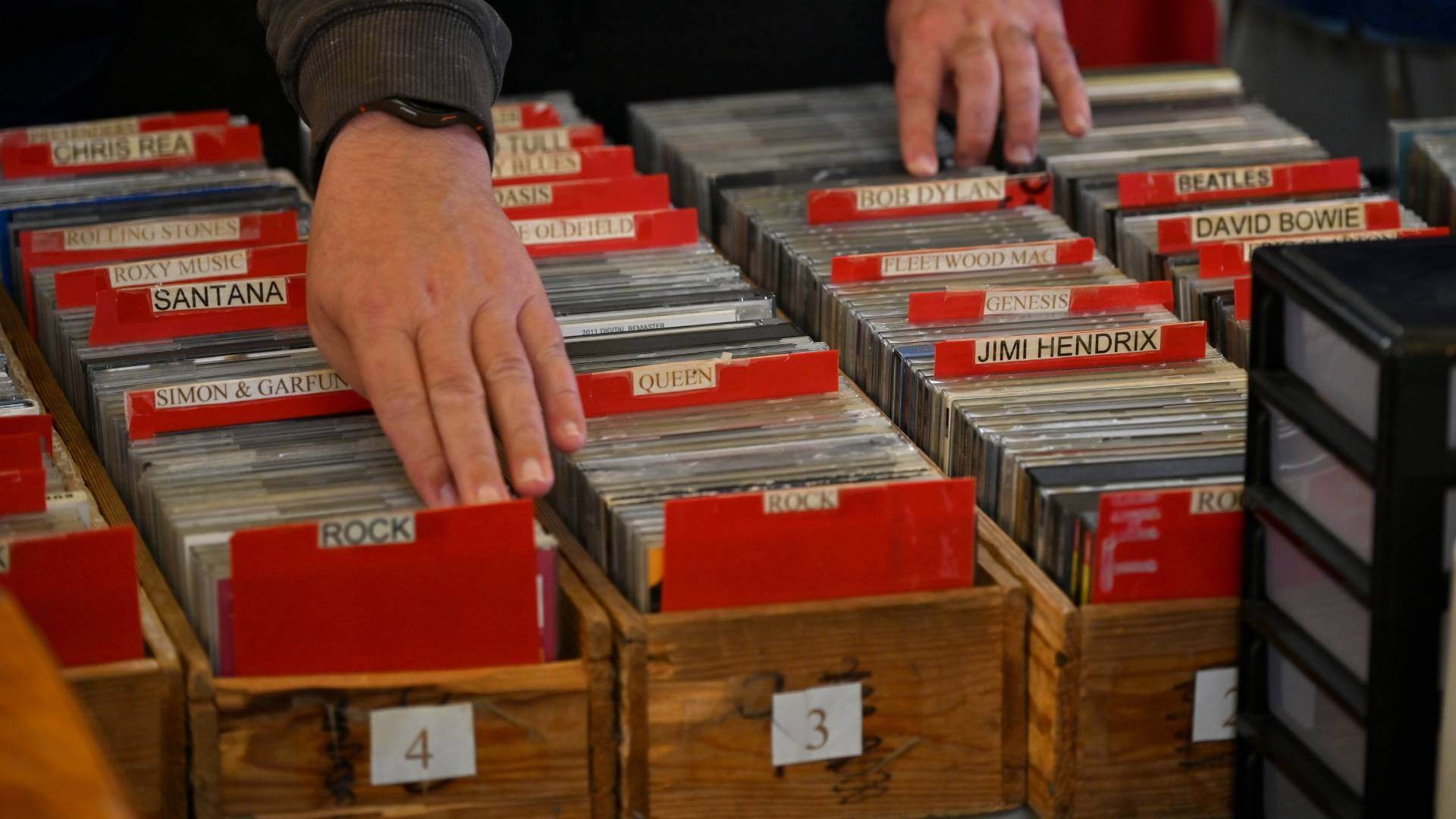
Telling people you quit streaming is the modern equivalent of “I don’t own a TV.” It might not help at parties, but taking charge of my listening habits has also reignited my relationship with music, making me more enthusiastic about what I listen to and more likely to sit with things that don’t immediately click. The albums are the same, but on streaming, there’s no friction between acquiring an album and listening to it. Low-effort acquisition led to low-effort consumption, and as soon as I put even the slightest bit of work into it, I found more to love. Reading liner notes, admiring album art, and loading a CD into the $30 burner we bought after canceling all made a bigger impression than replaying the same tired playlists I would turn to when decision paralysis made choice impossible. After all, a smaller collection is more welcoming to the lost art of letting an album grow on you. If I took the time to seek out music, be it at the library, the record store, or on Bandcamp, I would be more likely to connect with it.
The hesitation to leave streaming is understandable. Again, it’s an offer few could refuse, and most don’t. Spotify Wrapped makes a strong case that everyone you know is locked in the walled garden. Then there’s the obvious question: Where will I get my music? The first thing you notice when you quit streaming is that you either don’t have a music collection anymore, or it hasn’t been meaningfully updated in years. It’s hard to imagine how vital my CDs, records, and thousands of MP3s, which had traveled across computers, hard drives, and iPods, had been to me. 10 years of streaming, and nothing to show for it. It turned out to be a gift because rebuilding my collection has been one of the few bright spots in an otherwise dark 2025. Those abandoned worlds of record shopping and MP3 trading carried on without me. Used CD bins were still chock-full of classics for dirt-cheap prices; Discogs.com connected me to independent resellers around the world willing to sell me Sticky Fingers for $4; Bandcamp could allow me to buy from artists directly so they got paid while I got something tangible for my money; and there was an entire community of power users dying to teach me how to mod a 20-year-old iPod for seemingly endless hard drive space and battery life. Almost immediately, music went from background noise to a life-enriching hobby.
It’s no surprise, then, given streaming’s exploitation of emerging artists, investments in AI-powered drone warfare, and the slow, creeping spread of slop into the algorithm, that artists are leaving platforms, too. After Spotify’s CEO invested $700 million in AI weaponry, Deerhoof pulled their music, calling Spotify “a data-mining scam masquerading as a ‘music company'” that’s “creepy for users and crappy for artists.” “We don’t want our music killing people,” the band said in a statement. “We don’t want our success being tied to AI battle tech.” This made sense to Bay Area indie stalwarts Xiu Xiu, which followed suit, offering the scorched Earth statement: “Although the financial practices of all streaming services are acutely anti-musician, the actions of Spotify to use the profits they made from essentially stealing music in order to murder people to make even more money are almost beyond comprehension.” Australian psych-rockers King Gizzard & The Lizard Wizard also left over the investments, and unsurprisingly, the Gizzard vacuum was filled by AI clones. (Spotify assures us via statement that the AI Lizard Wizard violated platform policies and received no royalties, but anyone who thinks Spotify’s running from AI music is kidding themselves.) In October, another backlash emerged as recruitment ads for ICE began running on Spotify. How many of these compromises are we going to swallow because these services are convenient? Those no longer doing the mental gymnastics to justify staying on streaming are already standing out in a forest of Linktrees. For the last two years, Pitchfork has named records unavailable on streaming platforms its best albums of the year: Cindy Lee’s Diamond Jubilee in 2024 and Los Thuthanaka’s self-titled album in 2025. They seem to have “come out of nowhere” because they’re not available in obvious places. Listeners would have to do a little work to find them, and in both cases, discovery added to the experience.
It’s all a drop in the bucket; these companies are too big to fail. Spotify, Apple Music, and their ilk are undeniably convenient and give many people exactly what they want: Cheap music and shareable year-end stats. But convenience comes at a cost, one I was tired of paying: a monthly fee to have my relationship with music diminished. There’s more to music than listening, and as soon as I stopped streaming, I could hear everything much clearer.


 Keep scrolling for more great stories.