Paul McCartney either had a very good seventies or a terribly bad seventies; it just depends on who you’re talking to. In my experience, those taking the side of “bad” tend to be Beatle purists or McCartney haters. The “good” lobbyists fall somewhere in the middle—the Fab Four’s breakup doesn’t negate Sir Paul’s solo endeavors for them, nor do they loathe his Wings discography. Personally, I think McCartney had a pretty nifty run 50 years ago: the lo-fi, done-all-by-himself McCartney; the proto-indie-pop masterpiece Ram; the commercial, career-restoring excellence of Band on the Run; that sprawling Wings Over America live tape; the criminally overhated London Town. Heck, even the mostly faceless Back to the Egg gets a little whacky here and there. I tend to love that decade’s McCartneyatrics unconditionally, be they good, bad, ugly, or “Wonderful Christmastime.” People say, “Why do you have a Paul McCartney tattoo?” I tell them, “Because I like Paul McCartney.” I like years that begin with “la, la, la, la, la” and end in “ding-dong, ding-dong.”
The man’s first post-Beatles decade is like a braided essay, one bookended by records he wrote, recorded, and produced all by his lonesome. McCartney? Great, because it has “Every Night,” “Junk,” and “Maybe I’m Amazed.” McCartney II? Once you get past “Coming Up,” “Temporary Secretary,” and “One of These Days,” you’re left on this strange, experimental playground with little commercial value. Hell, the best McCartney II song—the 10-minute synth sojourn “Secret Friend”—only exists in full on a later reissue.
After Back to the Egg flopped in June 1979, McCartney retreated to his farm in Scotland to make his second self-titled album—starting with “Check My Machine,” which sampled a Merrie Melodies cartoon. He worked with just a 16-track recorder and a couple microphones, recorded drum parts in his kitchen or bathroom for the echo, and went extra heavy on synthesizers and sequencers in an attempt to make peace with new wave music. Talking Heads, John Cage, and Luciano Berio were nearby inspirations but not direct influences. Some have compared parts of McCartney II to Sparks and Kraftwerk. I just think it sounds like Macca fiddling with keyboards because that was the timely thing to do.
But McCartney II wasn’t his first crack at electronics. Some of his tape loop symphonies made it onto “Tomorrow Never Knows,” and he’d even fantasized about doing an electronic version of “Yesterday” with Delia Derbyshire at one point. And he’s kept up with that itch ever since, starting the Fireman duo with Youth, producing the Liverpool Sound Collage for one of Peter Blake’s art exhibits, and, in 2005, releasing Twin Freaks with Freelance Hellraiser. Digital eccentrics aside, the McCartney II songs were always going to be a tough sell with the Macca faithful. Here was Europe’s greatest romantic—a sap to a near-hatable fault—making… techno music? Most folks hate change, especially rock and roll fans. But those farm sessions didn’t totally wipe out the sugary stuff. “Waterfalls” is right there, nestled proudly between “On the Way” and “Nobody Knows,” though I’d have liked “All You Horse Riders / Blue Sway” in that spot instead. Those caffeinated grooves would’ve made for a much better trick than the TLC-predating balm.
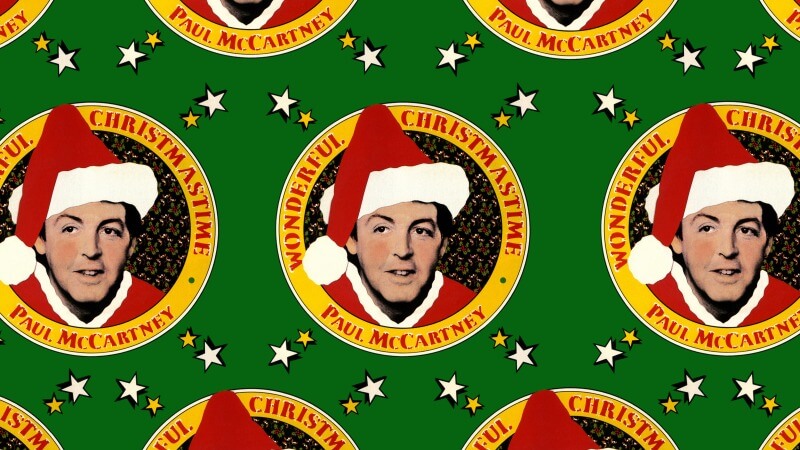
By the end of that summer, McCartney had a double album in the tank. But when a UK tour came calling for him and Wings, all the songs got tossed aside… except for one: “Wonderful Christmastime,” written and recorded by McCartney on August 30th and pushed out to stores by mid-November. It was his first solo single in eight years, following his and Linda’s “Eat at Home” from September 1971. It didn’t even chart on the Hot 100 upon release. Instead, “Wonderful Christmastime” achieved a modest #83 position on the now-defunct Cash Box Top 100 and peaked at #6 on the UK Singles Chart. Five years later, it surged into the Top 10 of Billboard’s special Christmas Singles chart, and the single finally made its Hot 100 debut in 2018 before rising as high as #26 in January 2024. Unlike “All I Want For Christmas Is You,” which has turned into a perennial #1 hit every December, “Wonderful Christmastime” has never quite exploded in a way you’d expect a former Beatle’s holiday tune to. That’s probably because a lot of people hate “Wonderful Christmastime.” For many, there’s just simply no room for wooshing in the Yuletide.
I think the song is a perfectly sentimental jamboree—repetition as a remedy for the innocuous—and I don’t take its opposition too seriously. Like the Beatle naysayers that still dare walk among us, I find little redemption in anyone who embraces incorrectness for the sake of being contrarian. What stripped you of such joy? When the days get shorter, the thinkpieces get stupider. December comes and suddenly Paul McCartney never wrote “When I’m Sixty-Four” or “Maxwell’s Silver Hammer” or “Ob-La-Di, Ob-La-Da”—only “Blackbird” and “Yesterday.” The megawatt personality of “Wonderful Christmastime” is maligned, McCartney’s songcraft gets blotted with an imposed seriousness that only tells half the story, and I cry in Yamaha CS-80. NPR recently ran an All Things Considered article about the polarization of “Wonderful Christmastime” and Ted Montgomery, a cornball crank who feigns authority because he’s written a few books on Macca and his Beatle adjacencies, called the song amateurish, banal, and embarrassing. The excuse for his gripe? “It’s all synth… I like real instruments.” Tell me, are the “real instruments” in the room with us right now, Ted?
I am generally opposed to most of Paul McCartney’s eighties output. I’d rather stick forks in my ears than hear “Say Say Say” and “Ebony and Ivory” again, and I detest the cursed trio of Pipes of Peace, Give My Regards to Broad Street, and Press to Play, but I am a card-carrying servant to the splendid Flowers in the Dirt now and always. McCartney II is a hoot because it bowls me over and pisses me off. I won’t submit to what’s considered “cool” now and act like I love “Temporary Secretary,” or anything—even though I did hear Macca sing it in Cleveland in 2016 and was positively chuffed at it being a precursor to “Let Me Roll It,” the dopest song of all time. But “Coming Up” is one of Macca’s best solo works, something of a mid-life-crisis sequel to “Got to Get You Into My Life,” if you will. The McCartney II experiments, like the videogamely “Front Parlour” instrumental, the Elvis wobble of “Bogey Music,” the bizarre clangs trapped beneath “Frozen Jap,” and the plastic ambience threaded into the spacious “Summer Day’s Song,” set forth a language that would cross the T’s of 1980s pop and dot the I’s of a forthcoming Blog Era. It’s serious-as-a-heart-attack music that sounds nothing of the sort, spliced together by a curious egghead isolated by the boggy whisky ports of Campbeltown. But I am by no means suggesting that we give McCartney II some critical reappraisal à la Pitchfork rating Metal Machine Music an 8.7. That would be silly. McCartney II is like an 8.6 at best.
But to love “Wonderful Christmastime”—and I mean really love it—I reckon you must first take the song at face value. It’s a Christmas tune. You’re not supposed to think about it in the same way you’d think about, say, “Hey Jude” or “The Long and Winding Road.” It’s novelty music for a novelty holiday, fodder for a worldwide gimmick. Why would I ever listen to “All I Want For Christmas Is You” in the same context as I do “Fantasy”? Not all parties are decorated the same, nor should they be celebrated as such. “Wonderful Christmastime” isn’t rock and roll or pop, but a satisfying, looping sense of completeness. The song goes on and on for four minutes, latching onto its listeners like a parasite. It’s not the world-weary, pocket revolution of Lennon’s “Happy Xmas (War is Over)” but something far more sinister: holly-jolly whimsy that’s hackneyed, contagious, and nets McCartney about $500,000 in royalties each year.
No one is saying that “Wonderful Christmastime” is a “good song”; I’m saying it’s a great song, and it’s great because you hate it. Those bleepy keyboard motifs, that “ding-dong, ding-dong” bridge, and those oddly-gated, semi-overdriven guitar solos all keep coming back, year after year, just to bug us. The song lives in our cars, in department stores, in doctor’s office waiting rooms, in a friend’s generic holiday party mix. I am floored that the 1970s ended with such a joyous little nugget of vapid nonsense. Most of the Christmas music I like I’ll queue up in April, June, whatever. The entrapments or criteria of winter listening don’t matter to me very much anymore. But I always save “Wonderful Christmastime” for those post-Thanksgiving days, when the dinners wind down and the FM stations switch their mixes from Top 40 to seasonal, because I know it’ll be there to greet me. It always comes back to torment us. You can’t miss those tinny synths, nor should you ever want to. Let’s get our hearts right this Christmas. The feeling’s here, so come and have yourself a piece.
Matt Mitchell is Paste’s music editor, reporting from their home in Los Angeles.


 Keep scrolling for more great stories.