
20 maddening (and 5 alright) news stories from 2025

Hardly anyone would consider 2025 their favorite year, but at least we got Vince Gilligan back on TV.

20 maddening (and 5 alright) news stories from 2025

2025 will probably not be remembered as one of as one of our best years ever. We began with devastating fires in Los Angeles County and watched a right-ward shift in the government bleed into most areas of pop culture and media. It was a long year, an exhausting year, the kind of year where at the end it’s hard to believe Anora winning Best Picture or the premiere of A Minecraft Movie happened within the past 12 months. 2016 and 2020 were years that became memes because they felt so awful at the time; that hasn’t happened with 2025. Instead, 2025 has felt more maddening and unbelievable, at least from where we’re sitting. To try to make sense of it, we’ve put together some of the biggest events of the year to remember together.


1. Los Angeles experiences devastating wild fires

First, and most importantly: The Eaton and Palisades wildfires that both started in Los Angeles County in January of 2025 were two of the deadliest such fires in California history, killing 30 people during a one-month run through the southern portion of the state. They were also massively destructive, doing something like $20 billion in damages, with those impacted ranging from huge numbers of California’s homeless population all the way up to a number of big-name celebrities, many of whom had their homes burnt to the ground by the raging fires. The destruction, taking place as it did close to the heart of the entertainment industry, had numerous knock-on effects even beyond the horrifying costs to human life, some of them directly impacting the pop-culture world. That included everything from numerous benefit concerts, running under the FireAid name, to the total disruption of 2025’s carefully set awards show schedule, as meticulously planned dreams of Hollywood hobnobbing ran directly into the hard realities of how much of the area was left in ruins by the fires. [William Hughes]

2. Karla Sofia Gascon posts her Oscar chances away

You wouldn’t know it now, after Anora practically ran the table, but there was a moment when Emilia Pérez and its lead actress Karla Sofía Gascón seemed to be the frontrunners at the 2025 Oscars. Then came social media and its habit of preserving every tasteless, ill-considered, and downright racist comment from those who tweet them. And unfortunately for her, Gascón tweeted a lot of them. After accusing fans of her fellow nominee Fernanda Torres of concocting some elaborate hate campaign against her, journalist Sarah Hagi did just the slightest bit of digging and found a trove of hateful tweets from Gascón. After the tweets, which included nasty comments about the then-recently-murdered George Floyd, were discovered, Gascón continued to make it worse, suggesting there was a conspiracy to tank her campaign. Though finding public social media posts hardly takes a conspiracy, Gascón’s Oscar campaign was, in fact, tanked. [Drew Gillis] 

3. Jason Isaacs’ penis-gate


Mike White tried his darnedest to give The White Lotus’ third season some juicy water-cooler moments, ranging from Carrie Coon monologue to Parker Posey’s accent to incest. Still, he couldn’t keep the ensemble from giving everybody things to talk about outside the show’s storylines. Walton Goggins and Aimee Lou Wood faced their fair share of this, as did Jason Isaacs, who couldn’t help but ignite headlines with his statements. Sick of being asked whether he wore a prosthetic penis in one of the episodes, he called it a “double standard.” He specifically named young female actors like Anora‘s Mikey Madison and The Substance’s Margaret Qualley, saying, “no one would dream about asking them about their genitalia.” Um, is he new to the business? Has he not seen how many times women are continually, unabashedly, excessively asked about their bodies, or has that been the topic of discussion? Anyway, he made an apology, so we can all stop thinking about his penis now and forever. [Saloni Gajjar] 

4. Paramount goes full villain

It’s not like the international megacorporations were on the side of the people before 2025, but the second Trump inauguration brought out the worst in so many of them. Nowhere was this more obvious than at Paramount, which spent most of its year trying to complete mergers by bowing to the current presidential administration. Trump returned to office with a bone to pick with 60 Minutes; the result was an effective overhaul of CBS News, with right-wing opinion columnist Bari Weiss put in charge of one of the United States’ most venerable journalistic institutions. The company sent Trump $16 million to make the lawsuit go away and eliminated its one-time Diversity, Equity, and Inclusion initiatives in the process of getting FCC approval. The company placed Bari Weiss, formerly an opinion columnist for The New York Times and the founder of The Free Press, in charge of CBS News, and the ramifications of that probably won’t be fully clear for some time. Then, it turned its lasers toward Warner Bros. Discovery, attempting to make an even bigger media conglomerate and control yet another major mainstream news source. Despite WB deciding to go with Netflix’s offer instead, Paramount is not ready to say die, potentially setting the table for another whole year of these shenanigans. [DG]

5. Lawsuits run amok

There was a time when you couldn’t open social media or be on the internet without being bombarded by unsolicited updates on the Blake Lively versus Justin Baldoni debacle. The It Ends With Us co-stars have been under media and public scrutiny ever since rumors surface of behind-the-scenes issues while shooting the movie. After the Gossip Girl star officially filed a sexual harassment complaint against her co-star/director in late 2024, Baldoni sued Lively and her husband, Ryan Reynolds, for $400 million in early January. This kickstarted a long year of very public legal battling between both parties—and a trial awaits in 2026. If you’re wondering why TikTokers are suddenly law experts (just kidding), now you know. And we can’t talk about the year in lawsuits without Trump, who launched a number of them against the media as an obvious intimidation tactic, including the BBC, with Paramount and YouTube setting, because bending over backwards for him probably felt like the most convenient option. [SG] 

6. Warner Bros.’ box office success makes it a better asset for monopolies 

Before we get to everything bad that happened, it’s worth noting that Warner Bros. Pictures had a very good year at the movies. Considering the studio’s 2024, which saw underperforming blockbusters and Oscar hopefuls Furiosa and Joker: Folie À Deux pushing the studio toward collapse, WB rebounded with a murderer’s row of hits, including the year’s biggest domestic grosser, A Minecraft Movie. Since installing Michael De Luca and Pam Abdy as the co-CEOs of Warner Bros. Pictures, their filmmaker-and-originality-first edict has led to an unprecedented run of success, topping the box office eight times and making an ungodly amount of money along the way. But more than money, it made real movies worth seeing in the theater, like Sinners and One Battle After Another. The studio successfully launched a new cinematic universe and gave audiences a Superman worth cheering for. It balanced franchise installments like Final Destination: Bloodlines with bold, original nightmares like Weapons, movies that people continued to discuss long after the grosses came out, which gave a bump to the recently, perpetually rebranded HBO Max. No wonder everyone wants to buy it all of a sudden. [Matt Schimkowitz]

7. Marvel tries a soft reset


Marvel’s post-Endgame run of movies could be considered shaky at best and disastrous at worst. 2025 didn’t help things. In a year designed to be a soft reset, Marvel missed the mark where it mattered most: Making new star characters. The massive investment in getting fans on board with Sam Wilson, who had a whole TV show devoted to him taking the shield, had been for naught as Captain America: Brave New World opened to some of the worst reviews in MCU history. Others fared better, but not much. The pretty good Thunderbolts overperformed for a movie about a bunch of side characters. But the most significant failure was Fantastic Four: First Steps, Marvel’s biggest hit of the year, which had none of the staying power or fan enthusiasm of last year’s Deadpool & Wolverine. All of it seemed like a non-starter after Marvel announced the massive cast of Avengers: Doomsday via a comically lengthy chair-back reveal, signaling to viewers that their old favorites were returning to the fold. Heading into 2026, it’s all on the Avengers to right a ship that has long since passed. [MS]

8. The AI omnibus

If there has been one specter hanging, like six extra thumbs jammed haphazardly into a hand that doesn’t quite connect at the wrist, over the world of entertainment in 2025, it has been that of artificial intelligence. It’s not just that the fights over generative AI over the last 12 months seemed to open up new fronts every single day—from the bizarre spectacle of supposed “AI actress” Tilly Norwood, to controversies rocking even the most critically lauded corners of the video game world, to Disney’s last-minute decision to plant a big, multi-mouthed kiss on OpenAI’s cheek—but that absolutely none of them seem to be in any danger of being resolved. Although authors have eked out a few wins in court cases over the tech types who allegedly stole their works en masse to feed into their digital woodchippers, and groups like SAG-AFTRA have pledged to fight AI encroachment wherever they can, the Trump White House has not only declined to regulate the multi-billion dollar industry, but actively worked to stop states from doing so themselves. The whole thing has left 2025 as a year of transition for artificial intelligence—but whether that transition winds up being into the glorious technological future that the billionaire class keeps promising, or the total financial collapse that every single other tech bubble like this has inevitably produced when those same billionaires’ bullshit runs out, remains, at least ostensibly, to be seen. [WH]

9. The Octagon comes to the White House

The re-election of Donald Trump was obviously going to unleash the horrors of racism, bigotry, xenophobia, and state-sanctioned violence at home and abroad. That’s what he ran on. But by flooding the zone with shit, the MAGA movement found new cultural lows to represent the country at large. Among them is the gender-affirming care of the country’s loneliest men through his partnerships with the UFC. Now we live in a reality where the Rose Garden has been paved to make room for the Octagon as the Trump White House welcomes UFC as part of the country’s 250th birthday Donald Trump’s 80th birthday celebration. Taxpayers struggling to get by in Trump’s economy will now be footing the bill to bring UFC to the White House lawn, where supposedly 5,000 people will be able to see a couple of guys beat the shit out of each other. This is what 49.8% of the U.S. electorate voted for. [MS]

10. Tech and media companies abandon DEI

There are a lot of letter groupings that Donald Trump seems to have a serious problem with—PBS, mRNA, and N-O all come immediately to mind—but none seem to set the man off more aggressively than D, E, and I. That is, diversity, equity, and inclusion, with initiatives promoting these pretty basic principles quickly becoming one of the first targets that the second Trump administration began venting its spleen all over, even before formally moving back into the White House in January. Besides feeding the brain worms of people who believe they’re only a few enthusiastic whining sessions away from transforming American into a perfect meritocracy, Trump’s anti-DEI moves gave tech and other companies an early and clear opportunity for boot-licking, as Amazon, AT&T, Boeing, Google, IBM, Meta, Disney, and many others got in early to strip DEI language from their corporate presentations, wipe away mandates to diversify their hiring pools, and generally roll over and show their tummies when it came to the White House’s latest pet gripe. [WH]

11. The Academy Of Motion Picture Arts And Sciences doesn’t stick up for Hamdan Ballal

The Palestinian documentary No Other Land won an Oscar on March 2. In the same month, co-director Hamdan Ballal was attacked and detained by Israeli settlers. And yet, the Academy’s statement—released only after Ballal’s colleague, Yuval Abraham, called them out for their silence—read in part, “The Academy condemns harming or suppressing artists for their work or their viewpoints.” They didn’t even name Ballal in this vague, HR memo-type release that refused to directly support one of their own. It was upsetting, but not exactly shocking behavior considering how many institutions are averse to condemning Israel’s genocidal actions. It wasn’t until there was an outcry from other members, including Mark Ruffalo and Penelope Cruz, that the Academy’s Bill Kramer and Janet Yang gave another statement that more openly talked about Ballal’s situation. It’s good that bullying works when it’s for the right reasons, but should it really take that much? [SG] 

12. The Riyadh Comedy Festival breaks a lot of comedian brains

If 2025 was the year it became impossible to ignore how many so-called comedians were carrying water for authoritarian governments, the Riyadh Comedy Festival revealed how many of them couldn’t stand being called out for it. Though the festival and its lineup—which included names like Aziz Ansari, Hannibal Buress, Bill Burr, and Pete Davidson—received plenty of side-eyes from the moment it was announced, it was comedian Atsuko Okatsuka sharing the festival’s contract that really dialed up the backlash. Suddenly, comedians who purportedly cared about free speech were willing to self-censor their acts for a check. Though it was perhaps less surprising to see the more manosphere-adjacent comedians sell out, some of the performers certainly disappointed a good chunk of their fanbases by doing so. At least comedians like Burr and Whitney Cummings heard that criticism and… pissed and moaned and called their critics racist. [DG] 

13. The Saturday Night Live overhaul that wasn’t

When Saturday Night Live makes its cuts and collects its new cast members, it usually does so definitively, the news arriving in flurries of hiring and firing notices that demonstrate Lorne Michaels’ still-tight control over his TV baby. The show’s supposed 51st-season overhaul—long expected, after Michaels notably held off on major changes ahead of 2025’s big 50th anniversary blowout—didn’t go quite like that. Sure, the new crop of comedians (stand-ups Tommy Brennan and Kam Patterson, online comedy presences Jeremy Culhane and Veronika Slowikowska, and internal hire Ben Marshall) all make a certain kind of sense. But the slow trickle of departures has come off as simply messy, as an initial slate of obvious layoffs (Devon Walker, Emil Wakim, Michael Longfellow) was followed by news that vets Heidi Gardner, and then Ego Nwodim, were both leaving the show. (Also, no more Please Don’t Destroy.) The final blow didn’t even land until just a few weeks ago, when it was revealed that Bowen Yang—the one undeniable star SNL has generated for itself in the last several years—was making a rare mid-season departure. Aren’t overhauls supposed to leave something standing in their wake? [WH]

14. CBS cancels Colbert

2025 was a tumultuous year for the normally stolid, Jimmy-heavy world of late-night talk television, with the real drama kicking off in July, when Stephen Colbert told his audience that CBS was canceling his Late Show at the end of its current season. News that Colbert would be going off the air in the spring of 2026 quickly offered up a Rorschach test for fans and enemies alike: Was this the death knell for late-night talk generally, with CBS swearing the order was “purely a financial decision” in response to rising costs and fading revenues? Or a harbinger of things to come, arriving as it did just a week after Colbert heavily criticized Paramount ownership for settling its lawsuit with the Trump administration in order to pave the way for Skydance Media’s purchase of the company? The move—which would ultimately get overshadowed by an even more dramatic late-night shutdown two months later—provoked widespread commentary from both Colbert and his peers, with predecessor David Letterman dubbing the act one of “pure cowardice” by his former bosses at CBS. [WH]

15. Everyone wants to buy Warner Bros. 

In the fall of 2025, hot off of firing Stephen Colbert and cozying up to the White House by hiring Bari Weiss to destroy CBS, Paramount Skydance CEO David Ellison triggered a bidding war for Warner Bros. Discovery. WBD CEO David Zaslav was already in the midst of preparing the studio for sale, planning to split the company into two parts: one for movie studio (WB Studios) and streaming operations (HBO and HBO Max), and another for its cable television holdings (TNT, TBS, Discovery, etc). But Ellison’s overture supercharged efforts, forcing the studio to market well ahead of schedule. By the end of the year, Netflix had seemingly won the bakeoff when WB accepted the $86 billion offer that many believe seals the fate of theatrical distribution for Hollywood’s oldest studio. Meanwhile, Paramount, with the help of CEO David Ellison’s father, Larry, the President’s son-in-law, and the Crown Prince of Saudi Arabia, began attempting hostile takeovers, offering ludicrous deals that reached $108 billion. Ultimately, it’s an Alien Vs. Predator situation: Whoever wins, we lose. [MS]

16. Jimmy Kimmel’s Charlie Kirk monologue gets him suspended

The murder of political activist Charlie Kirk on September 10, 2025 sent shockwaves spreading through all walks of American life—and entertainment wasn’t spared the tides of backlash and retaliation that swiftly followed the Turning Point USA founder’s death. After a week or so of unrest, much of that disorder seemed to find a lightning rod in ABC talk show host Jimmy Kimmel, who peppered one of his usual weeknight monologues with a typically on-brand mixture of jokes mocking Republicans for trying to capitalize on the killing, and a few ill-judged comments suggesting they might be trying to deflect from the shooter’s real motivations. Kimmel’s monologue was less notable for its content than for the reaction it provoked: Condemnation from both Donald Trump and FCC head Brendan Carr, who made pointed comments suggesting that wise ABC affiliates (i.e., ones who didn’t want to face his organization’s ire) should voice their unhappiness with Kimmel’s speech, too. When the two biggest affiliate owners in the country, Sinclair and Nexstar, dutifully complied in the form of paired boycotts, ABC owner Disney blinked, suspending Jimmy Kimmel Live! from its airwaves. The suspension only lasted about a week as Hollywood quickly balked at such an overt display of authoritarian wishful thinking. But the precedent it set has loomed large over the industry’s fractured relationship with the current administration ever since. [WH]

17. Donald Trump remakes the Kennedy Center in his image

Before 2025, most of us probably thought about the Kennedy Center a few times a year at most, and maybe tuned in for the Kennedy Center Honors held in December. Even Donald Trump hardly seemed to think about it during his first term, declining to attend any of the Honors events. But with Trump 2.0, the national cultural center has become a fixation and a near-constant fixture in the news. Early in the year, Trump fired much of the organization’s board and replaced them with his own picks who then voted him in as chairman; other artists involved with the center, like Ben Folds and Shonda Rhimes, resigned in protest not long after. There was also the obsession with putting the Trump name on various elements of the Kennedy Center as it was a bankrupt hotel or golf course. The summer saw an attempt to have a Melania Trump Opera House while in December Trump did add his name to one of the buildings in the complex. The saga also ended 2025 in typical Trumpian fashion: with a lawsuit. [DG]

18. Comedy’s cinematic comeback remained (mostly) stalled

For one reason or another (box office troubles, media consolidation, an overreliance on blockbuster tentpoles), 2025 seemed like a make-or-break year for studio comedies. As such, critics and moviegoers placed undue pressure on otherwise affable and lightweight comedies that couldn’t really measure up to expectations. It’s already hard enough to make people laugh; now comedies have to do so in a way that justifies their very existence. Yet, time and again, audiences said, “Yes, we would like to laugh at the funny people.” The Naked Gun and Friendship both produced substantial box-office returns relative to their budgets. Despite the negative reviews, many seem to think Netflix left millions on the table by keeping its Happy Gilmore 2 on its streaming service, where it became the studio’s biggest hit of the year. But even way back in January, Keke Palmer and SZA powered the throwback rent-is-due comedy One Of Them Days to the top of the box office. Sadly, as long as studios expect every movie to gross half a billion dollars, the comedy will forever be in short supply. [MS]

19. Tariffs mess with the Switch 2 (and everything else)

When Nintendo rolled out its big, shiny new Switch 2 video game console in April of 2025, it had to do so with the embarrassment of a big political asterisk hovering over things: tariffs. And not just the regular brand of relatively stable duties, but the Trump White House’s chaotic, ever-shifting mixture of punitive and hypothetically lucrative added costs, which caused serious headaches for any business trying to set price points in the middle part of 2025. After some serious worries about pre-orders, Nintendo and its fellow tech giants eventually settled on stable, if hefty, prices, with the Switch 2 retailing for $450 at launch. But the uncertainty imposed by Trump’s yo-yoing tariff rates added an uneasiness to a digital entertainment industry already reeling from rising development costs, increasing focus on serious labor issues, and the sudden delay of big tentpole games like the now-2026-set Grand Theft Auto VI. [WH]

20. Difficult-to-process celebrity deaths

As bad as any year is, it can always get worse. Such was the case in 2025. This year, we lost Val Kilmer, David Lynch, Diane Keaton, Gene Hackman, Rob Reiner, and many, more more. Even the “expected” deaths of elderly artists or those who succumbed to illness were nevertheless difficult to believe. Lynch’s January death would turn out to be caused by the one-two punch of COVID and the Los Angeles wildfires, which inflamed his severe emphysema. It was also a harbinger of bad news for the rest of the year. The following month, 94-year-old Gene Hackman and his wife, Betsy Arakawa, were found dead in their New Mexico home. She died of a respiratory illness, and Hackman, suffering from Alzheimer’s disease, died several days later from severe heart disease. In October, Diane Keaton died suddenly, followed closely by the devastating murder of Rob Reiner and his wife, Michele Singer Reiner, who were allegedly killed by their son Nick. The deaths of public figures always affect the public, but this year’s string of horrific and seemingly preventable tragedies was especially challenging. [MS]

…And five bits of relief

1. Vince Gilligan returns to TV


Vince Gilligan has been a TV staple for a long time now, going all the way back to X-Files and, of course, Breaking Bad and Better Call Saul (which he co-created with Peter Gould). So it’s a good thing we didn’t have to wait too long for another TV brainchild of his.  Three years after BCS‘ end, Gilligan teamed up with star Rhea Seehorn for a mind and genre-bending sci-fi thriller, Pluribus. As Carol Sturka navigated the apocalypse alone, with a hive mind ready to serve her until they turn her, it was a pleasure to get lost in the beautiful world that Gilligan dreamed up. What can we say? Simply put, it’s just nice to have a smart, visually pleasant, thought-provoking, well-acted, and innovative series that captures everyone’s attention. A great way to cap off an already pretty good year for TV, if you ask us. [SG] 

2. Beyoncé finally wins Album Of The Year 

For a while, it seemed like Beyoncé was destined to be the Charlie Brown to the Grammy Awards’ Lucy. Okay, that’s certainly an overstatement—she is literally the most-awarded artist in Grammy history—but when it comes to the night’s biggest award, Album Of The Year, Beyoncé has long been the bridesmaid, not the bride. With her fifth nomination, Beyoncé finally cinched the trophy she’d long been chasing, doing it with her country music pivot Cowboy Carter. (The night also saw her become the first Black woman to win the Grammy for Best Country Album.) Sure, award shows don’t really matter, and true, you’d be hard-pressed to find many Beyoncé fans who really consider Cowboy Carter to be the standout album in a discography that also includes Beyoncé, Lemonade, and Renaissance. But in 2025, we’ll take a win where we can get it, even vicariously through a very wealthy pop star. [DG]

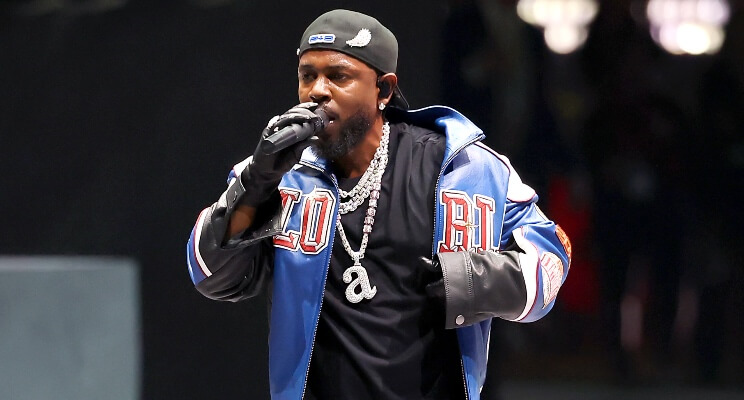
3. Kendrick immolates Drake at the Super Bowl 

Kendrick Lamar at the Super Bowl LIX Halftime Show (Photo: Gregory Shamus/Getty Images)

Kendrick Lamar at the Super Bowl LIX Halftime Show (Photo: Gregory Shamus/Getty Images)

While 2026’s Super Bowl halftime show promises to be an entry into a very stupid, never-ending culture war, 2025’s was just the site of some fun interpersonal conflict. Just one week after winning five Grammys for his Drake diss, Kendrick Lamar brought “Not Like Us” to perhaps the biggest stage in the United States. Though Lamar did avoid saying the word “pedophile,” perhaps to avoid a lawsuit, the second-most vicious lyric in the song still made it into the telecast, along with Lamar staring down the barrel of the camera to grin and say “Hey, Drake.” Yes, there was more to the performance than the beef with Drake—Samuel L. Jackson made an especially memorable appearance, playing Uncle Sam as a pseudo-MC—but it was certainly designed to be the part we’d pay a lot of attention to. Drake made sure of that, too. In a year where the star committed to being a sore loser, Lamar was more than willing to model winning. [Drew Gillis] 

4. Ryan Coogler’s Sinners deal 

At the start of the year, things weren’t looking so good for Warner Bros. Oscar-winner Bong Joon-ho’s ambitious sci-fi satire Mickey 17 failed to ignite the box office, and according to some analysts, that spelled doom for the studio’s other original genre play, director Ryan Coogler’s vampire epic, Sinners, which, like Mickey, WB paid a fortune for. Analysts tugged their collars at the idea of director Ryan Coogler’s $100 million budget, first-dollar gross, final cut, and ownership of the movie in 25 years. How could an artist, who had produced some of the biggest, most artful and memorable studio films of the last decade, demand such compensation? That’s to say nothing of the multi-format release strategy that required an explainer video from Coogler himself. All that worry was for naught; the movie became one of the year’s most successful, a genuine event that prompted near-immediate re-releases and sustained Oscar buzz. Audiences and critics loved Sinners, and the film kickstarted the studio’s surprising and successful 2025. [MS]

5. Some movies got so popular that they had to be shown in theaters

For all the doom-and-gloom about the box office in 2025, one truth has shone through: When people are genuinely excited to see a movie, they want to see it in a movie theater. Even a company like Netflix—whose co-CEO Ted Sarandos obnoxiously claimed this year that movie theaters were “outdated”—couldn’t deny the power of the communal movie-going experience, consenting to let critical winners and crowd pleasers like Frankenstein, Wake Up Dead Man, and, most notably, mega-hit KPop Demon Hunters play on the big screen for a few scant weeks of collective joy. At the same time, audiences were able to manifest wider releases for the films they genuinely cared about, whether that came in the form of more theaters for Ben Leonberg’s canine horror flick Good Boy after its trailer tore its way across social media, or the successful campaign to get Ryan Coogler’s Sinners shown in Clarksdale, Mississippi, the small, theater-less town where it’s set. Beyond the deals and franchise plans and what will, inevitably, be another million or so consolidations and mergers over the next few years, audiences clung to one idea in 2025: Movies are better when we watch them together. [WH]

Keep scrolling for more great stories from A.V. Club.
 
Join the discussion...