Born in the Bronx, New York City in 1947, Reiner came from a showbusiness family. His father, Carl Reiner, created The Dick Van Dyke Show, and moved his family to Los Angeles in the 1950s. His mother Estelle was also an actress and a singer. Rob graduated from Beverly Hills High School and attended the UCLA Film School before beginning to get minor roles in series like Batman, That Girl, The Beverly Hillbillies, and The Andy Griffith Show.
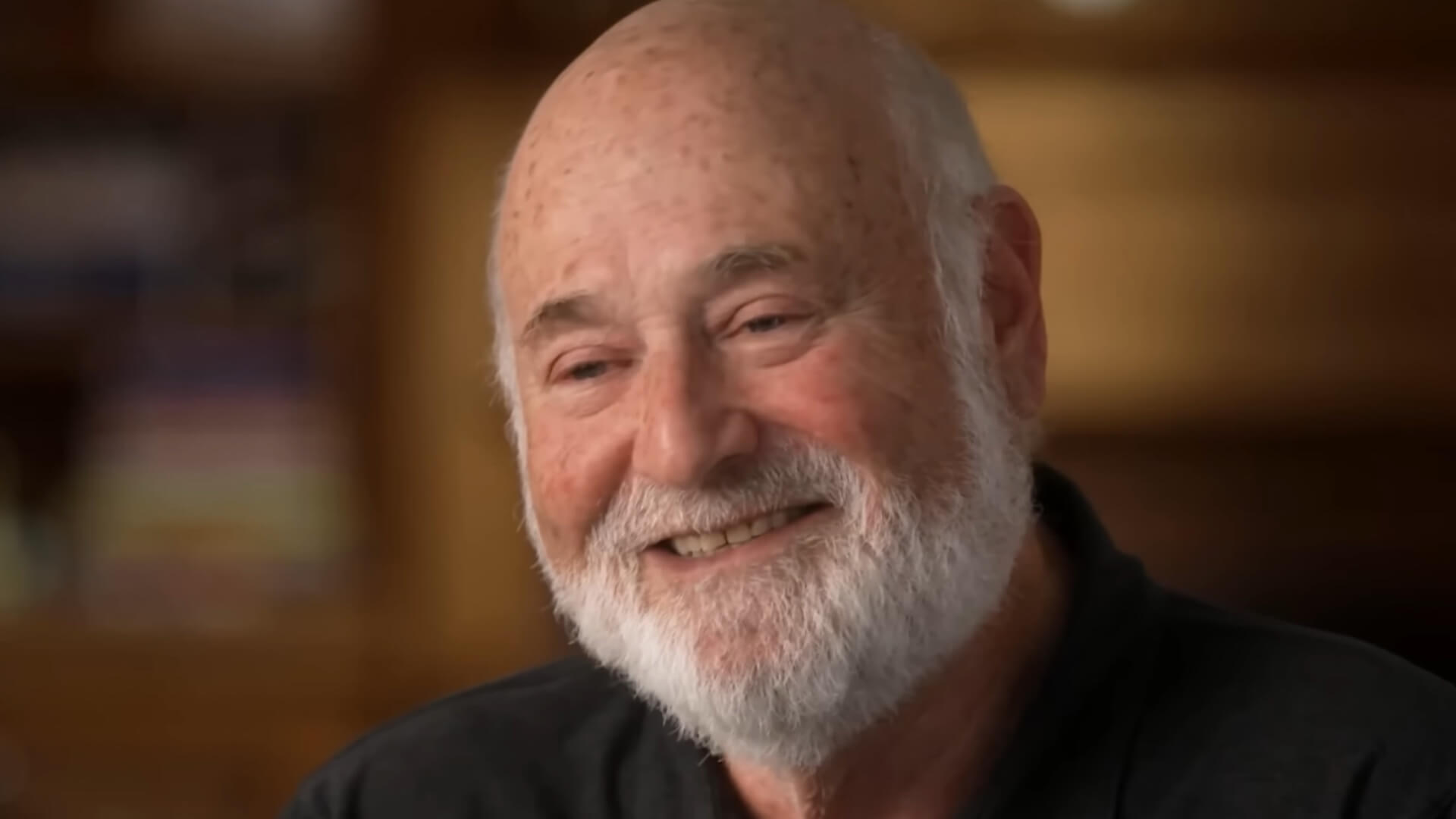
Reiner’s break came when he landed a main role in All In The Family beside O’Connor, Jean Stapleton, and Sally Struthers. Created by Norman Lear, All In The Family centered on a working-class family in Astoria, Queens as they worked through various social issues of the day. “I was more interested in writing and directing,” Reiner recalled in an interview with the Television Academy years later. “I didn’t think All In The Family would go very far… It was so, as they say, hip for the room. It was so far out that I didn’t think it would ever succeed.” Today, the show is considered one of the most influential in television history, and was directly responsible for spinoffs The Jeffersons, Maude, and Good Times.
Five years after the end of All In The Family, Reiner made his directorial debut with This Is Spinal Tap, another project with an enormous cultural footprint. Reiner is also credited as a writer on the film along with stars Christopher Guest, Michael McKean, and Harry Shearer, though the dialogue is largely improvised. Reiner followed the film with The Sure Thing in 1985 and Stand By Me in 1986, which he told The A.V. Club in 2016 stands in his filmography as “certainly the one that means the most to me, because it was the first time I made a film that really was reflective of my personality and my sensibility.” He followed Stand By Me with 1987’s The Princess Bride, 1989’s When Harry Met Sally…, and 1990’s Misery.
1992 brought A Few Good Men, which became Reiner’s first film to be nominated for Best Picture at the Academy Awards. He later said it was a story he could relate to: “I like the idea that it was a young guy whose father was a famous lawyer, and he always shied away from challenging himself in court, and finally he did it when he goes up against Jessup. I thought, ‘Ooh, I can tell this story.'” The film also began a collaboration between Reiner and screenwriter Aaron Sorkin, who again teamed up for 1995’s The American President, which had major influence over what would eventually become The West Wing. Reiner also directed The Ghosts Of Mississippi in 1996, The Bucket List in 2007, LBJ in 2016, Albert Brooks: Defending My Life in 2023, and Spinal Tap II: The End Continues in 2025.
Outside of his film work, Reiner was well known for his outspoken political activism. In 1998, he supported a tax on tobacco products to help pay for early childhood education, and was a major supporter of same-sex marriage and other social causes championed by Democratic politicians. “The work that we were able to do in early childhood, saving environmental areas in Southern California, and then getting marriage equality the law of the land—those things are big,” he reflected later. “People come up to me a lot of times, and they say [they] liked Spinal Tap or When Harry Met Sally… or whatever, which always makes you feel good. But then when they come up and say, ‘Thank you so much for what you did for marriage equality,’ whatever the things are, that makes me feel even better.”


 Keep scrolling for more great stories.