Yee haw, it’s 2025, and cowboys are back in fashion. The immense fan power generated by TikTok has radically changed the publishing industry over the course of the 2020s. Romance in particular has experienced a commercial resurgence that has brought subgenres to the mainstream that were once seen as too niche for traditional publishers. Consider the rise of dark romance and romantasy, or the ways that proud monster f**king erotica has taken over the New York Times bestseller list. But it’s the revival of old-school romance styles that has proven to be the biggest surprise to readers. In 2025, the cowboy romance has become the hottest new thing for BookTok enthusiasts, and it’s a change that nobody saw coming.
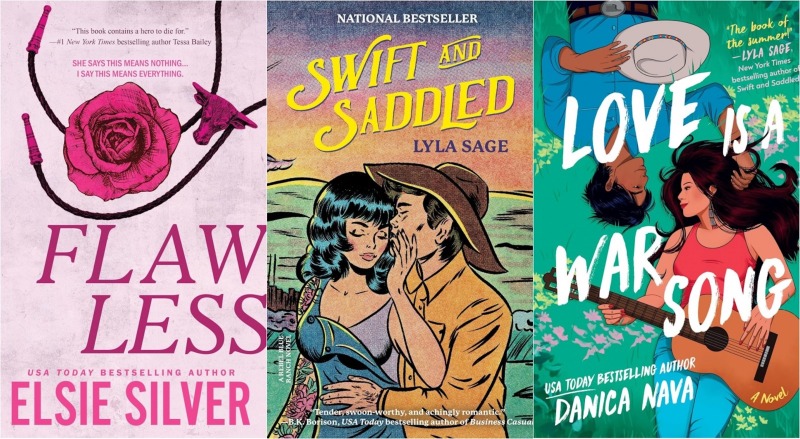
Elsie Silver is one of the writers who helped to rebirth the cowboy romance for the modern era. Her Chestnut Springs series, about a small town in the Canadian Rockies populated with bull riders and ranchers, and full of trope-tastic dynamics, exploded in popularity via the platform. Her follow-up series, Rose Hill, set in the same universe, was even more beloved, and turned her from an indie author to a bestselling powerhouse with one of the big five publishers behind her. Many authors followed suit as readers eagerly demanded more modern cowboys: Lyla Sage, Bailey Hannah, Jessica Peterson, Kayla Grosse, and Ava Hunter are but a handful of the authors who have helped to bring the yeehaw agenda back to the mainstream of the romance genre.
It’s hard for many to get over the cultural image of the cowboy that has long been rooted in whiteness and conservatism. See how the modern country music scene has embraced hard-right rhetoric in Stetsons while rejecting musicians like Beyoncé who have sought to explore the genre’s intrinsically Black roots. The image of the noble white man on a horse roaming the wild plains of the old West has frequently been used in narratives of white supremacy, all the way back to the days of Manifest Destiny. Old-school Western romances were seen as being part of that tradition. The men were Men, the land was unforgiving, and alphas shaped the world. Indigenous communities typically got the short end of the stick, perpetuating the most racist excesses of the genre (and that’s not even getting into the history of “noble savage” romances, which featured indigenous heroes —often depicted on the covers by Fabio—dominating white women.)
The modern Western romance has more in common with Chappell Roan than John Wayne. Machismo of the plains has been remoulded into a more trope-heavy kind of stoic romantic alpha, and it’s the women who are front and center. Lyla Sage told USA Today that her cowboys are a way for her to explore “a more secure type of masculinity […] “I’m just very interested in writing green flag men, but also I want to write secure masculinity, a man who is happy to take care of you but knows that’s not your whole shtick.” Silver’s novels feature characters dealing with PTSD and disordered eating, as well as non-traditional families that reject the archaic image of man, wife, and kids on the plains.
In an interview with SheReads, Silver gave her theory on why Western romances like hers have become so popular in recent years. “I think people are craving that sense of community and simplicity. During the pandemic, we all retreated into our homes and lost a lot of day-to-day human connection,” she said. “Western and small-town romances tap into that longing for close-knit friendships, family dinners, neighbors who know each other.”
As BookTok fandom drives a more trope-heavy approach to selling novels, Western romances have provided another new backdrop for this. It’s a setting and atmosphere that can be as flexible as, say, the balls of the Regency era, for your fave tropes: grumpy-sunshine, forced proximity, marriage of convenience, and so on. With Western tales, you have the added detail of pure escapism via some of the most scenic locales in North America. For a generation who dealt with lockdown, doomscrolling, and rising rents, a chance to flee to the wide open spaces seems more tempting than ever.
Many modern cowboy romance writers are trying to subvert the genre’s racist history and recenter the gaze of people of colour and indigenous history over tired Hollywood tropes. Remember, the original cowboys were Black men, and the term “cowboy” was originally a derogatory way to describe them. Beyoncé’s Cowboy Carter was an exploration of this history (as were the visuals of her sister Solange’s 2019 album When I Get Home). Rebekah Weatherspoon is one Black writer bringing the cowboy romance into this reshifting of the narrative. Her Cowboys of California trilogy focuses on Black cowboys as the handsome, hard-working, and ever-so-charming heroes in stories of Black cultural specificity within these gentrified spaces.
Danica Nava, an author and enrolled citizen of the Chickasaw Nation, tackled indigenous erasure from cowboy history in her most recent novel, Love is a War Song. Her heroine, a Muscogee pop star named Avery, flees to her estranged grandmother’s ranch in Oklahoma after a public scandal. It’s her first time living on the reservation, and it puts her into conflict not only with the handsome rancher Lucas Iron Eyes, who views her with suspicion, but her own expectations of her identity. Nava told SheWrites that her book was “my attempt to reclaim this subgenre and the ‘cowboy vs Indian’ trope and narrative in my way.”
“Love is a War Song is my battle cry that we are here, thriving in America. America was ours first. You simply cannot tell a western or cowboy story and exclude Native Americans and other people of color,” she said. “The vaqueros were the first cowboys, not white men, and certainly not billionaire white men. The American West was built on the backs of people of color. The West was full of LGBTQ+ individuals. To exclude us all in these stories is to erase our history and rewrite it.”
This is not to paint too rosy a picture of the genre or its impact on the real thing. The old West propaganda of old still holds immense political and social thrall in 2025, and the reality of life for many in these regions is poverty, addiction, and isolation. For people of color, especially indigenous communities, these issues are greatly exacerbated, and women in particular suffer from high rates of sexual assault, disappearance, and murder. But if romance, which continues to be extremely white on and off the page, is about letting everyone be seen and heard, why can’t the Western subgenre be part of that? There’s something to be said about an active exploration of culture and tackling centuries-old stereotypes through a feminine lens that seeks to add in the oft-erased shades of a complicated and heavily whitewashed past. After all, this land is everyone’s land.
Kayleigh Donaldson is a critic and pop culture writer for Pajiba.com. Her work can also be found on IGN, Slashfilm, Uproxx, Little White Lies, Vulture, Roger Ebert, and other publications. She lives in Dundee.