Tell-alls, streaming service deep-dives, personal essays, and artist mythologies defined 2025’s printed year in music. Paste has picked its 10 favorite music books from the last 12 months, but I’d like to shoutout to some other titles I loved spending time with this year: Peter Ames Carlin’s Tonight in Jungleland: The Making of Born to Run; Paul McCartney’s Wings: The Story of a Band on the Run; Mark Hoppus and Dan Ozzi’s Fahrenheit-182; Audrey Golden’s Shouting Out Loud: Lives of The Raincoats; and Yusuf/Cat Stevens’ Cat: On the Road to Findout. The list you’re about to scroll through is a good approximation of Paste’s current taste: some pop trash, classic rock oral reports, memoirs that remind us why we write about music, and queer coming-of-age stories. With some assistance from contributors, this is our definitive ranking of the best music books of 2025—all of which are quintessential reads you should pick up immediately, if you haven’t already. —Matt Mitchell, Editor
10. Ben Ratliff: Run the Song: Writing About Running About Listening
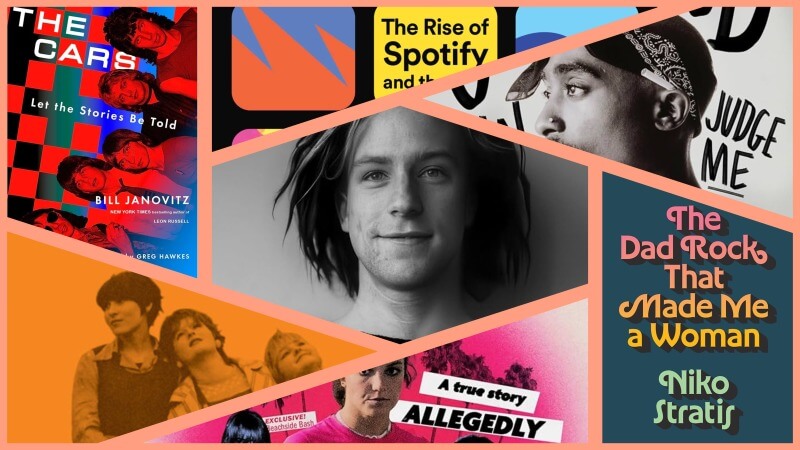
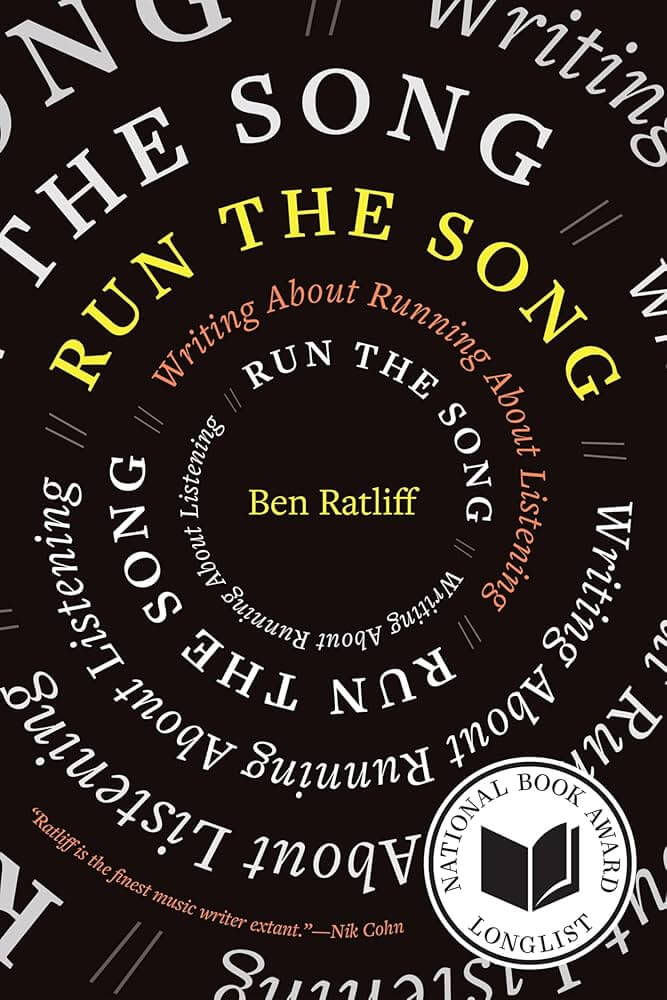
When people discuss music and running in the same breath, it’s typically through the framework of workout playlists, optimal BPMs, and other logistical characteristics. Ben Ratliff, a former New York Times music critic and current professor at NYU, highlights an overshadowed nexus between the two in his latest book, Run the Song: Writing About Running About Listening. Ratliff takes us on his runs throughout New York, sharing the songs he’s listening to and what he unearths in them through constant physical motion. He hears the music in a new light, and the music augments the sensations of running: the tactility of the terrain, the passersby he observes, the feeling of the wind on his skin. Even if you aren’t a runner, Ratliff shows us how there is always something new to hear in the songs we’ve loved for years. —Grant Sharples[Graywolf Press]
9. John Darnielle: This Year: 365 Songs Annotated: A Book of Days
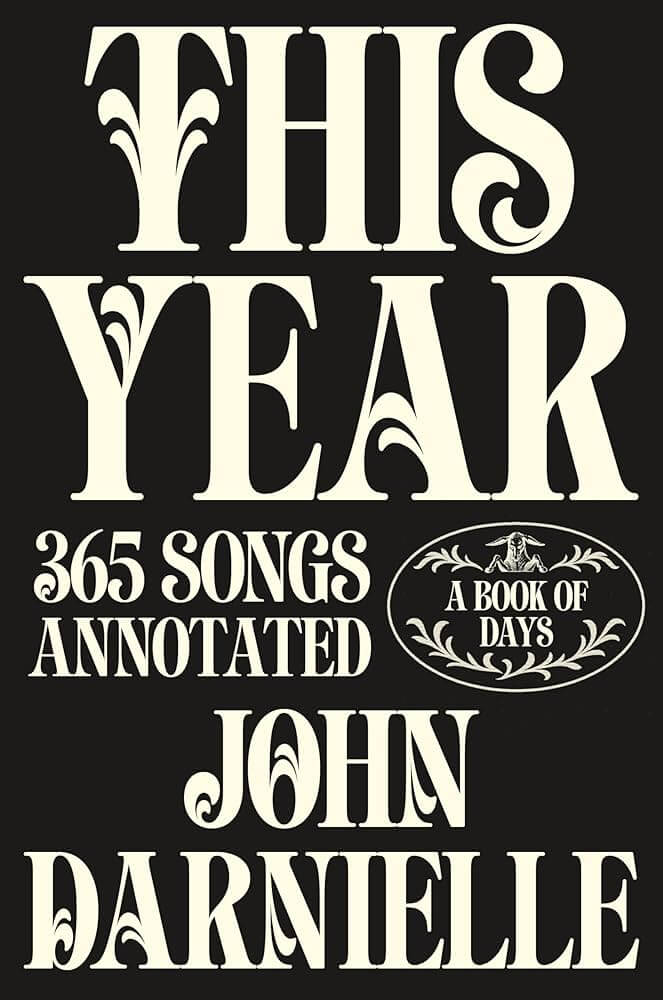
John Darnielle’s This Year: 365 Songs Annotated feels less like a lyrics collection than a yearlong conversation with one of indie rock’s most generous minds. Organized as a song-a-day almanac, the book pairs lyrics with Darnielle’s winding, funny, quietly devastating annotations, drifting from craft talk to autobiography to the kind of literary and philosophical side roads his stage banter only hints at. It follows the Mountain Goats’ catalog roughly chronologically, allowing it to double as a loose memoir in scrapbook form. What makes it special isn’t explanation but companionship: digressions about form, faith, wrestling, trees, addiction, joy, and the strange mechanics of inspiration pile up until a self-portrait emerges almost by accident. Few artists could plausibly pull off a project built around 365 songs (as always, Darnielle’s discography is terrifyingly vast), and fewer still would have the curiosity—or humility—to use it to ask why songs exist at all. Handsome, heavy, and oddly comforting, This Year doubles as a devotional for longtime fans and a quiet manifesto on creative persistence. —Casey Epstein-Gross[MCD]
8. Debsey Wykes: Teenage Daydream: We Are the Girls Who Play in a Band
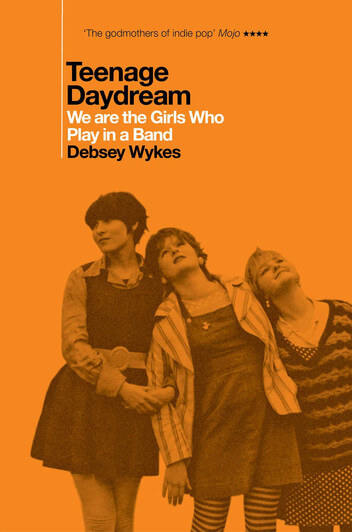
Maybe you’ve heard of Debsey Wykes? She was the bass player and singer in Dolly Mixture, the all-girl punk band from Cambridge 45 years ago? Mojo once called them the “godmothers of indie pop,” and Wykes’ book Teenage Daydream is a brilliant recollection of the UK music industry she, Rachel Bor, and Hester Smith were thrown into in the late 1970s. In a diary full of rock and roll souvenirs, we watch Dolly Mixture attempt to co-exist with the Jam, Madness, and the Pogues while coming of age. Teenage Dream is part-memoir, part-cultural survey—an untold story of an underloved but deeply group of people. History lends itself to Wykes’ first-hand account of womanhood in a mostly-male music world. How she and her bandmates navigated those times turns into a love letter to their friendship and a beautiful, imperfect, episodic portrait of England’s DIY community. —Matt Mitchell[New Modern]
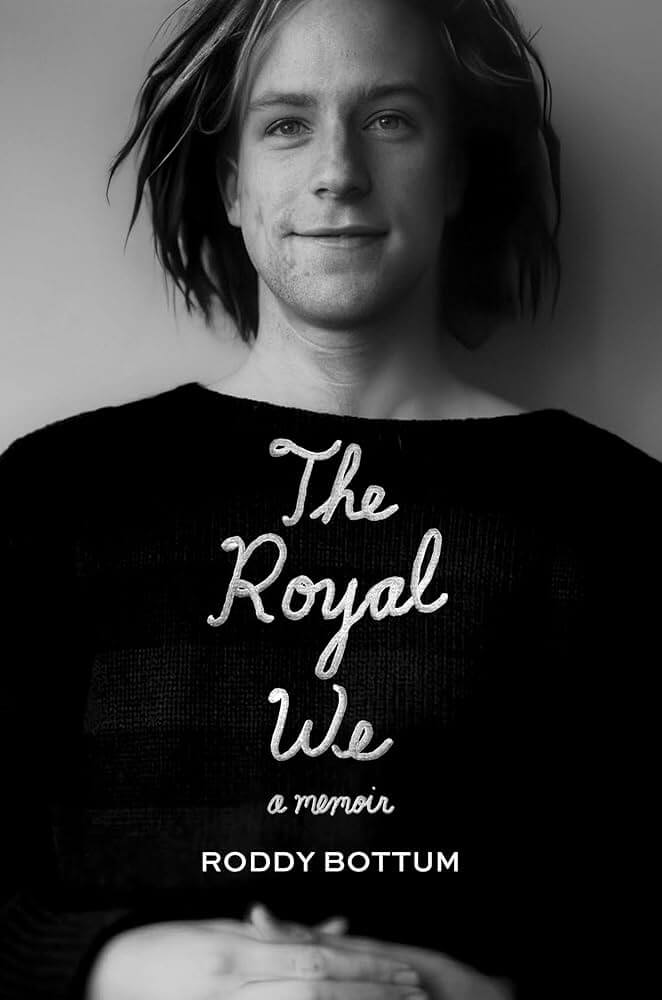
7. Roddy Bottum: The Royal We: A Memoir
The Royal We is an intimate drawing of the curtains on Roddy Bottum’s life. Whether that was founding Faith No More with his schoolmates Billy Gould and Mike Bordin in San Francisco in 1981 or coming out of the closet ten years later while the AIDS epidemic was ongoing, Bottum offers a personal tell-all of his life, the rock and roll, and the tragedy and trauma he’s spent 40 years outliving. He runs into Kurt Cobain and Guns N’ Roses, plays stadium shows across the world, and grapples with an all-consuming heroin addiction. 250 pages of punks, street witches, leather-clad passerbys, and no role models, The Royal We isn’t just a memoir—it’s a hero’s journey typed in bold-face font. As Bottom embraces his imperfections, he’s eager to share his life with all of us. The Royal We is at times somber but its heart is never lost. —Matt Mitchell[Akashic Books]
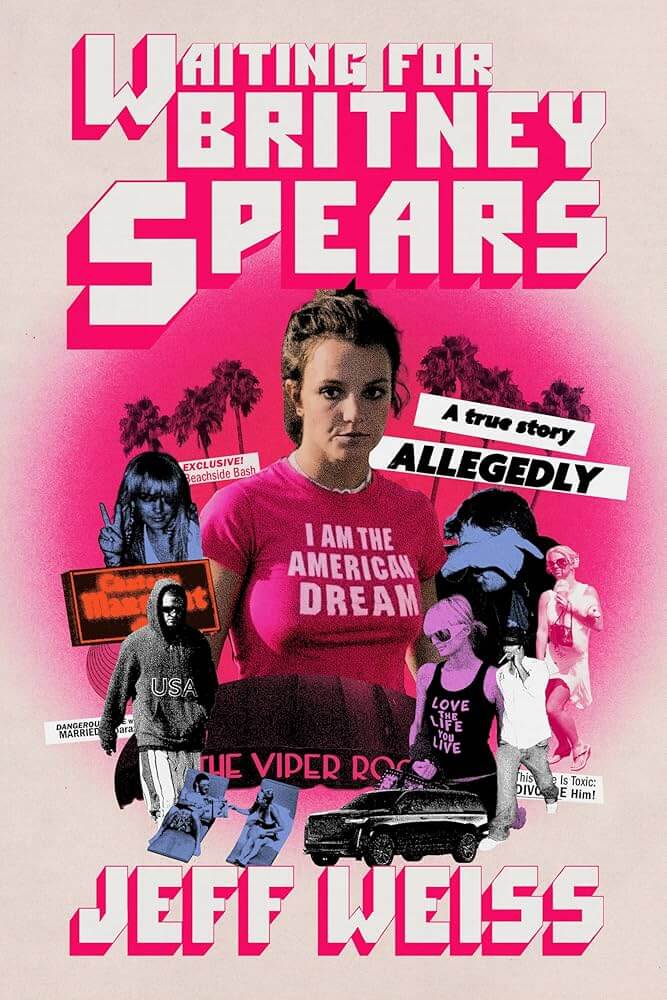
6. Jeff Weiss: Waiting for Britney Spears: A True Story, Allegedly
LA native and former paparazzo Jeff Weiss’s first book is ostensibly about Britney Spears, but it’s equally a portrait of what the pop music ecosystem buzzing around her at the turn of the millennium looked like: tabloid culture; the seedy, trashy, unhinged ways the cult of personality pulled an entire generation into celebrity obsession; and the moral dilemma of making a career out of someone else’s worst moments. Weiss admits to his own infatuation with Spears—born from sneaking onto the “…Baby One More Time” music video set as a teen—and how that fixation eventually became his profession. He uses Spears’ ascent (and descent) as reference points for his own career, documenting a life spent worming his way into clubs under fake names, getting arrested for trespassing, repeatedly attempting to break into more “legitimate” journalism, and being pushed back into the paparazzi economy. As Spears moves through chart dominance, album cycles, pregnancies, divorce, and public breakdowns, Weiss moves alongside her, becoming increasingly aware of his role in sustaining an ever-exploitative machine. Through a rotating cast of industry intermediaries (photographers, editors, security heads, “fixers”), he exposes the incentives, schemes, and motivations of the people tasked with chronicling a public unraveling. Waiting for Britney Spears ultimately serves as Weiss’s reckoning with the early-aughts media apparatus that tightened around Spears, and with Weiss’ own entrapment in a system that pits conscience against financial survival. —Cassidy Sollazzo[MCD]
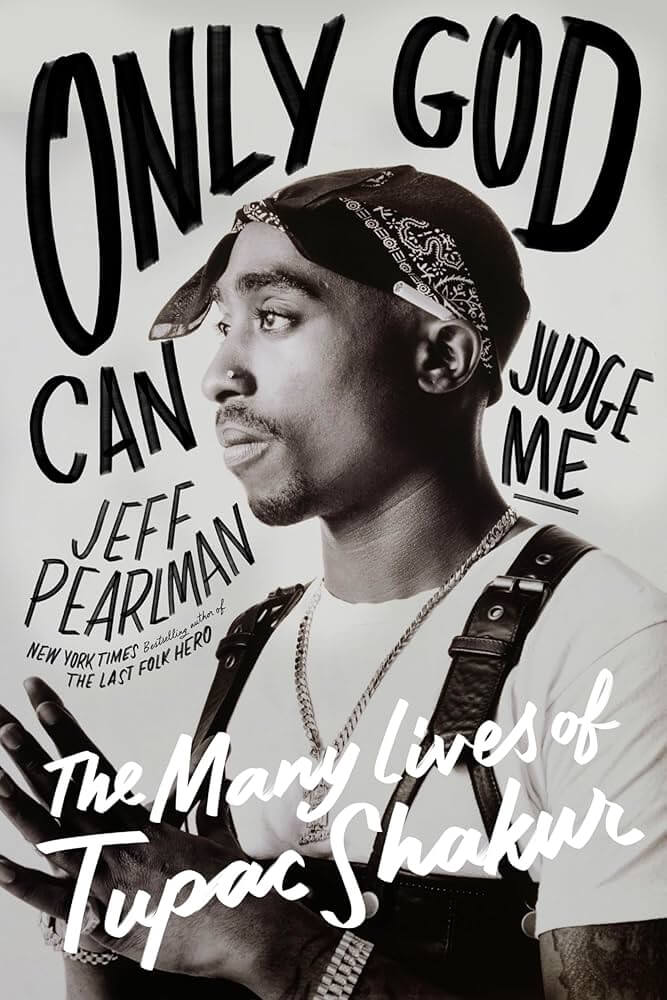
5. Jeff Pearlman: Only God Can Judge Me: The Many Lives of Tupac Shakur
Chuck Klosterman for anyone who had a yearly Sports Illustrated subscription, Jeff Pearlman is one of our best living researchers. I’ve been following his career since he wrote Showtime, and he’s since become one of my go-to storytellers on TikTok. How the hell could he, let alone anyone, tackle the mythology of Tupac Shakur? Pearlman attempts to give a definitive account of Shakur’s life through a recreated West Coast rap scene. He steps into the Death Row Records offices, goes on the set of Juice, and winds up in Paradise, Nevada, on the night Bruce Seldon fought Mike Tyson at the MGM Grand, the night Shakur was murdered in his BMW. 30 years after the shooting, the tragedy has been rewritten into musical folklore, but Pearlman’s ability to capture Shakur outside of the phenomenon, thanks to the hundreds of hours of interviews and never-before-published details of Shakur’s life he collected, makes for a breathtaking portrait. By the end of Only God Can Judge Me, Pearlman presents Shakur as more man than legend. The rapper’s complexity has never been greater, but the walls between us and his legacy are more blurred than ever. —Matt Mitchell[Mariner Books]
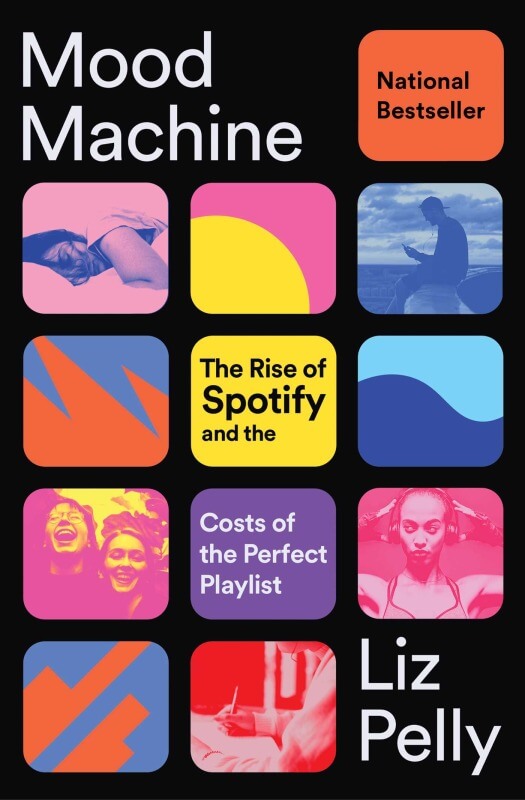
4. Liz Pelly: Mood Machine: The Rise of Spotify and Costs of the Perfect Playlist
Mood Machine isn’t just phenomenal reporting—it’s a necessary and uncomfortable discussion around Spotify and the consequences of its monoculture. Liz Pelly interviews a bunch of industry heads, former Spotify employees, and musicians to give us this intimate and damning look at the inner-machinations of the biggest music streaming service in the world. She examines lopsided streaming payouts and the corporate stooges that control where the money goes, using listener habits to offer insight into why consumers give Spotify their data. The section on popular playlists getting filled with stock music, or the section about modern-day payola are great precursors to Pelly’s ideas for better streaming models, a reappraisal of musicians’ labor, and how a post-Spotify world could be sustainable. —Matt Mitchell[Atria/One Signal]
3. Bill Janovitz: The Cars: Let the Stories Be Told
Few rock bands from the last 40, 50 years are as fascinating as the Cars, and Bill Janovitz captures every bit of that mystique and cultural/commercial impact in Let the Stories Be Told, his biography on the Rock and Roll Hall of Famers. It’s part-investigative journalism, part-artist profile, as Janovitz speaks to the still-living members of the band while doing his own forensic deep-dives into their storied, chronicled history. What makes Let the Stories Be Told so great is that each member—Ric Ocasek, Benjamin Orr, Elliott Easton, David Robinson, Greg Hawkes—gets their portrait taken by Janovitz, who then uses those images to build this great composite of the Cars altogether. The biography makes a concentrated effort to show why the Cars weren’t just Ocasek’s band—though he remains a mysterious figure by the book’s end, just as he was while he walked among the living—by talking to friends, wives, anyone in the Cars’ orbit that could lend an anecdote or two. Janovitz goes all the way in, warts and all (Ocasek’s troubled childhood, the jealousy of Orr’s sex appeal, Orr’s troubling alcoholism, the band’s bitter breakup in 1988), about a band he so clearly loves. What we’re left with is one of the most compelling works on a major rock band in years, at least since Bob Mehr told the Replacements’ whole story. —Matt Mitchell[Grand Central Publishing]
2. Niko Stratis: The Dad Rock That Made Me a Woman
“Dad rock” is occasionally a pejorative and often a joke. In her book The Dad Rock That Made Me a Woman, writer (and previous Paste contributor) Niko Stratis uses “dad rock” as a foundation to explore her journey toward realizing her trans identity. Through the lens of music from artists including the National, Built to Spill, and Bruce Springsteen, Stratis traces her experiences with addiction, gender, and home. She works as a glazier with her dad, she moves from the Yukon to Toronto, and she discovers a new name for herself, the one that always belonged to her even when she didn’t yet know it. This collection of essays underlines music’s ability to help us locate our identities, fostering an understanding of the self that makes life not only easier but more fulfilling. —Grant Sharples
1. Cameron Crowe: The Uncool
The pages of The Uncool scale the entirety of Cameron Crowe’s ordinary beginnings —when he was a baby-faced SoCal kid watching Bob Dylan play in a gymnasium, contributing to the San Diego Door, befriending cranks like Lester Bangs, submitting his writing about Humble Pie to Creem, and graduating high school in 1972 at age 15—through his days of tailing folks like Jerry Garcia, Jim Croce, Gram Parsons, and Fleetwood Mac for tell-all stories. Stories of his family, including the suicide of his sister Cathy, are sewn into the memoir, too. We reconvene with his beloved mother Alice and get a rare portrait of his pretty great father, Jim. Not only is it a snapshot of a part of his childhood we’ve only seen fictionalized, in the bookending segments of Almost Famous in 2000, but it’s him putting personal touches on a time in his life where he shared the stories of others almost exclusively. A large chunk of the memoir details Crowe’s tenure working for Rolling Stone, writing cover stories on the Allman Brothers Band, Led Zeppelin, and David Bowie. But rather than “get lost in the past,” The Uncool plucks the people out from behind the curtain, gives them a stage, and, as Neil Young would put it, confronts “the danger” head-on.
Crowe’s memoir takes place in a period of rock journalism that could afford its own excess, when editors would fork over thousands of dollars just to get one story over the line—even if that meant hitching Crowe to a figure like Bowie for nearly two years, or picking up room-service tabs on his criss-crossings of North America. Music criticism is practically unrecognizable now, thanks to staff jobs vanishing and a collapse in readership across the board. But good rock journalism somehow finds a way, because it’s never been about the money, although some money would be nice. No, good rock journalism is about people giving a shit. It’s about writing just to fucking write. A half-century’s passed since Crowe thought he was the lamest passenger on Zeppelin’s Starship. Now, we’d have all killed for his seat. I don’t reckon that Crowe’s outlived his own “uncool” title, but that he’s totally reclaimed it. His work in The Uncool preserves what didn’t get lost in all those gross, heavy, penniless decades and never will: There’s nothing quite like sharing what you love with everybody, anybody. There’s nothing better than, as a wise woman once said, loving some silly little piece of music, or some band, so much that it hurts. I’d say that’s pretty cool. —Matt Mitchell[Avid Reader Press/Simon & Schuster]


 When people discuss music and running in the same breath, it’s typically through the framework of workout playlists, optimal BPMs, and other logistical characteristics. Ben Ratliff, a former New York Times music critic and current professor at NYU, highlights an overshadowed nexus between the two in his latest book, Run the Song: Writing About Running About Listening. Ratliff takes us on his runs throughout New York, sharing the songs he’s listening to and what he unearths in them through constant physical motion. He hears the music in a new light, and the music augments the sensations of running: the tactility of the terrain, the passersby he observes, the feeling of the wind on his skin. Even if you aren’t a runner, Ratliff shows us how there is always something new to hear in the songs we’ve loved for years. —Grant Sharples [Graywolf Press]
 John Darnielle’s This Year: 365 Songs Annotated feels less like a lyrics collection than a yearlong conversation with one of indie rock’s most generous minds. Organized as a song-a-day almanac, the book pairs lyrics with Darnielle’s winding, funny, quietly devastating annotations, drifting from craft talk to autobiography to the kind of literary and philosophical side roads his stage banter only hints at. It follows the Mountain Goats’ catalog roughly chronologically, allowing it to double as a loose memoir in scrapbook form. What makes it special isn’t explanation but companionship: digressions about form, faith, wrestling, trees, addiction, joy, and the strange mechanics of inspiration pile up until a self-portrait emerges almost by accident. Few artists could plausibly pull off a project built around 365 songs (as always, Darnielle’s discography is terrifyingly vast), and fewer still would have the curiosity—or humility—to use it to ask why songs exist at all. Handsome, heavy, and oddly comforting, This Year doubles as a devotional for longtime fans and a quiet manifesto on creative persistence. —Casey Epstein-Gross [MCD]
 Maybe you’ve heard of Debsey Wykes? She was the bass player and singer in Dolly Mixture, the all-girl punk band from Cambridge 45 years ago? Mojo once called them the “godmothers of indie pop,” and Wykes’ book Teenage Daydream is a brilliant recollection of the UK music industry she, Rachel Bor, and Hester Smith were thrown into in the late 1970s. In a diary full of rock and roll souvenirs, we watch Dolly Mixture attempt to co-exist with the Jam, Madness, and the Pogues while coming of age. Teenage Dream is part-memoir, part-cultural survey—an untold story of an underloved but deeply group of people. History lends itself to Wykes’ first-hand account of womanhood in a mostly-male music world. How she and her bandmates navigated those times turns into a love letter to their friendship and a beautiful, imperfect, episodic portrait of England’s DIY community. —Matt Mitchell [New Modern]
 The Royal We is an intimate drawing of the curtains on Roddy Bottum’s life. Whether that was founding Faith No More with his schoolmates Billy Gould and Mike Bordin in San Francisco in 1981 or coming out of the closet ten years later while the AIDS epidemic was ongoing, Bottum offers a personal tell-all of his life, the rock and roll, and the tragedy and trauma he’s spent 40 years outliving. He runs into Kurt Cobain and Guns N’ Roses, plays stadium shows across the world, and grapples with an all-consuming heroin addiction. 250 pages of punks, street witches, leather-clad passerbys, and no role models, The Royal We isn’t just a memoir—it’s a hero’s journey typed in bold-face font. As Bottom embraces his imperfections, he’s eager to share his life with all of us. The Royal We is at times somber but its heart is never lost. —Matt Mitchell [Akashic Books]
 LA native and former paparazzo Jeff Weiss’s first book is ostensibly about Britney Spears, but it’s equally a portrait of what the pop music ecosystem buzzing around her at the turn of the millennium looked like: tabloid culture; the seedy, trashy, unhinged ways the cult of personality pulled an entire generation into celebrity obsession; and the moral dilemma of making a career out of someone else’s worst moments. Weiss admits to his own infatuation with Spears—born from sneaking onto the “…Baby One More Time” music video set as a teen—and how that fixation eventually became his profession. He uses Spears’ ascent (and descent) as reference points for his own career, documenting a life spent worming his way into clubs under fake names, getting arrested for trespassing, repeatedly attempting to break into more “legitimate” journalism, and being pushed back into the paparazzi economy. As Spears moves through chart dominance, album cycles, pregnancies, divorce, and public breakdowns, Weiss moves alongside her, becoming increasingly aware of his role in sustaining an ever-exploitative machine. Through a rotating cast of industry intermediaries (photographers, editors, security heads, “fixers”), he exposes the incentives, schemes, and motivations of the people tasked with chronicling a public unraveling. Waiting for Britney Spears ultimately serves as Weiss’s reckoning with the early-aughts media apparatus that tightened around Spears, and with Weiss’ own entrapment in a system that pits conscience against financial survival. —Cassidy Sollazzo [MCD]
 Chuck Klosterman for anyone who had a yearly Sports Illustrated subscription, Jeff Pearlman is one of our best living researchers. I’ve been following his career since he wrote Showtime, and he’s since become one of my go-to storytellers on TikTok. How the hell could he, let alone anyone, tackle the mythology of Tupac Shakur? Pearlman attempts to give a definitive account of Shakur’s life through a recreated West Coast rap scene. He steps into the Death Row Records offices, goes on the set of Juice, and winds up in Paradise, Nevada, on the night Bruce Seldon fought Mike Tyson at the MGM Grand, the night Shakur was murdered in his BMW. 30 years after the shooting, the tragedy has been rewritten into musical folklore, but Pearlman’s ability to capture Shakur outside of the phenomenon, thanks to the hundreds of hours of interviews and never-before-published details of Shakur’s life he collected, makes for a breathtaking portrait. By the end of Only God Can Judge Me, Pearlman presents Shakur as more man than legend. The rapper’s complexity has never been greater, but the walls between us and his legacy are more blurred than ever. —Matt Mitchell [Mariner Books]
 Mood Machine isn’t just phenomenal reporting—it’s a necessary and uncomfortable discussion around Spotify and the consequences of its monoculture. Liz Pelly interviews a bunch of industry heads, former Spotify employees, and musicians to give us this intimate and damning look at the inner-machinations of the biggest music streaming service in the world. She examines lopsided streaming payouts and the corporate stooges that control where the money goes, using listener habits to offer insight into why consumers give Spotify their data. The section on popular playlists getting filled with stock music, or the section about modern-day payola are great precursors to Pelly’s ideas for better streaming models, a reappraisal of musicians’ labor, and how a post-Spotify world could be sustainable. —Matt Mitchell [Atria/One Signal]
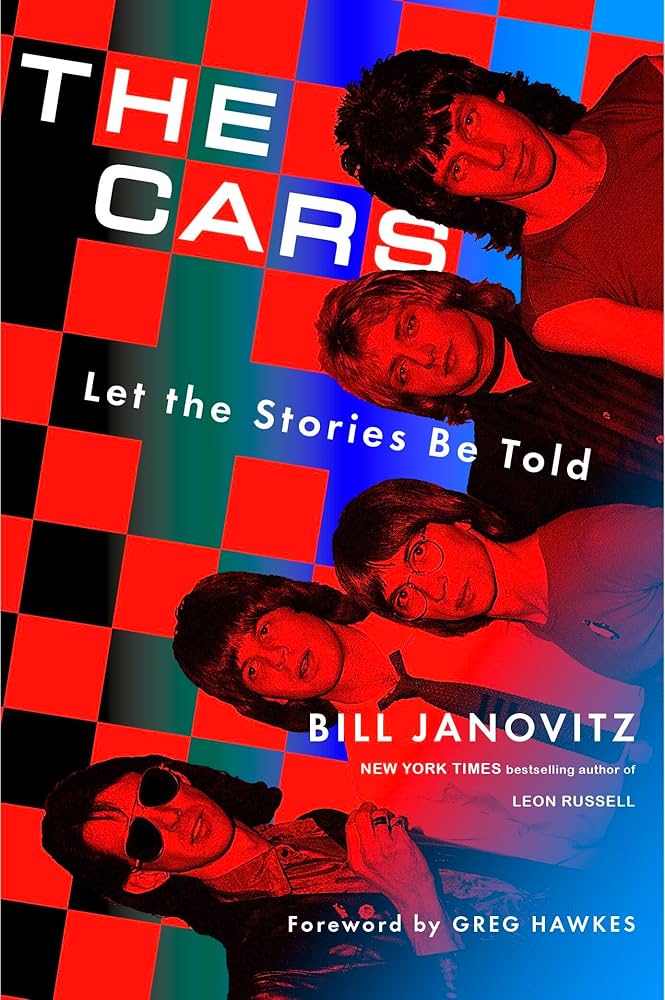 Few rock bands from the last 40, 50 years are as fascinating as the Cars, and Bill Janovitz captures every bit of that mystique and cultural/commercial impact in Let the Stories Be Told, his biography on the Rock and Roll Hall of Famers. It’s part-investigative journalism, part-artist profile, as Janovitz speaks to the still-living members of the band while doing his own forensic deep-dives into their storied, chronicled history. What makes Let the Stories Be Told so great is that each member—Ric Ocasek, Benjamin Orr, Elliott Easton, David Robinson, Greg Hawkes—gets their portrait taken by Janovitz, who then uses those images to build this great composite of the Cars altogether. The biography makes a concentrated effort to show why the Cars weren’t just Ocasek’s band—though he remains a mysterious figure by the book’s end, just as he was while he walked among the living—by talking to friends, wives, anyone in the Cars’ orbit that could lend an anecdote or two. Janovitz goes all the way in, warts and all (Ocasek’s troubled childhood, the jealousy of Orr’s sex appeal, Orr’s troubling alcoholism, the band’s bitter breakup in 1988), about a band he so clearly loves. What we’re left with is one of the most compelling works on a major rock band in years, at least since Bob Mehr told the Replacements’ whole story. —Matt Mitchell [Grand Central Publishing]
 “Dad rock” is occasionally a pejorative and often a joke. In her book The Dad Rock That Made Me a Woman, writer (and previous Paste contributor) Niko Stratis uses “dad rock” as a foundation to explore her journey toward realizing her trans identity. Through the lens of music from artists including the National, Built to Spill, and Bruce Springsteen, Stratis traces her experiences with addiction, gender, and home. She works as a glazier with her dad, she moves from the Yukon to Toronto, and she discovers a new name for herself, the one that always belonged to her even when she didn’t yet know it. This collection of essays underlines music’s ability to help us locate our identities, fostering an understanding of the self that makes life not only easier but more fulfilling. —Grant Sharples
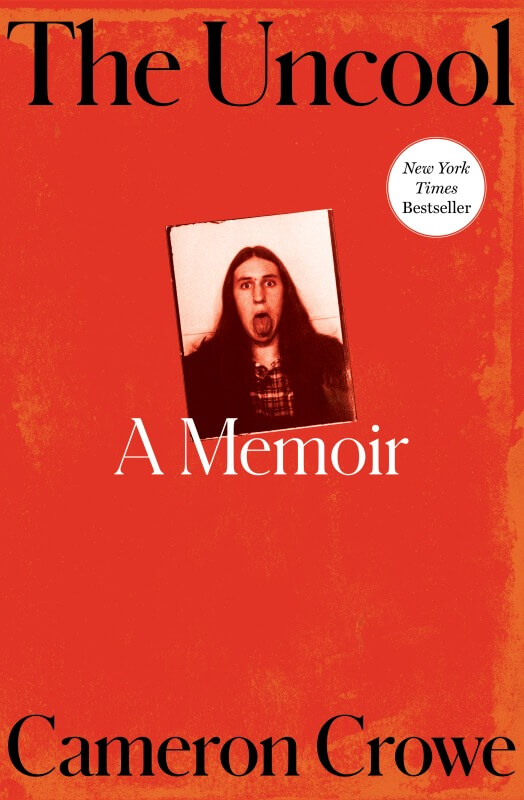 The pages of The Uncool scale the entirety of Cameron Crowe’s ordinary beginnings —when he was a baby-faced SoCal kid watching Bob Dylan play in a gymnasium, contributing to the San Diego Door, befriending cranks like Lester Bangs, submitting his writing about Humble Pie to Creem, and graduating high school in 1972 at age 15—through his days of tailing folks like Jerry Garcia, Jim Croce, Gram Parsons, and Fleetwood Mac for tell-all stories. Stories of his family, including the suicide of his sister Cathy, are sewn into the memoir, too. We reconvene with his beloved mother Alice and get a rare portrait of his pretty great father, Jim. Not only is it a snapshot of a part of his childhood we’ve only seen fictionalized, in the bookending segments of Almost Famous in 2000, but it’s him putting personal touches on a time in his life where he shared the stories of others almost exclusively. A large chunk of the memoir details Crowe’s tenure working for Rolling Stone, writing cover stories on the Allman Brothers Band, Led Zeppelin, and David Bowie. But rather than “get lost in the past,” The Uncool plucks the people out from behind the curtain, gives them a stage, and, as
  Keep scrolling for more great stories.