One decade and two billion dollars later, any legacy that Star Wars: The Force Awakens may have cultivated now seems overshadowed by Babu Frik memes. As the Disney inflection point for a franchise once defined by the idiosyncratic vision of George Lucas, it is impossible to disentangle The Force Awakens from everything that came after—especially from The Rise Of Skywalker. But if third act problems are really first act problems, then The Force Awaken‘s reputation as a serviceable legacy sequel withers upon reassessment. That such a pivotal and profitable film could vanish from popular culture like any other vapid consumer product reveals the wreck that Disney put into motion from the (re)start, and betrays the emptiness at the heart of a sequel project that the company still embraces today.
At the time, audiences were generous. The trilogy could bear out, any missteps could still prove worth it. On reexamination, those missteps presage the ensuing tumble. The relentless ride of fetch quests, skirmishes, MacGuffins, and cameos already felt written for Disney’s theme parks rather than theaters. Twice in the film, characters brush away readily predictable questions with promises of a tie-in story. How did Poe Dameron (Oscar Isaac) get off Jakku? Read the comic. How did Maz Kanata (Lupita Nyong’o) get Luke Skywalker’s lightsaber? Buckle in, casual.
A decade later, the more pessimistic sentiment courted by the script holds: The scathing-turned-loving memes that helped recover the popular consensus of the prequel trilogy today still mock the sequel films. “The garbage will do” is perhaps the most quoted line from The Force Awakens, while Padme’s words near the end of Revenge Of The Sith, “So this is how liberty dies. With thunderous applause,” have aged into respect, now misquoted every time the GOP touts their victories, praised in retrospectives, and extolled by fans.
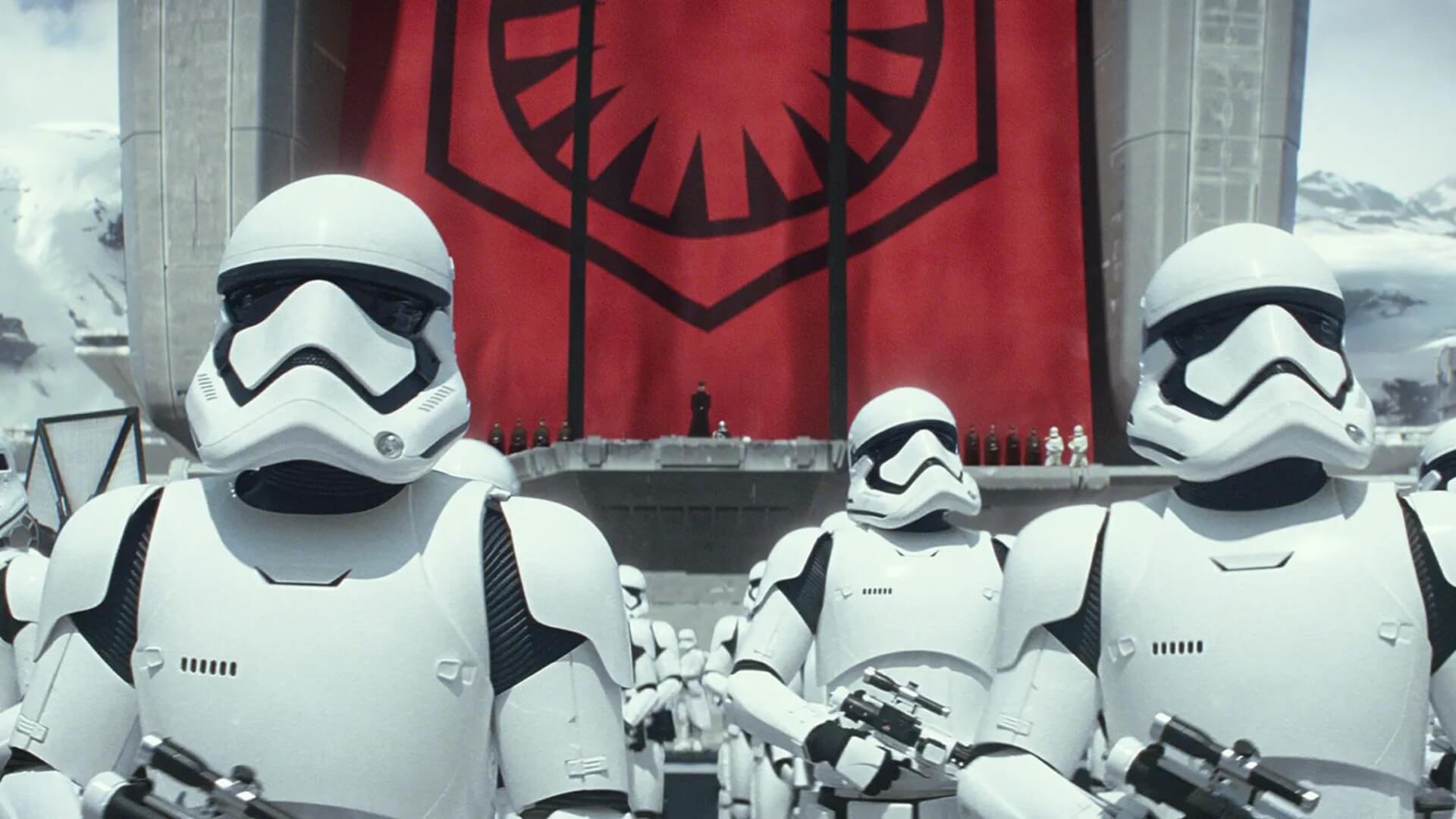
One day, the rehabilitation of the sequel trilogy will also come, and is probably already here in some dark, outer reaches of the Star Wars fandom. It was someone’s first Star Wars, after all, and from that moment, Disney could sell the rest of the franchise to them. But what nostalgia will people mine from The Force Awakens in another 10, 20, or 40 years? Kylo Ren will never supplant Darth Vader, but the trilogy merely sticks audiences with him and dozens of other referents. Phasma as Boba Fett. Snoke as Palpatine. Spruced-up X-Wings and Tie Fighters land like Apple touting the latest iPhone; even the Stormtroopers look like they got a pass by Jony Ive.
This borrowed, spit-shined imagery and the film’s repeated archetypes are vacant, not even put to the same ends as the original divisions of Empire and Rebellion. The path set forward by The Force Awakens has no endpoint: What would victory mean, for Rey, Poe, Finn, the Resistance? What was achieved when Rey beat Kylo in their second duel? These questions aren’t the ones the film is interested in. Rather, the mysteries to unravel are about characters from other films, and how they relate to the new ensemble: What happened to Luke and Kylo? To Rey’s parents?
Much of what charged Lucas’ Star Wars was contextual to its time. The prequel trilogy’s dissolution of the Republic spoke to a post-9/11 America, while Star Wars and its immediate sequels connected Flash Gordon to the Vietnam War. Director J.J. Abrams goes through it all again, but has no perspective outside of the franchise canon, letting his audience project whatever they want onto his repositioned action figures.
Lucas’ original portrayal of guerrilla fighters challenged the contemporary visual shorthands created by Vietnam broadcasts. The good guys looked like the Viet Cong as Lucas aligned the aesthetics of a commonly agreed upon Nazi evil with the actions of the U.S.—a subtle condemnation many could overlook, but not deny. The sequel trilogy’s First Order, on the other hand, is just a stand-in for the Empire and, like Kylo Ren, appears to be playing dress-up—a pure retreat into already-litigated images.
While the imagery of the Empire evoked Nazi iconography, beneath that surface was a coherent politics. The First Order rather plainly invokes a propagandistic version of it. This works to an extent, when The First Order are campy. In The Force Awakens, especially, there’s a humorous obsession with size: On the planet-sized Death Star named Starkiller Base (another in-reference for the franchise nerds), a banner taller than an AT-ST mimics Nuremberg decorations, rows of officers wear calf-length capes, and a fully chrome stormtrooper stands there as Domhnall Gleeson barks in a fascist-as-petulant-brat performance that reaches all the way back to Charlie Chaplin. And yet, as the franchise has sprawled forth from The Force Awakens—in encyclopedic texts detailing the superweapons’ use of Dark matter quintessence—it seems that Disney isn’t really in on the joke. The First Order is an attraction in Disney’s parks, and retailers sell graphic tees that play up the space Nazis’ cool factor by literally mimicking propaganda. Maybe all this mimicry isn’t supposed to be funny at all.
On the other side of things, The Force Awakens only shows the New Republic for about 10 seconds, cast in the red glow of an orbital space laser making planetfall. The imagery seems to say the New Republic is (was) cosmopolitan, but they’re not exactly our good guys either. Leia’s Resistance (confoundingly named in resistance to a military junta, not the reigning government), simply mirrors the scrappy coalition of Rebellion fighters in the original trilogy. But whereas the Rebellion fought to overthrow an oppressive yoke, the Resistance seemingly fights to maintain the status quo—perhaps a fitting goal for a film like The Force Awakens. There’s nothing but visual shorthand referencing the past to establish their ideological opposition, indicative of a project so sanitized that the new owners of Star Wars, Disney, could live with it.
The Last Jedi at least elevated The Force Awakens‘ cloying reverence for the original trilogy to a vision of fatalistic conflict, rather than fan service. Together, the films read as thesis and antithesis, each denied by The Rise Of Skywalker‘s revisions. Much of what the trilogy’s first two films set up was simply overturned, but the finale lands somewhere closer to where The Force Awakens ultimately pointed: Mysteries like Rey’s parentage are given a definitive answer, and the bad guys tow out their next big toy. The trilogy-capper echoed the opener in tone: It’s silly, but no one’s having fun; the audience is just seated for another billion-dollar cash-in from a franchise too big to not make money, made by a company too big to fail.
On Disney’s own terms, the failure of The Force Awakens is that it didn’t sell us nostalgia—it just burned it for fuel. Abrams’ movie didn’t generate anything as evocative as the binary sunset or battle on Mustafar, and now Disney is running out of memories to exploit. The studio doesn’t even appear to be planning a celebration for the film’s 10th anniversary, with unceremonious updates earlier this month about how there is still no progress on Sharmeen Obaid-Chinoy’s standalone Rey film, which was announced in 2023. Only two of a dozen announced films even have release years, the first up being a film based on a TV show: 2026’s The Mandalorian And Grogu.
It’s there, on the small screen, where Star Wars has actually shown an alternative path to the sequel trilogy. Andor‘s success is predicated on its point of view, on actually saying something. The void at the heart of The Force Awakens leaves room only for the commodification of its imagery by a corporation constantly seeking a safe return on investment. And yet, insisting on an apolitical IP produces dissonance. The Force Awakens is Star Wars for a studio-turned-tech company that defangs once-potent imagery by balancing out black with white: Make the Stormtroopers diverse, make their armor look cool, and put that on a shirt. Abrams shepherded a vision of corporate-friendly conformity, and now on the precipice of Disney’s AI era, The Force Awakens is a warning sign that nostalgia is a dirty and non-renewable fuel. But it proves an immensely profitable one too, for now. Replaying the hits without contributing anything meaningfully new has been solidified as a business strategy.
A decade on, The Force Awakens looks more like the opening salvo in a culture war waged from the top down than an earnest attempt at cinema. Phone it in. Play the hits. Defend the fandom. Cash in. Crash out. The Force Awakens made a corporate monopoly palatable, made apparatchik deference to executives mainstream. So as the corporate owners of Star Wars turn to AI, it’s only fitting that a quote from that film sounds like their new strategy: The garbage will do.


 Keep scrolling for more great stories.