The year's biggest fantasy trend finally gives women swords

No one in any of this year's lady knight books is waiting for someone else to determine or change their fate.

The year's biggest fantasy trend finally gives women swords

In the year of our Lord 2025, the medieval era is having a moment. This hasn’t come out of nowhere—last year, Chappell Roan literally set the stage on fire at the MTV Video Music Awards while performing “Good Luck Babe” dressed in armor and chain mail, while Pinterest (accurately, as it turns out) predicted the rise of “castlecore” as a decorating and fashion trend. But while medieval themes, aesthetics, and characters have been around in popular fiction forever—titles ranging from J.R.R. Tolkien’s Lord Of The Rings to Robin Hobb’s Farseer trilogy and George R.R. Martin’s A Song of Ice And Fire books have all taken inspiration from various familiar aspects of the period—the medieval renaissance that’s taking over the publishing industry at the moment feels like something brand new. 

Much of this can be credited to the rise of the sub-genre known as romantasy, a deliriously popular style of story that combines the elaborate world-building and intricate magical systems of high fantasy with the relationship arcs and steamy sex of romance. These books not only feature strong female leads with complex problems and emotional traumas, but they also give them the power to change their fates, often setting them against specifically patriarchal or other oppressively dystopian systems and allowing them to save kingdoms, marry fae princes, and ride dragons in the process. Given the largely awful state of, well…pretty much everything at the moment, it’s not a huge stretch to see why such stories are so popular, and seemingly growing more so every day. After all, taming a mystical beast can’t be all that much harder than some of the things young women are asked to deal with regularly in our world right now.

But while this corner of the fantasy world has embraced everything from faeries (Sarah J. Maas) and dragons (Rebecca Yarros) to vampires (Carissa Broadbent) and mythological gods (Abigail Owen) over the past few years, 2025’s so-called “lady knight” trend has emerged as one of genre’s most original and satisfying. Nearly a dozen different titles featuring women sporting armor and brandishing swords have hit shelves this year, with stories that have run the gamut from young adult and romantasy to epic fantasy and folk horror. 

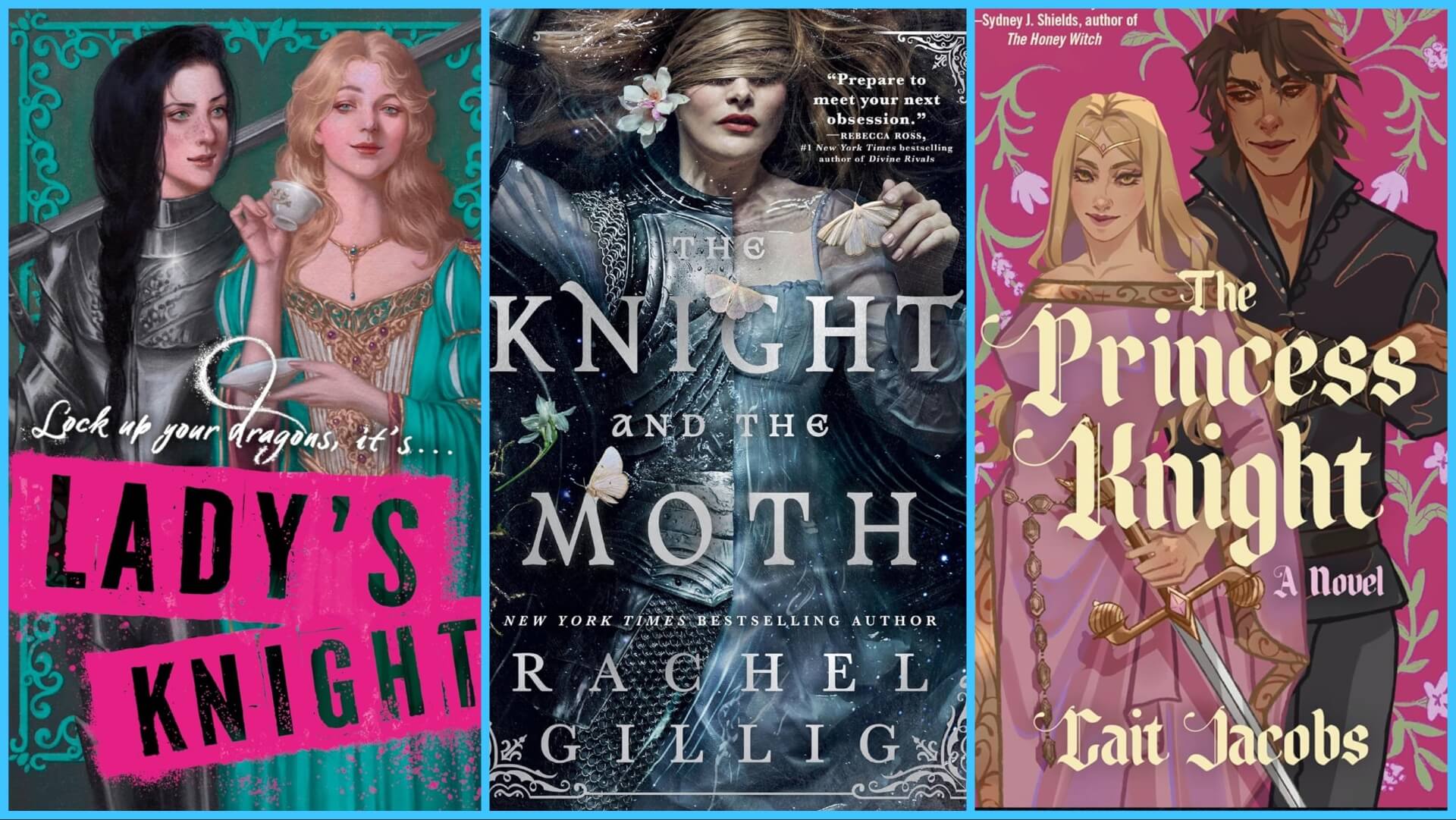
From lyrical and bittersweet fairytale The Isle In The Silver Sea and the more Gothic-tinged The Knight And The Moth to the youthfully exuberant Lady’s Knight and the timey-wimey The Everlasting, these are all stories that gleefully subvert expected stereotypes, shake up traditional gender roles, and put the kinds of queer and marginalized characters who rarely feature in this particular fictional space at the center of their narratives. It helps, of course, that these books are all great as stories, each with compelling characters and satisfying plots. But at this specific cultural moment, these books—and the larger medieval-themed renaissance they represent—feel like a reclamation, a statement about who we want to be and what kind of world we want to live in.

As anyone who grew up reading Tamora Pierce can attest, the lady knight trend isn’t exactly new. Female fantasy fans have long sought ways to see themselves and their experiences reflected in the stories they love—and in ways that go beyond a simple love interest, a tortured damsel in need of rescue, or the requisite evil witch who must be vanquished. There’s a reason so many of these readers imprinted on Tolkien’s shieldmaiden Eowyn of Rohan at a young age, after all. But what makes these new takes on this genre so fascinating—and so satisfying to read—is the deliberate way they turn familiar tropes and established expectations on their heads, reframing traditional ideas of masculinity, heteronormativity, power, and propaganda along the way.

Much of our modern idea of what a knight is supposed to be and do comes from the work of Chrétien de Troyes, the 12th-century writer whose poems include “Lancelot, “The Knight Of The Cart,” and “Yvain, The Knight Of The Lion.” De Troyes is not only credited with introducing many of the elements we now consider essential to the King Arthur myth (Lancelot and Guinevere’s affair, the search for the Holy Grail), but with defining the ideas of chivalry and courtly love in a way that still resonates centuries later. His writings were among the first to imagine chivalry—and, by extension, knighthood—as a system of ethical and moral rules, establishing those who espoused the virtues of courtesy and courtly love as protectors (and, indirectly, as weapons should the need arise). Of course, de Troyes’ stories, and the bulk of those that followed, are about male heroes and embrace a largely patriarchal view of the world. In them, though some women may initially seem powerful and influential, they are largely passive figures, particularly if you define such passivity in the simplest terms of who gets to perform action in any given story. Lots of ladies are stuck in towers, at crossroads, in far-off kingdoms, and what have you, waiting for the men to complete whatever quest or vow they’re given them to accomplish.

No one in any of this year’s lady knight books is waiting for someone else to determine or change their fate. Instead, these women are challenging norms of power, both in terms of the positions they hold and what those positions represent in the larger scheme of their societies. Knights are associated with the kind of specifically gendered power long deemed inaccessible to women and female-presenting figures, and which are often deliberately set at odds with that which is coded as overtly feminine. Many of these stories are also unabashedly queer, further breaking boundaries and reimagining classic themes and tropes in exciting and subversive new ways. 

As a result, all of these books play with gender and sexual norms in some way or other, whether by the simple act of putting women in armor, featuring central Sapphic romances, or confronting dark themes that range from colonialism to cannibalism. Several of these stories, including Tasha Suri’s The Isle In The Silver Sea, Alix Harrow’s The Everlasting, and Caitlin Starling’s The Starving Saints, also play with themes of power and propaganda, and what the idea of a lady knight can come to represent in a larger world, with or without her consent. Many of these women find themselves treated like symbols and objects as often as they are three-dimensional people, and the blurring of the lines between their various overlapping identities—think the way both history and popular culture like to envision Joan Of Arc, as simultaneously a literal saint, a pseudo-avatar for female empowerment, and a kind of gender traitor—adds a frequently bittersweet complexity to their emotional journeys as they wrestle with ideas of personhood and purpose. 

Yet, lady knight stories are also more than capable of leaning into joy in a way that many of their more male-centered counterparts are frequently not. Meagan Spooner and Amie Kaufman’s Lady’s Knight is an infectious, humor-filled romp about two medieval young women smashing the patriarchy, fighting back against classism, and falling for one another at the same time. Cait Jacobs’ charming Legally Blonde remix, The Princess Knight, purposefully rejects the idea of a Chosen One who’s not like all the other girls in favor of a girly girl heroine who loves fashion and jewelry. That she eventually learns to pick up a sword doesn’t require her to abandon her sense of self; it becomes the vehicle by which she learns self-acceptance and the depth of her inner strength. 

Yes, there’s certainly an element of escapism at work in any fantasy story, and that goes double for romantasy generally and the lady knight trend specifically. Co-opting and feminizing the idea of the knight—long a symbol of strength, independence, and even political power—feels deliciously transgressive and empowering, particularly in a time when so many real-life women are rapidly losing autonomy over many of their own choices (bodily and otherwise) or being encouraged to re-embrace traditional societal roles. In these books, female characters run the gamut when it comes to sexuality, desire, political motivations, and personal ambitions, finding ways to resist, critique, and change the world around them in unexpected ways. And if modern readers are hoping to think about ways they themselves can accomplish something similar in the real world, well, there are certainly worse role models. 

 
Join the discussion...