For the most affecting movies of the year, a death at the end wasn’t a spoiler, but the film’s very foundation. Aligning with the frustrated powerlessness of its audience, these powerful cinematic obituaries subverted the macabre fascinations of true-crime stories. They didn’t focus on asking questions or solving mysteries, but spent their time with the victims and the claustrophobic sense of inevitability around their impending ends. These tragedies, documented in real time by so many of 2025’s non-fiction films, are suffused with a recognizable sense of doom from the start, because they afflicted the most vulnerable: Black mothers, Palestinian children, those stuck in America’s healthcare system, the freedom of speech. A through-line of palpable desperation made these movies more nervy and raw than other documentaries dealing with death—a sense of immediacy deployed to combat a growing numbness in their audience.
Waking up each day to be assaulted by an onslaught of bad news enacted by forces beyond your control is enough to make anyone feel like a deer on a NASCAR track, staring blankly at the caravan of headlights speeding towards them. This helplessness is the sensation evoked by Kaouther Ben Hania’s docudrama The Voice Of Hind Rajab, and documentaries like Put Your Soul On Your Hand And Walk, The Perfect Neighbor, Come See Me In The Good Light, and My Undesirable Friends: Part I—Last Air In Moscow. These are films swimming against waves that will swallow them, films whose subjects stand against foes too massive to fall and whose fates are predetermined. What hope does any one person have against unchecked Israeli war crimes, against America’s racist gun culture or infuriating medical industry, against the censorial powers of a fascist regime?
But these films aren’t necessarily looking for hope. Even the most loving among them, director Ryan White’s Come See Me In The Good Light, can’t help but capture infuriating larger truths about chronic illness treatment in the U.S. As spoken word poet Andrea Gibson, who died a few months after the film premiered at Sundance, battles ovarian cancer for far longer than anyone ever expected, their final days’ bittersweet love story is tainted by cruel practicalities. Their terminal diagnosis sets the stakes from the very beginning of the film, and Come See Me In The Good Light spends its runtime finding beauty in this death sentence. But even translated into the breathy beats of the film’s heartfelt tone, there’s no way of accepting or gaining perspective on an endless cycle of doctor visits, test results, and mounting debt. There’s no poetry in bills, in those closest to you inheriting your imbalanced account. White doesn’t just capture the experience of a loved one’s looming end, but of all the institutional indignities that accompany this certainty.
Like their urgency, it’s this shared sobriety around systems that stands out among all these films. These aren’t just calculated weepies, designed to dislodge easy tears by exploiting real deaths. The tears will come, but they’re just as likely, maybe more likely, to be furious as mournful. The Perfect Neighbor, a film where Ajike Owens, a Black mother of four, is murdered by her Karen-who-cried-wolf neighbor, has this in common with The Voice Of Hind Rajab and Put Your Soul On Your Hand And Walk, two films about Palestinian civilians (five-year-old Hind Rajab and 25-year-old Fatima Hassouna, respectively) murdered by the Israeli military.
Each film acknowledges its audience’s expectations. We’re conditioned to see cops’ bodycam footage of happily playing Black children and know that something horrific awaits them. Director Geeta Gandbhir doesn’t need to insert herself into The Perfect Neighbor; the visual language of Cops has become a foundational part of American media literacy, and when a white person sics the authorities on a Black person, there’s only ever one result.
The inextricable association between subject and fate only wraps itself tighter around the latter films; even the most politically unaware understand the word “genocide.” When director Kaouther Ben Hania explains in opening title cards that the Red Crescent volunteers in The Voice Of Hind Rajab are actors performing a reenactment, but that the voices we hear calling into the emergency line are all real recordings, the film’s future becomes clear even to those who didn’t follow the story in the news. Its straightforward sorrow isn’t predicated on surprise, but bluntness. It’s another artist pleading with an international audience to recognize how innately they have accepted this extermination as inevitable.
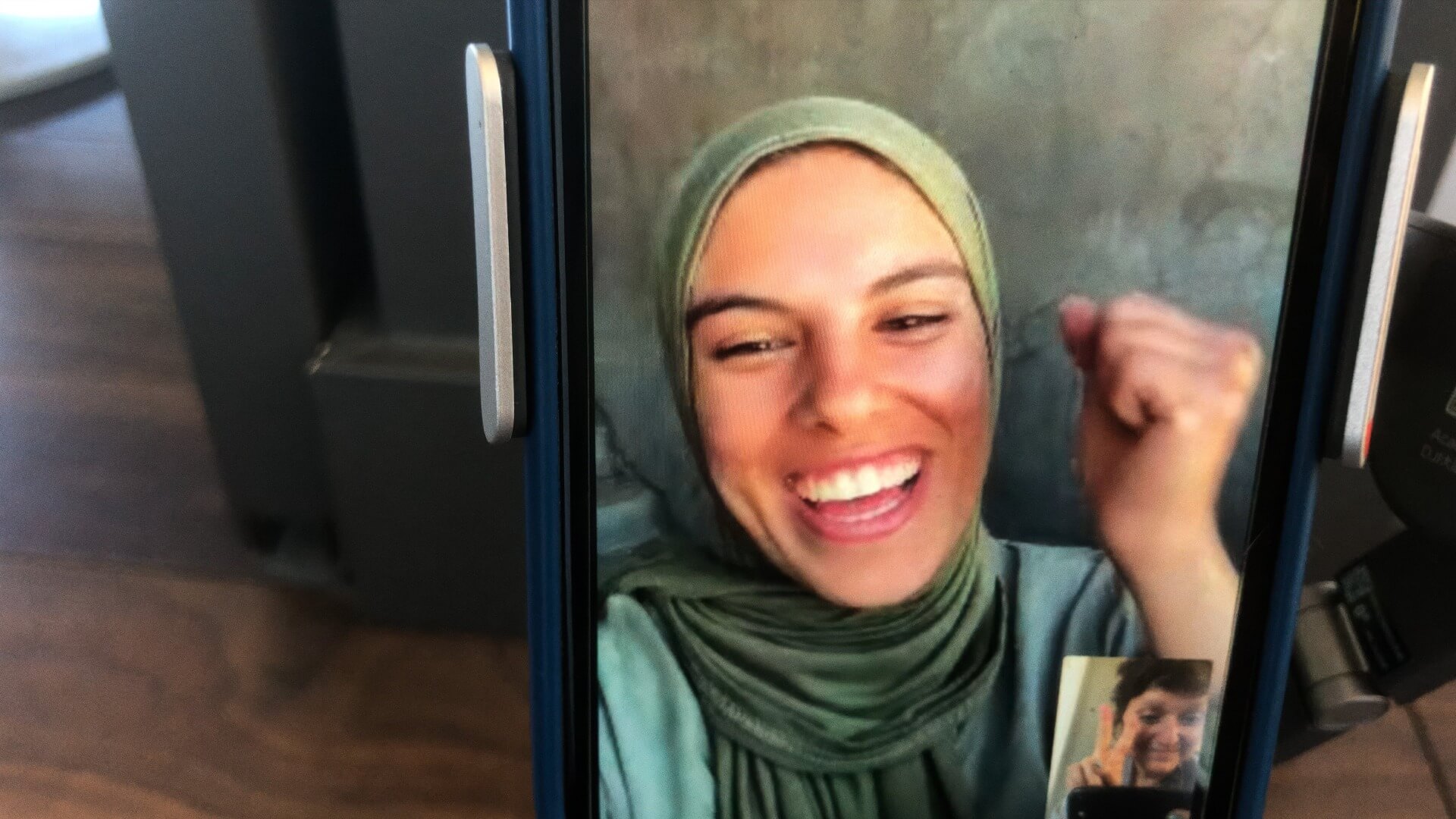
Similarly, from the first video call between Put Your Soul On Your Hand And Walk filmmaker Sepideh Farsi and Fatima Hassouna, anyone who’s found themselves watching understands what’s to come. Farsi herself doesn’t foreshadow anything in her video diary of Anne Frank. She doesn’t need to; it’s just statistics. It’s simply more likely that any given Palestinian on our screens is a victim of war crimes than still living among us.
The Israeli military has murdered more women and children in Gaza than have been killed in any other armed conflict in the past two decades. Over a similar timeframe, Black women were six times more likely to be murdered than white women in America. But news reports and shocking headlines can only move readers so much, especially as misinformation has exploded and trust in the press has plummeted. Not only have viewers been desensitized to all the ways these groups are under threat, they’ve become actively oppressed by endlessly circulating videos of their trauma. What these filmmakers are left to navigate is how to avoid this kind of damaging exploitation while still attempting to shake audiences out of their collective stupor. They approach this by eschewing images of literal death; this isn’t evidence for a courtroom, but testimony for history. When these murderous circumstances are so common as to fade from the front pages, even while there seems to be no escape from the snuff films that citizen journalism sometimes evolves into, all filmmakers can do is construct contemporaneous memorials to the people in front of them.
This is the plight faced by the Russian opposition journalists in My Undesirable Friends: Part I—Last Air In Moscow, Julia Loktev’s five-and-a-half-hour epic, which watches in horror as a team of reporters realizes that their country is invading Ukraine—and will soon snuff out what little free speech is left in the nation. While there have been plenty of documentaries filming those struggling against the invading Russians, including this year’s first-person frontline film 2000 Meters To Andriivka, My Undesirable Friends pays its respects to those watching in horror on the other side—an increasingly relatable feeling for those who spent the last year (or two, or ten) doomscrolling. Perhaps the most egregiously foregone conclusion of the bunch, considering that it covers a period from 2021 to 2022, Loktev’s film still pulls off the same personalizing magic as its peers, humanizing the plight of a free press and underlining the furious dignity of those still fighting against propaganda.
Like the endings of the films focused on Palestinians under fire, and Black women under fire, and terminal cancer patients jerked around by the systems there to keep them alive, the death of non-state media in Russia surprises no one. But it’s surprisingly heartening to feel kinship with a handful of chain-smoking, self-effacing, broke-ass reporters from the other side of the world—to see shared values fought for tooth and nail, under a government more repressive than our own on its worst days. It’s the compassion and integrity needed to continue shining lights on the world’s darkest sins, to commit them to film even though you know that few will go out of their way to confront their vast sadness. These intimate in memoriam are important work, inviting the uninitiated to be moved and re-energizing the informed, active, and burned-out. These movies carve their subjects’ names into the canon, encapsulating systemic issues with their specific farewells.


 Keep scrolling for more great stories.