
Beyoncé’s Black Is King is an unfettered celebration of Blackness

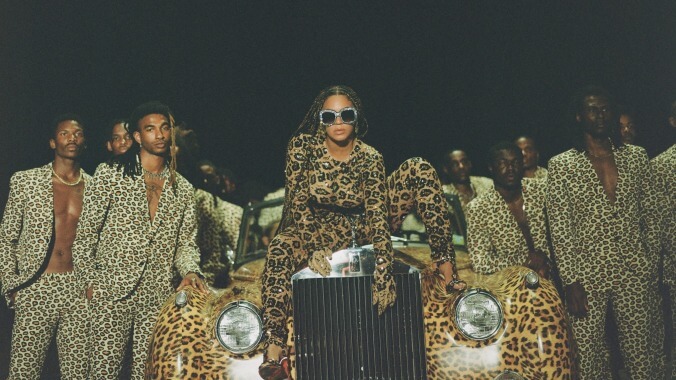
If we are to commit only one detail about Beyoncé to our collective memory forever, it should be this: She never gives an ounce less than her entire being to anything she does. When whispers of her involvement in the photorealistic remake of Disney’s The Lion King began, there was a tacit understanding among fans that it might lead to more than an acting role—especially when high-profile artists like Pharrell, Ariana Grande, and Kendrick Lamar are more commonly tapped to produce and curate entire soundtracks. And with such a beloved story, it was only a matter of time before Beyoncé would offer something truly special beyond another film credit in her otherworldly portfolio.
But when she released The Lion King: The Gift, a collection of original tracks inspired by the film, it became clear that it would function as something deeper than a soundtrack. Songs like “Bigger” and “Brown Skin Girl” embraced Blackness so intentionally, expressing sentiments that extended beyond a single film. Black Is King, a nearly 90-minute-long visual companion to The Gift created by Beyoncé for Disney+, recontextualizes the album as a broader celebration of Black identity, and it arrives not a moment too soon. During a time when the country is starting to have a more robust conversation surrounding systemic racism, this special event is not only a timely statement but also a fitting blueprint for aggressive—if not radical—self-acceptance. The film’s lessons, overtly tailored for Black audiences, are as vehement as the artist herself: Black is not just beautiful; it is glorious. It is not enough to love ourselves; we must regard ourselves as royalty.
For the new companion film, Simba’s coming-of-age story is translated into one of a Black boy’s journey from infancy to adulthood, as he navigates identity, love, and self-acceptance. Through a parade of breath-snatching vignettes filmed across a number of continents, the visual spectacle reveres the inherent beauty of the Black diaspora. Appearances from Lupita Nyong’o, Wizkid, Kelly Rowland, Naomi Campbell, Adut Akech, Pharrell, Tierra Whack, and others inject the effort with the kind of star power that one would expect from a project of this magnitude. It’s the latest from an artist who continues to place culture directly at the center of whatever she touches, a bold choice in an industry that often discourages aggressive cultural expression from anyone who isn’t white.
 Keep scrolling for more great stories.